Momentum Builds for US Economy, Slows for Stocks
 Andrew MoranUpdated 1 day Ago4 Mins read
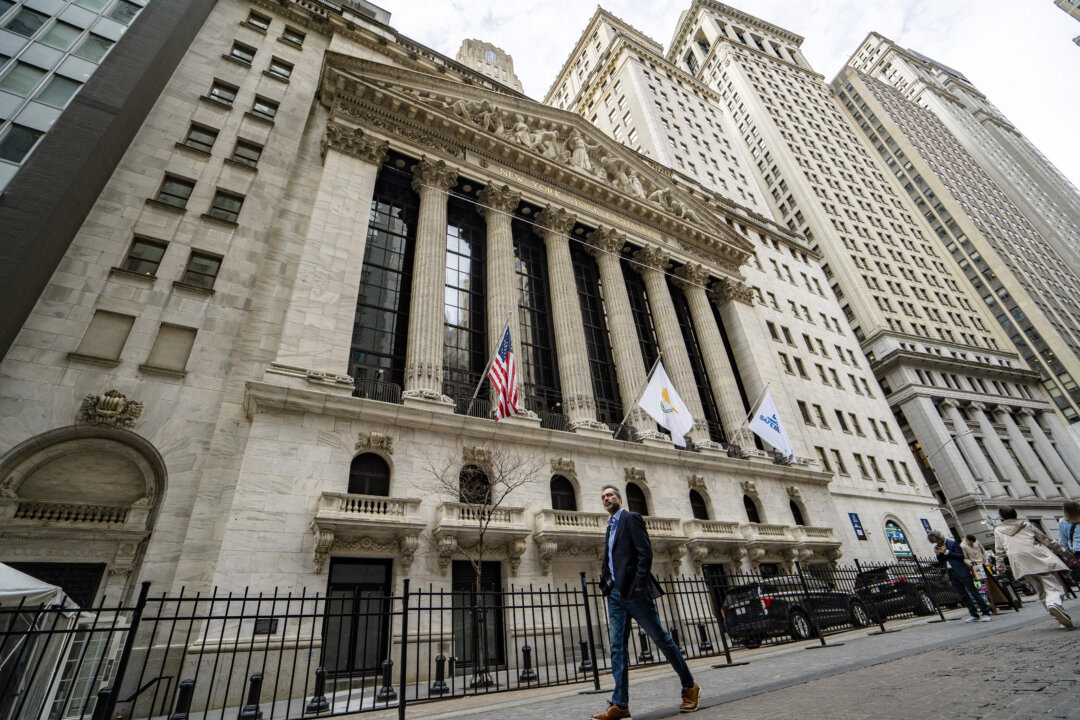
News Analysis
Current economic conditions in the United States are gaining momentum, while the record-breaking stock market rally could be losing steam.
Artificial intelligence has been the dominant theme for Wall Street and Main Street over the past few years.
Leading hyperscalers, from Alphabet to SpaceX, are betting big on the revolutionary technology. This year’s capital expenditures are forecast to reach up to $1 trillion, and early estimates suggest spending will top the trillion-dollar mark again next year.
To support the infrastructure buildout, demand for computing hardware, cooling systems, power infrastructure, and storage has been ferocious.
This has fueled a boom for numerous companies, driving a tech-led surge in the equities market. Despite fears of a circular ecosystem—tech firms investing in each other and then spending that money on their products—investors have waved off these worries.
Benchmark averages are slightly off their recent all-time highs. A broad array of indicators points to the momentum trade slowing as traders grow nervous about renewed price pressures and higher borrowing costs weighing on companies’ bottom lines.
The S&P 500 Momentum Index—a measure of about 100 stocks from the broad market index that have been rising—has slumped about 9 percent since July 1. By comparison, the overall S&P 500 has risen by almost 4 percent over the same period.
Should the Iran war continue, the next catalyst to support the bull market could be AI giant Anthropic’s highly anticipated debut on the New York Stock Exchange.
While SpaceX’s post-IPO performance could be a cautionary tale—shares are down about 20 percent from their highs—investors appear willing to participate in such events.
“U.S. IPOs have raised $145.8 billion, already surpassing the $142.4 billion raised in all of 2021,” Willy Lee, principal at Neostellar Advisors, said in an emailed note to The Epoch Times.
“Separately, Alphabet, Amazon, Meta, Microsoft and Oracle raised $255 billion of debt and equity through early June, more than twice their combined 2025 total, largely to finance AI infrastructure.”
Fighting the Headwinds
Despite a sharp selloff in March, U.S. stocks have been highly resilient as traders shrug off a series of headwinds.
The blue-chip Dow Jones climbed close to 55,000. The Nasdaq topped 27,000, while the S&P 500 breached 7,800. Even the Russell 2000, an index of 2,000 small-cap companies, surpassed the 3,000 milestone.
This, says Natalia Lojevsky, managing director at CIFC Asset Management, has been underpinned by strong earnings.
Coming off a stellar second-quarter earnings season, 86 percent of S&P 500 companies exceeded Wall Street estimates, data from FactSet show.
“But at some point, higher interest rates do start to bite,” Lojevsky told The Epoch Times in an emailed note.

Federal Reserve Chairman Kevin Warsh speaks during a press conference in Washington on July 29, 2026. Madalina Kilroy/The Epoch Times
The main area that could be hit the hardest is rate-sensitive sectors, “potentially in the much-loved and much-chased technology story,” she added.
Yields on U.S. government bonds have surged across the curve this summer.
The benchmark 10-year Treasury yield is hovering around 4.8 percent, while the 30-year recently reached a 19-year high of 5.31 percent.
Market watchers have offered various theories—AI debt issuance crowding out Treasury securities and U.S. fiscal health concerns—but yields have been climbing worldwide. One common denominator is that central banks, including the Federal Reserve, are increasingly expected to raise interest rates to combat rising or elevated inflation.
Futures markets are betting on a 58 percent chance of a rate hike at next week’s Fed policy meeting, according to new CME FedWatch data.
A chorus of monetary policymakers has presented mixed thoughts on what to do next.
Fed Governor Christopher Waller proposes giving “disinflation a chance.” Cleveland Fed President Beth Hammack, who was one of three dissenting votes in July, said last month that “now is the time to act” on reining in inflation.
Larry Holzenthaler, senior portfolio manager at Catalyst Funds, said everything points to a Fed rate hike.
“There’s a very strong argument to be made, especially given Warsh’s comments at Jackson Hole, that the Fed is in a difficult position if they don’t choose to raise rates,” he said in a note emailed to The Epoch Times.
Recent economic data also supports the case for tightening, he added.
And there lies the rub. While the stock market could be taking a breather, the broader economic landscape could be heating up.
Momentum Pivots to Economy
It was a tepid first half for the world’s largest economy, logging 2.1 percent growth in the first quarter and 1.5 percent in the second.
Economic conditions could kick into high gear in the second half of 2026.
The widely watched Atlanta Fed GDPNow Model estimates third-quarter growth will surge by almost 5 percent. Looking further out, the New York Fed Staff Nowcast projects a 2.5 percent expansion in the final three months of 2026.
Consumer spending, business investment, and changes in private inventories are fueling the growth. A dashboard of recent leading indicators confirms the same growth trajectory.
Factory orders surged more than expected in July, and manufacturing activity expanded for the eighth consecutive month in August. The services sector registered its best month since earlier this year in August.
The U.S. labor market also posted a blockbuster nonfarm payrolls report. August saw 162,000 new jobs—surpassing the consensus estimate of 56,000—and the unemployment rate held steady at 4.1 percent.

People shop for groceries at a store in Elkridge, Md., on Feb. 27, 2026. Madalina Kilroy/The Epoch Times
Whether consumers believe the current economic environment is positive will be reflected in the University of Michigan’s preliminary September Consumer Sentiment Index.
Retail sales unexpectedly slumped 0.6 percent in July, which economists attribute to seasonal factors, including Amazon moving its Prime Day event to June and the conclusion of the FIFA World Cup festivities.
“Consumer financial health looks solid. Despite cost-of-living pressures from areas such as gasoline, the share of households paying off their credit card bills in full each month has risen,” Bank of America economists said in their recent Consumer Checkpoint report.
“And there is little sign of an acceleration in households drawing upon their savings.”
This leaves the U.S. central bank in a difficult position: raise rates and risk slowing growth, or keep rates unchanged and risk inflation trending up.
What the Fed does next, and its potential implications for the economy, will depend on what the Consumer Price Index indicates.
The Bureau of Labor Statistics will release August’s consumer inflation report on Sept. 11.
The 12-month headline inflation rate is forecast to be unchanged at 3.4 percent. Excluding food and energy, annual core inflation is expected to hold steady at 2.4 percent.
“If the CPI data this week comes in even at consensus or above consensus, we think the Fed will be in a difficult position not to go ahead and raise rates,” Holzenthaler said.




Florida’s Attorney General Sues Netflix for Allegedly Harvesting, Selling Children’s Data
Florida’s attorney general sued Netflix on Sept. 9 claiming the streaming giant...
4 Women Accuse Amazon of Systematic Pregnancy Discrimination
Four former Amazon female warehouse employees have sued the e-commerce giant, alleging...

Clearing Up the SECURE 2.0 Confusion: Is Your Required Minimum Distribution Age 73 or 75?
Congress, in regulating the tax treatment of certain retirement plans, has changed...
Gas Prices Expected to Drop in 2027, Energy Information Administration Says
A customer at a Los Angeles gas station on July 1, 2025....