
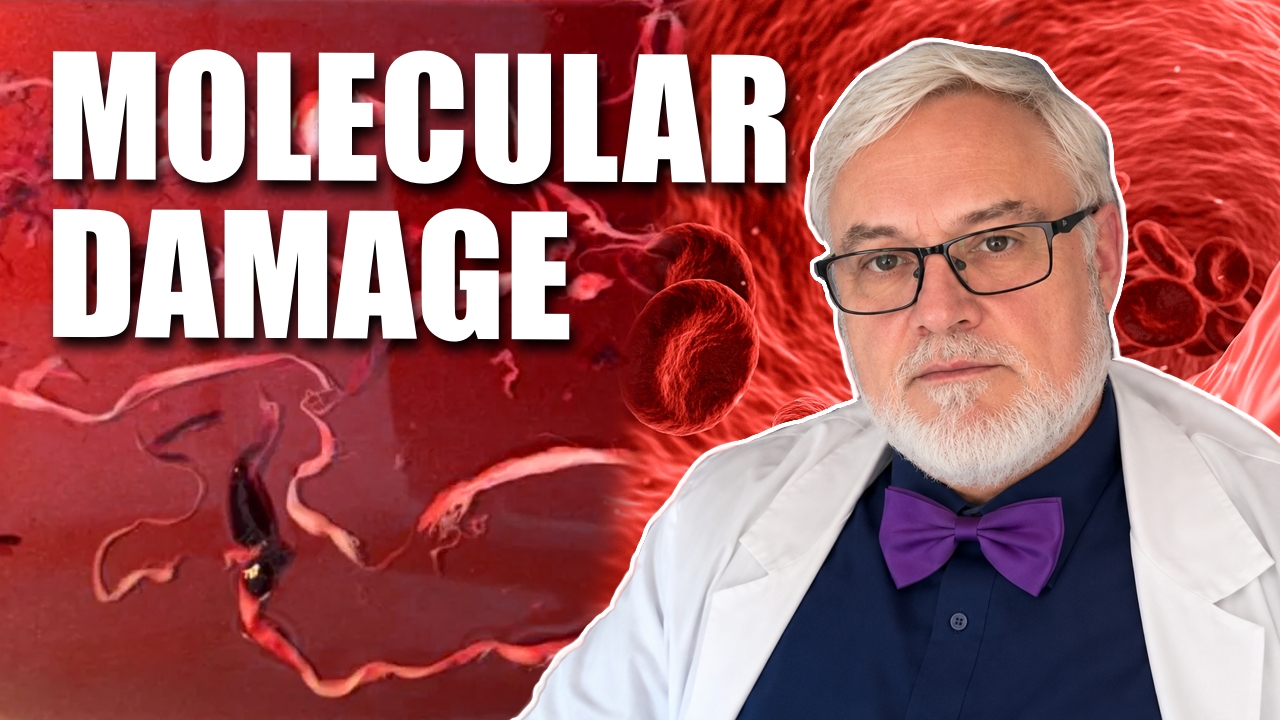

Part 3 of 4 — In this segment, Dr. Bruce Rapley examines the proteomic findings from the anomalous intravascular casts — commonly known as “calamari clots.”
He breaks down the abnormal protein signatures, including disrupted fibrin structures, immune activation, and inflammatory markers, and discusses what these molecular clues reveal about the mechanisms driving cast formation, immunothrombosis, and potential widespread vascular injury.
If our work resonates with you and you value independent medical investigation, informed consent, and health sovereignty, please consider supporting our ongoing work at DrTrozzi.news.
Dr. Bruce Rapley is an interdisciplinary applied biologist and systems scientist with expertise spanning human health, environmental science, biophysics, and complex biological systems.
Trained in medical and applied microbiology, his early research explored the biological effects of electromagnetic fields and acoustic stress. He later specialized in psychoacoustics, occupational noise exposure, and infrasound. For the past six years, Dr. Rapley has focused on the morphology, histology, elemental chemistry, and proteomics of anomalous white intravascular casts (commonly known as “calamari clots”) observed in the post-COVID-19 era.
He approaches scientific questions with careful observation, rigorous skepticism, and a systems-oriented perspective.

-
The anomalous “calamari clots” are overwhelmingly composed of human proteins — over 500 identified — with no detectable spike protein in the structures themselves.
-
Nine dominant proteins make up the majority of the cast material, including abnormal fibrin ratios, hemoglobin fragments (suggesting red blood cell damage), myeloperoxidase, cathepsin G, IgG, and actin.
-
The casts show strong signs of immunothrombosis, inflammation, and oxidative stress, with severely impaired fibrinolysis (low plasmin/tPA).
-
High phosphorus levels point to significant cellular debris and vascular damage contributing to cast formation.
-
The fibrin framework appears structurally defective, potentially allowing the casts to act like biological filters that trap circulating proteins and continue growing.
-
The findings raise concerns about protein misfolding and errors in synthesis linked to modified mRNA technology, with possible amyloid-like or prion-like implications.
-
These proteomic signatures suggest a novel, systemic pathological process that deserves urgent independent investigation.