Canada pitches mix of ‘conventional and clean energy’ to power $1 trillion capital push
 Darius SnieckusUpdated 2 hours Ago4 Mins read
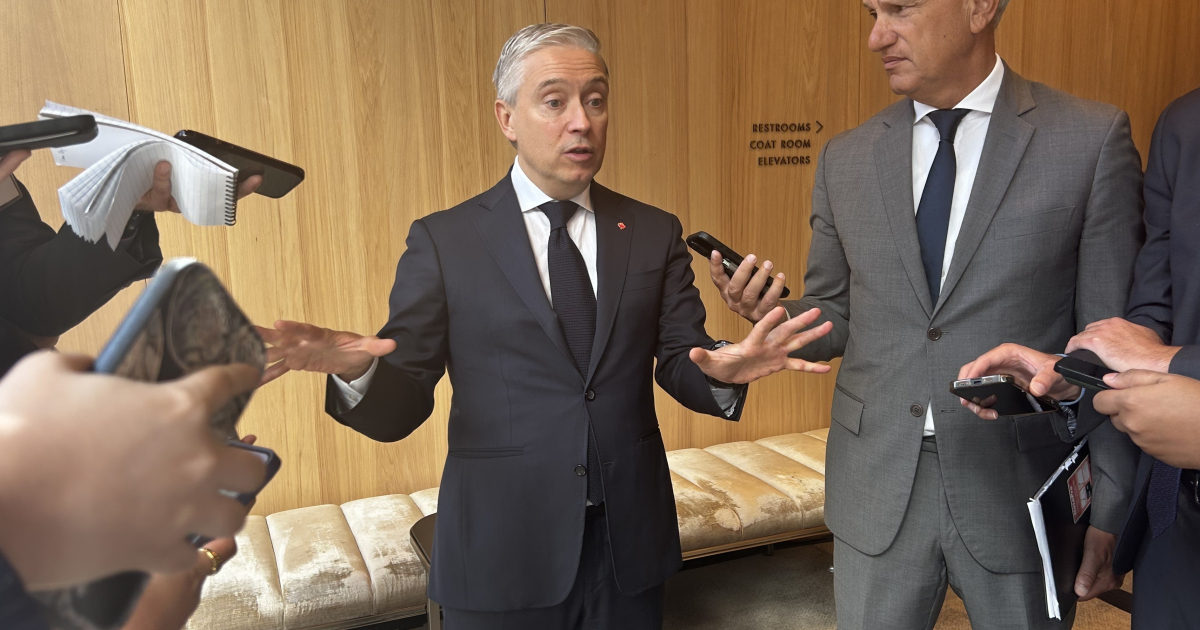
Federal Finance Minister François-Philippe Champagne put Canada’s vast energy resources at the centre of the country’s pitch for global capital ahead of the inaugural Canada Investment Summit in Toronto, spotlighting a portfolio of conventional and renewable energy projects worth hundreds of billions of dollars.
The government’s investment prospectus features 11 oil and gas megaprojects alongside 31 clean energy developments in its “shop window,” part of Ottawa’s ongoing efforts to position Canada as both a reliable hydrocarbon producer, including liquefied natural gas, and a major supplier of low-emissions energy generation and technology.
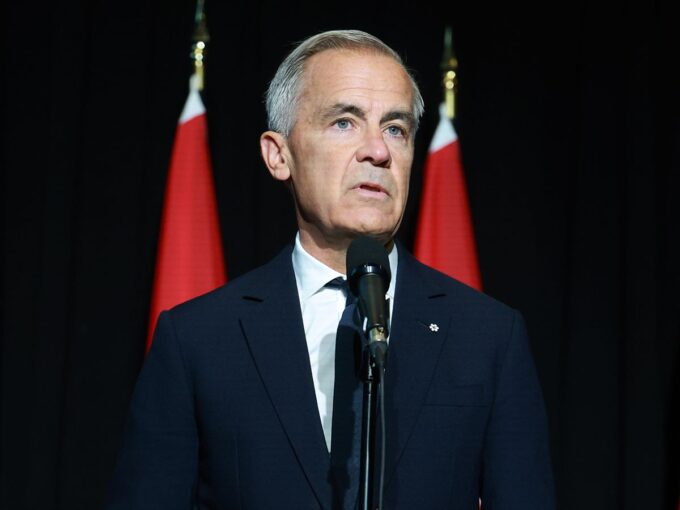
The “pitchbook,” a copy of which was published by cleantech advocacy body the Clean50, is part of Prime Minister Mark Carney’s strategy of courting international financial institutions managing over $120 trillion in global assets to invest in more than 160 projects as Canada seeks to diversify its economy and reduce its market exposure to the US.
Champagne, addressing several hundred delegates at an event organized by the Milken Institute, a think tank, said Canada’s resource wealth, fiscal stability and reliability were increasingly valuable commodities amid roiling geopolitical uncertainty.
“People realize that in a very uncertain world, Canada provides the most sought-after commodity, which is trust,” Champagne said, highlighting the country’s low net debt, skilled labour force and natural resources.
The former innovation minister referred to remarks made by International Energy Agency director-general Fatih Birol at a conference in Montreal this summer that the world was “in the midst of redesigning the energy architecture for the planet.”

The pitchbook showed the range of projects Ottawa sees as foundational to the country’s energy transition.
On conventional energy, the three biggest projects are Trans Mountain’s US$35 billion West Coast oil pipeline and export terminal, the $28.5 billion Ksi Lisims LNG pipeline and terminal, and the $9.9 billion Woodfibre LNG project.
The clean energy portfolio included Nova Scotia’s US$44 billion Wind West offshore wind and transmission project, Novatron Energy’s $36 billion on-and offshore wind and power line platform, and the US$10.6 billion EVREC Green Energy Hub in Newfoundland and Labrador, a green hydrogen and ammonia generation hub.
“I think we’re strong on renewables, strong on conventional [energy] and can offer an important alternative when it comes to nuclear,” Champagne said, referring to other international atomic energy powers.
‘Energy is destiny’: Champagne
Champagne, in answer to a question from Canada’s National Observer, told reporters that “energy is destiny” and lies at the heart of federal industrial policy, adding that Ottawa does not see conventional and clean energy as “competing” development priorities.
Investors are also being offered a closer look at Canadian critical mineral projects central to the energy and defence industries, with 52 of the 167 projects listed in the prospectus having a connection to the minerals and metals deemed key to the global energy transition technologies.
“We offer the world the critical minerals that are going to be needed to support the growth” of the energy, defence and electronics sectors, Champagne said, while Canada can also be “the partner of choice when it comes to oil and gas to our partners in Asia or in Europe” as this country scales up carbon capture, nuclear power and renewables.
“It’s a golden opportunity for investors,” he said, reflecting the Liberal government’s view that oil-and-gas resources can help finance and accelerate the country’s transition to a low-carbon economy.
Ottawa also moved Monday to address a longstanding concern for investors considering committing capital for large, long-timeline projects: tax certainty.
The Canada Revenue Agency will now prioritize requests for an advanced income tax ruling tied to investments of $1 billion or more, giving financiers a binding decision on how tax law will apply to a deal before they commit capital. The change will “lower risk and help speed up” large projects.
“In a more uncertain world, the government is giving major investors the clarity and certainty they need to invest in Canada,” the government said in a statement announcing the measure.
Canada’s electricity demand is projected to rise by as much as 75 per cent by 2050, requiring billions of dollars to finance power generation and grid buildout. Canada’s biggest banks are already jockeying for a role.
TD Bank unveiled a $150-billion, five-year commitment aimed at supercharging spending on energy, critical minerals, defence, artificial intelligence and infrastructure.
“Canada is entering a defining period of investment and industrial growth that will shape the country’s economy for decades to come,” TD Group CEO Raymond Chun told the conference. “We will connect investors with opportunity, help businesses scale and strengthen the sectors critical to Canada’s next era of growth.”
Scotiabank pledged more than $100 billion over five years and launched the Scotia Growth Institute, led by strategic advisor Kirsten Hillman, Canada’s former ambassador to the US. The bank also announced $50 million for workforce training.
BMO Financial Group said it would set up a $70 billion fund to invest in electricity grids, pipelines, artificial intelligence computing, mining and defence over the next ten years.
The bank commitments come with a caveat: financing may not be the biggest obstacle to building the largest projects.
Big projects ‘very hard’ to build
Alan Tannebaum, head of BMO Capital Markets, said public-private infrastructure projects can be difficult to deliver because of the number of governments and range of “other interests” involved.
“There’s a lot of focus around big infrastructure, partnership between private-public to get big infrastructure projects done,” he told the conference. “I feel like everybody acknowledges that those projects can be very hard, there are lots of constituents that need to come together to get that done.”
He said more attention should go toward financing small and medium-sized companies in energy, metals, and data infrastructure, which he described as the “growing industrial companies that provide the picks and shovels.”
Jeremy Carter, global analytical head at Fitch Ratings, one of the “Big Three” global credit rating agencies along with Moody’s and S&P Global Ratings, said regulatory certainty matters most to investors weighing long-term infrastructure development projects.
“The thing that we were trying to talk about is the predictability of being able to build a project,” Carter said, speaking to CNO on the sidelines of the conference. Investors need clarity “from saying that this is what we’re going to build, to building it” so they do not “have to be demanding a risk premium compared to the US.”
This, said Carter, went “far beyond” the industrial investors mulling capital commitments to major projects. Canada needs to look beyond the high-profile “national building” projects and “develop the capacity to execute thousands and thousands of smaller ones.”
“This, in many ways, is more important than the Major Projects Office pushing through 20 or 30 of the biggest ones,” he said.
Carter cited data-centre infrastructure as an example of the gap between the asset classes. The US had roughly 5,500 such projects late last year, compared with 350 in Canada, and he urged governments to make the Canadian investment framework “as frictionless as possible” across all industries to help narrow the divide.





Self-proclaimed ‘Hoax Buster,’ Trump scoffs at warnings about AI dangers
U.S. President Donald Trump speaks to reporters aboard Air Force One while...
Carney woos foreign investors; Poll finds Canadians support closer EU ties; and more
Prime Minister Mark Carney. Photo by Gavin Young/PostmediaArticle contentIt’s Monday, September 14....
John Ivison: If Canada really is open for business, Carney needs to rein in labour strife
Prime Minister Mark Carney. Photo by Gavin Young/PostmediaArticle contentMark Carney’s pitch to...
The government of Canada wants an AI ‘supercycle.’ Who will pay to power it?
Canada is pitching global investors on an AI-and-energy boom, but the electricity...