Michael Higgins: ICJ risks destroying credibility if it redefines genocide
 Michael HigginsUpdated 2 hours Ago3 Mins read
Article content
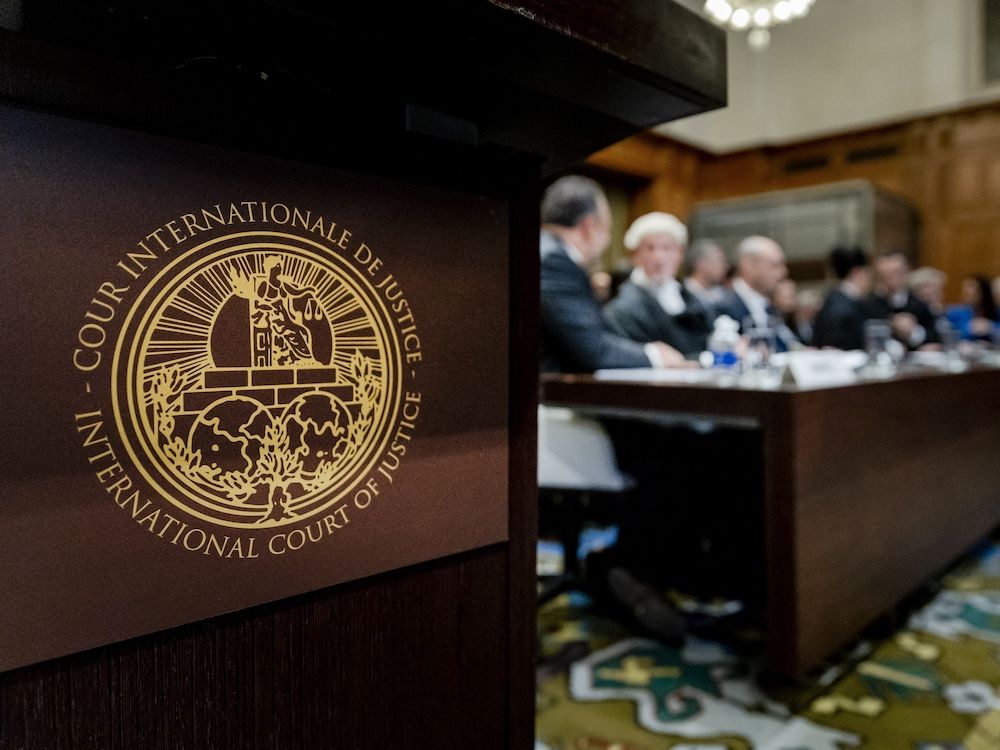
A ruling expected shortly by the International Court of Justice in the Hague could pave the way for a host of countries, including Canada, to stand trial for genocide.

THIS CONTENT IS RESERVED FOR SUBSCRIBERS
Enjoy the latest local, national and international news.
- Exclusive articles by Conrad Black, Barbara Kay and others. Plus, special edition NP Platformed and First Reading newsletters and virtual events.
- Unlimited online access to National Post.
- National Post ePaper, an electronic replica of the print edition to view on any device, share and comment on.
- Daily puzzles including the New York Times Crossword.
- Support local journalism.
SUBSCRIBE FOR MORE ARTICLES
Enjoy the latest local, national and international news.
- Exclusive articles by Conrad Black, Barbara Kay and others. Plus, special edition NP Platformed and First Reading newsletters and virtual events.
- Unlimited online access to National Post.
- National Post ePaper, an electronic replica of the print edition to view on any device, share and comment on.
- Daily puzzles including the New York Times Crossword.
- Support local journalism.
REGISTER / SIGN IN TO UNLOCK MORE ARTICLES
Create an account or sign in to continue with your reading experience.
- Access articles from across Canada with one account.
- Share your thoughts and join the conversation in the comments.
- Enjoy additional articles per month.
- Get email updates from your favourite authors.
THIS ARTICLE IS FREE TO READ REGISTER TO UNLOCK.
Create an account or sign in to continue with your reading experience.
- Access articles from across Canada with one account
- Share your thoughts and join the conversation in the comments
- Enjoy additional articles per month
- Get email updates from your favourite authors
Sign In or Create an Account
or
Article content
In the case of Gambia versus Myanmar the ICJ has been asked to lower the threshold for genocide and if the judges agree it would almost certainly lead to an avalanche of lawfare cases.
Article content
Article content
The World Court would find itself less concerned with justice than politics.
Article content
Article content
Indeed, politics is at the heart of the effort to reduce the standard for genocide. A lower standard would make it easier for South Africa to make its case at the ICJ that Israel is committing a genocide in Gaza.
Article content
By signing up you consent to receive the above newsletter from Postmedia Network Inc.
Article content
But if the ICJ lowers the threshold merely to appease those who wish to punish Israel then it makes a mockery of itself.
Article content
Genocide is the “crime of crimes.” Raphael Lemkin, a Polish-Jewish lawyer, coined the word in 1944, writing, “By ‘genocide’ we mean the destruction of a nation or of an ethnic group.”
Article content
Four years later, the Geneva Convention defined genocide as “acts committed with intent to destroy, in whole or in part, a national, ethnical, racial or religious group.”
Article content
To prove genocide involves making the case that there was a “specific intent” to destroy a group, in whole or in part.
Article content
Alan Kessel, a Canadian lawyer and diplomat who represented Canada in the early stages of the Myanmar case, said, “Genocide is probably the most difficult issue to prove and it was designed that way. It was particularly made difficult because we do have war crimes, crimes against humanity, but genocide would be the most heinous.”
Article content
Article content
Canada, along with Denmark, France, Germany, the Netherlands, and the United Kingdom intervened in the Myanmar case “in order to set out their interpretation of the relevant provisions of the Genocide Convention before the Court,” said a statement from the Canadian government in 2023.
Article content
Article content
Ireland was also granted intervenor status but in its submission it asked the ICJ to broaden its interpretation of what constituted a genocide. It has made a similar submission in South Africa’s case against Israel.
Article content
Kessel, who has retired from the federal government but was the assistant deputy minister for legal affairs at Global Affairs Canada, said Ireland has been pushing for countries to be found guilty of genocide on the basis that they “should have known of the natural and probable consequence of the conduct.”
Article content
“That is not a test that any of us uses and it’s not a test that we would want to see the ICJ use because that would be open to incredible mischief,” said Kessel, now a senior fellow at the Macdonald Laurier Institute.
Article content
“The ‘should have known’ basis is not what we consider a clear intent. It’s a much lower basis. I mean, anybody should have known or could have known or might have known.”







Anthropic Says Claude Found Something Big in DNA. It Just Doesn’t Know What
In brief Anthropic says Claude spent 21 hours and roughly 210 million...

An AI Agent Just Hacked a Government Website for the First Time, Australia PM Says
In brief Prime Minister Anthony Albanese revealed that an OpenAI agent breached...

OpenAI Gives Ukraine Access to Daybreak AI Cyber-Defense Tool
In brief OpenAI will give Ukraine's Ministry of Digital Transformation access to...

China Probes DeepSeek and Moonshot Over Alleged Data Leaks to Anthropic’s Claude
In brief China's Cyberspace Administration summoned all seven companies named in Anthropic's...