

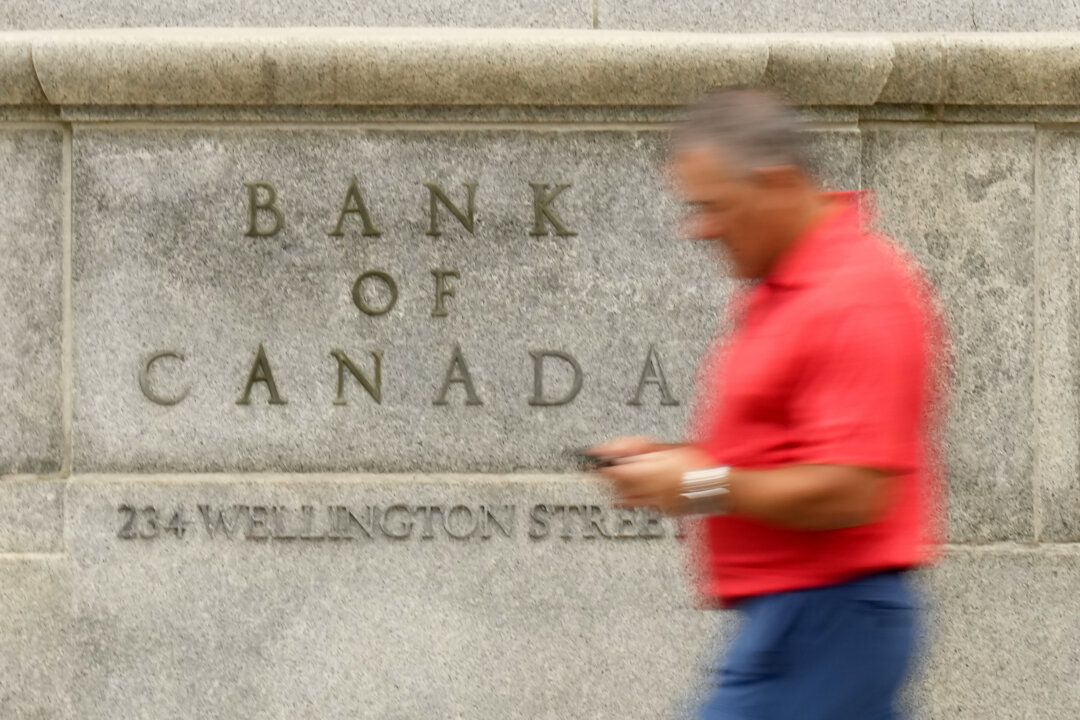
The Bank of Canada is carefully watching the rise of an alternative credit model that has Canadian investors and banks exposed to half a trillion dollars of loans held largely beyond the public eye.
The concern revolves around private credit, which doesn’t have a universal definition but broadly involves businesses taking out loans from non-bank lenders including asset managers, insurers and pension funds.
A mid-sized business might turn to private credit if they’re looking for money to fund the next stage of growth but are still too small for a traditional bank loan or issuing debt on the bond market.
The share of Canadian businesses making use of private credit is still limited, but the rapid adoption of the model worldwide and in the United States it has been tied to high-profile bankruptcies.
Private credit was flagged as a risk in the Bank of Canada’s 2026 financial stability report in May. Economists at the central bank released a paper last week tracking the model’s growth in Canada, and explaining to a broader audience why private credit is worth watching.
Globally, the uptake of private credit is expanding rapidly as firms seek fast and flexible ways to access capital, according to the Bank of Canada.
But the report’s authors said the share of loans from non-banks to domestic businesses has held steady at about 15 percent over the past decade. They said that suggests “private credit has not been displacing traditional sources of funding.”
The Bank of Canada’s analysis concluded Canadian firms aren’t taking out those loans en masse, but in many cases, they are underwriting them.
As of the start of this year, the bank estimates that there was a combined value of $500 billion in private lending by Canadian investors and lending to private credit funds by Canadian banks. Most of that lending activity was in the United States.
Private lending in Canada primarily comes from life insurers, pension funds and asset managers. Perhaps counter-intuitively, banks themselves are also exposed to private credit by lending to funds who are involved in the space.
The Bank of Canada noted that insurers and pension funds are stable investors in the private credit space. Domestic asset managers are a “small but growing” segment of the market, while banks’ exposures to private lending is considered relatively low-risk.
In its May financial stability report, the Bank of Canada deemed private credit risks “manageable,” but monetary policymakers think it’s still a space worth watching.
Private credit hasn’t been tested in a prolonged market downturn, so it’s unclear what kind of ripple effects the financial system would see from a shock like that.
“These exposures may help diversify portfolios and support returns, but they also create potential channels of contagion,” the Bank of Canada economists wrote last week.
“A sharp downturn in the performance of private credit abroad could affect Canadian investors and business lending in the domestic economy.”
Peter MacKenzie, senior policy analyst at the C.D. Howe Institute, said private credit emerged as an attractive option after the 2008-09 financial crisis, when big banks took a step back from loans for small- and medium-sized businesses and focused on safer, more established firms.
Private lenders stepped in to fill that gap, MacKenzie said. Interest rates on private credit are usually be higher, but businesses might like the speed at which non-bank lenders can move and the relative flexibility of their terms.
MacKenzie said there’s a lack of transparency in private credit, however, where deals are usually negotiated behind closed doors.
“The opaqueness and not having an explicit definition of what private credit is for these different insurance companies, pension plans, banks to report in their financial statements — that alone I think is a bit of a risk,” he said.
The Bank of Canada’s analysts also flagged concerns about the complex structures and lack of visibility around private lending. Growth in private credit is happening “largely outside a regulatory environment,” which poses a bigger risk for investors and Canada’s financial stability, the central bank report noted last week.
Private companies also don’t have the same reporting requirements as a publicly held bank, limiting windows into how stringent underwriting standards are for some private lenders.
MacKenzie said today’s concern over private credit is tied to “friction” in the United States.
Last year’s bankruptcy of First Brands Group, a Texas-based auto parts manufacturer largely financed by private credit, was one of the high-profile collapses that sparked alarm in the space. Some major private credit funds capped withdrawals for investors this past spring as concerns spread over bad loans.
In Canada, turmoil has been especially pronounced in private real estate funds. Firms like Trez Capital Fund Management, Centurion Asset Management Inc., Avenue Living Asset Management Ltd. and many others have temporarily halted or limited withdrawals from their funds over the past year.
An investor’s money is typically out on loan in private credit, which MacKenzie said means withdrawals typically happen on a stricter schedule than more liquid funds focused on stocks where assets can be bought and sold on a relatively easy basis.
Bruce Flatt, CEO of Canadian asset manager Brookfield Corp., said in a letter to shareholders last quarter that he was confident in the firm’s approach to the space after completing its acquisition of Oaktree, a U.S.-based fund with a significant private credit business.
Flatt dubbed the recent turbulence a “healthy adjustment” from a period in private credit where abundant capital led to loose underwriting standards.
“We do not, though, view today’s environment as a systemic problem, and the areas attracting the most attention represent only a very small part of the broader credit market,” Flatt wrote.
Outside stability concerns, MacKenzie said the exposure of Canadian banks to the private lending space could lead to a broader tightening of financial conditions if funds start to see their loans go bad. In that hypothetical, instead of lending to domestic firms, banks would be putting that money toward bailing out private credit funds.
But he said he’s also wary that panic over private credit in the United States could lead domestic regulators to come down too hard on what has been a niche but stable source of capital for firms in Canada.
“You could have an effect like that, where we start overregulating the Canadian side because of what’s happening on the U.S. side, but then we lose out again on some of that much needed Canadian business investment,” he said.