
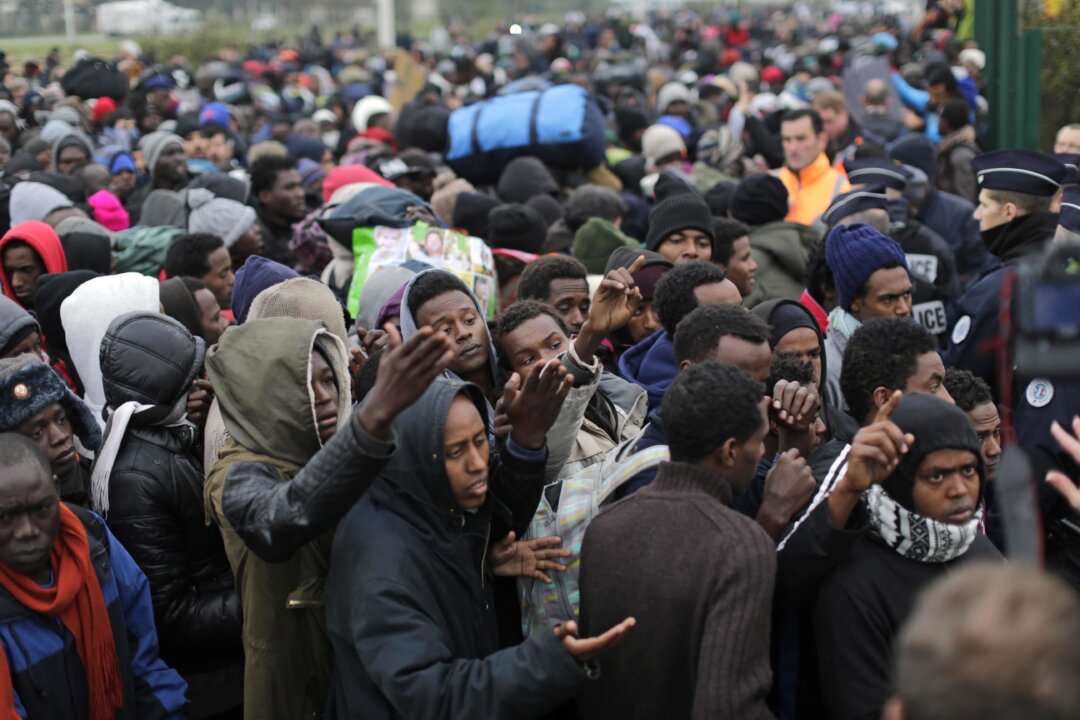
A population demographer says Sub-Saharan Africa will likely be the next major source of migrants globally in the coming decades after India.
Aude Bernard of the University of Queensland in Australia told the Joint Standing Committee on Migration’s “Inquiry into the Value of Skilled Migration,” that globally the intention to migrate was “very, very high” amid population decline in Europe and East Asia.
Associate Professor Bernard pointed to surveys suggesting about 25 to 30 percent of the global population was keen to migrate with demand consistently high.
“I think what’s interesting, if we think about the future in global trends … some countries are shrinking, and in that sense, I think the competition for skilled migrants will only grow and intensify in the future as you have significant population decline and ageing, particularly in southern and eastern Europe, as well as East Asia,” she said on Aug. 24.
“But at the same time, the demographic trends mean that perhaps ‘source’ countries will change, and I think demographic trends explain why India has become the main source country over China since 2017, and where a lot of the population growth will come from this century.
“[Going forward,] about 50 percent of the global population growth will be from Sub-Saharan Africa, and so this, I think, will change who applies for visas coming to Australia in the decades to come.”
Skilled Migrants Largely Stay in the Regions
Affordable housing was also discussed and highlighted as a key incentive for the regions to keep skilled workers.
“We found that regions that had lower housing prices were doing better at retaining regional migrants in the longer term,” Bernard told the inquiry.
Bernard said there was research into why migrants remained in non-metro areas, including employment, income levels, and the availability of teachers and social services.
But housing, job opportunities, and the presence of other migrants came out as the strongest determining factors.
Studies also found about 70 percent of skilled migrants who moved to the regions, stayed away from the three biggest cities, Brisbane, Sydney and Melbourne, even after 10 years.
But the retention rate of skilled migrants dropped to just 40 percent after the same period—suggesting many move to other regional areas.
Budget figures released in May showed more than 1 million migrants are expected to arrive in Australia up until 2028.
Migration Concerns
The findings add another layer to an already contentious debate about mass migration and housing with fast population growth driving demand for homes—a concern that has propelled the popularity of the conservative-leaning One Nation party.
One Nation leader Pauline Hanson criticised Australia’s migrant intake amid what she calls the nation’s worst housing crisis in history.
“[The government] already brought in 1.5 million in four years,” she said.
“That’s why your rent exploded, your pay went backwards, and your kids can’t buy a home.
“It’s why hospitals are turning away sick people.”
The party pledges to cap overall net migration to 130,000 per year from the 225,000 target by 2027-28.
Earlier this month, shadow housing spokesman Andrew Bragg said Australia’s housing shortfall could be addressed by lowering net migration to 180,000 people a year over four years.
Bragg suggested reducing the number of international students, backpackers, and unskilled workers.
“Lifting migration standards and analysing them carefully each year is crucial to ensure integrity and public trust in our migration settings,” he told media.
Labor Immigration Minister Tony Burke maintains that migration is falling, citing Australian Bureau of Statistics data showing the current net migration rate had dropped to 301,000—a 45 percent decrease from the post-pandemic peak in 2023.
“We are bringing migration down with a sensible, measured approach to provide the skilled workers Australia needs, while addressing exploitation and rorts,” he said in a recent statement.
“The numbers of temporary visa holders and international students also continue to fall, as we prioritise the skills that we need to care for our sick and elderly and build homes.”