Saudi Arabia, Syria Sign Defense Cooperation Agreement Amid Ongoing Houthi Attacks
 Evgenia FilimianovaUpdated 2 weeks Ago2 Mins read
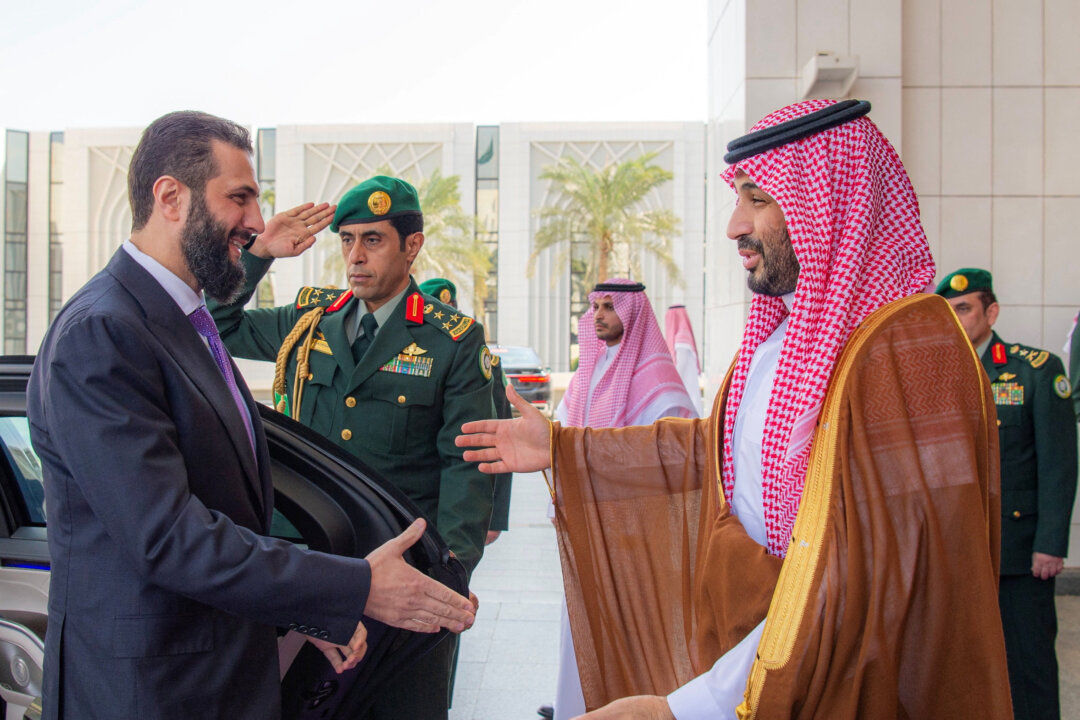
Saudi Arabia and Syria signed a defense cooperation agreement on Wednesday, as the kingdom continues to face escalating missile and drone attacks from Yemen’s Iran-backed Houthis.
The Syrian Foreign Ministry said the two countries also signed agreements and memorandums of understanding on agriculture, environmental protection, infrastructure, housing and financial services.
The deals were announced during Syrian leader Ahmed al-Sharaa’s visit to Riyadh, his second trip to Saudi Arabia in less than a month. Neither country disclosed details of the defense agreement.
The visit took place amid fighting between U.S. ally Saudi Arabia and Yemen’s Iran-backed Houthis that escalated in July, following a period of relative calm that persisted after a U.N.-brokered truce formally expired in October 2022.
The fighting has increased risks to shipping through the Bab el-Mandeb Strait, a critical maritime route connecting the Red Sea and the Suez Canal.
Syrian foreign ministry officials said in the Nov. 4 statement that Saudi Arabia and Syria urged an immediate end to actions threatening navigation in the Red Sea, the Bab al-Mandeb Strait, and the Strait of Hormuz.
Regional Support
Regional partners have stepped up support for Saudi Arabia as the kingdom responds to renewed Houthi attacks.
Last week, Egypt’s parliament authorized President Abdel Fattah el-Sisi to take measures to help defend Saudi Arabia, although lawmakers did not specify what form that assistance would take.
Riyadh is also coordinating with Pakistan and Turkey under the Mecca Agreement, which includes a collective defense clause under which an armed attack on one member would be treated as an attack on all.
Last month, the pact’s members met in Riyadh and agreed to ensure the rapid deployment of military forces and capabilities inside Saudi Arabia.

Saudi army artillery fires shells towards Yemen from a post close to the Saudi-Yemeni border, in southwestern Saudi Arabia, on April 13, 2015. Fayez Nureldine/AFP/Getty Images
On Thursday, Turkish lawmakers are due to debate a bill that would ratify the Mecca agreement.
U.S. President Donald Trump has previously said Washington might join Saudi attacks against the Houthis. Last month, Trump said a decision would be made quickly following a Houthi attack on King Khalid International Airport in Riyadh.
Latest Fighting
Houthi military spokesperson Yahya Saree said the group carried out a series of attacks against Saudi targets over the past 24 hours.
He said the group launched a drone attack on a Saudi military radar site near Jizan and fired ballistic missiles at a military camp in Najran and a Border Guard headquarters in Jizan.
Saree said the Houthis also struck King Khalid International Airport in Riyadh with a ballistic missile, causing “significant damage.”
In October, a Houthi attack on Riyadh’s King Khalid International Airport killed 13 people.

Thick black smoke and flames rise from a fire at King Khalid International Airport in Riyadh, Saudi Arabia, on Oct. 8, 2026. UGC via AP
In a separate statement, Saree said Saudi Arabia carried out 104 airstrikes and missile attacks across Sana’a and the governorates of Al-Jawf, Al-Bayda, Saada, Amran, Marib, Taiz, and Lahij over the previous 24 hours.
The claims could not be independently verified.
Saudi Arabia said its air defenses have continued to intercept Houthi attacks. Turki Al-Malki, a spokesperson for the Saudi-led coalition in Yemen, said on Nov. 5 that air defense systems intercepted and destroyed a ballistic missile launched by the Houthis toward the Medina region.
On Nov. 3, the coalition said it intercepted and destroyed a drone heading toward Saudi Arabia’s southern region, and one drone targeting the eastern region.

Saudi-led coalition spokesperson Turki al-Malki speaks during a news conference in Riyadh, Saudi Arabia, on Dec. 26, 2021. Ahmed Yosri/Reuters
Coalition spokesperson Turki Al-Malki also said on Nov. 2 that two drones targeting the Riyadh area were intercepted and destroyed. Saudi authorities did not report casualties or damage from the intercepted projectiles.
Saudi Arabia also shut down its East-West crude oil pipeline in September as a precaution after a drone attack that Riyadh and Baghdad said originated in Iraq.







Is Autumn Glow the Next Winx? Inside the Making of a Racing Superstar
Autumn Glow now has six Group 1 victories—and she is fast becoming...
Womens’ Rights Advocate to Run for One Nation in NSW
Former Liberal candidate for Warringah Katherine Deves waits for Prime Minister Scott...

MP Marks ‘Positive Moment’ in Recovery Following Car Ramming Attack Outside Office
Australian independent Member of Parliament Helen Haines speaks to journalists in the...

How a Secret Chinese Police ‘Liaison’ Officer in Vancouver Contacted a Student to Conduct ‘Ideological Work’
When a Chinese student in Vancouver stopped speaking to his parents, an...