Beijing Pushes Back After US, 9 Partners Sign Pact to Protect AI Supply Chains
 Sean TsengUpdated 5 days Ago2 Mins read
The Chinese regime on Nov. 16 pushed back against a new U.S.-led pact to protect the technology and infrastructure behind artificial intelligence, a day after the United States and nine partners signed it in San Francisco.
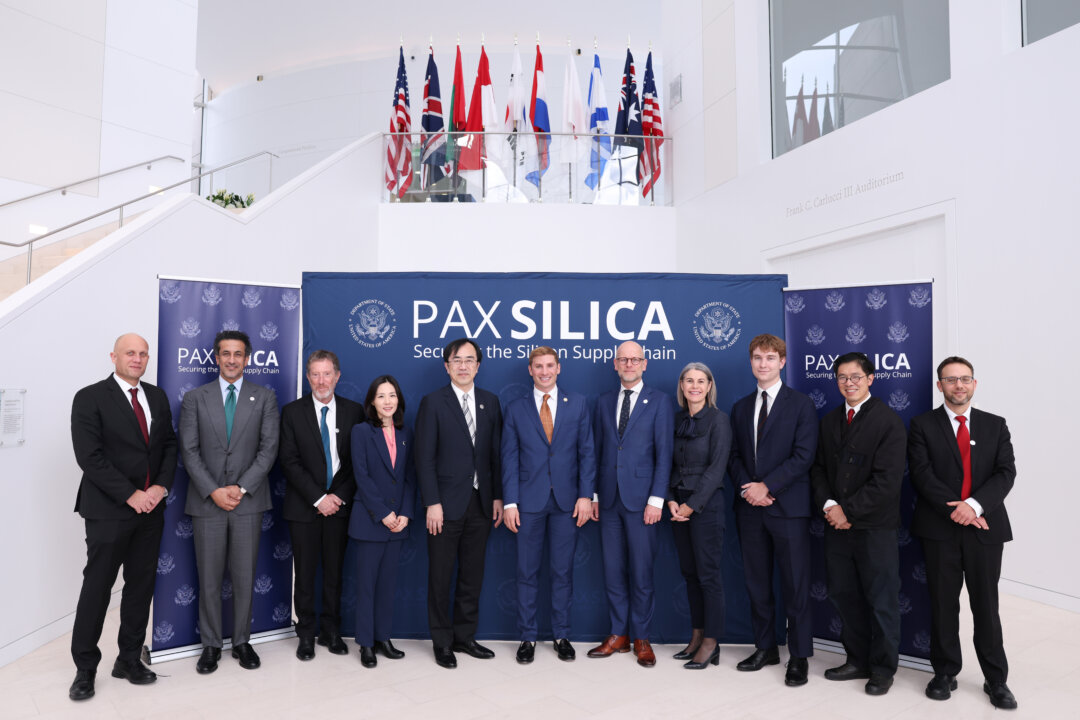
The United States, Australia, India, Israel, Japan, South Korea, Qatar, Singapore, the United Arab Emirates, and the United Kingdom signed the San Francisco Declaration on the Secure Foundations of Enduring Prosperity on Nov. 15, according to the State Department. The signing took place at the Pax Silica Founders Retreat, convened by Under Secretary of State for Economic Affairs Jacob Helberg.
The declaration names two things the signers will protect together: sensitive technologies, including the goods, software, materials, knowledge and components essential to AI supply chains; and critical infrastructure, including ports, transport, communications and logistics networks, the energy and information technology systems they run on, and the digital platforms that coordinate them.
The document does not name China. It defines sensitive technologies as those whose theft, illicit transfer, or acquisition by “hostile actors” would give them a meaningful military or intelligence advantage, or undue economic leverage over the signers.
Chinese Foreign Ministry spokeswoman Mao Ning, asked about the pact at a regular briefing on Nov. 16, said “China believes that artificial intelligence is a shared asset of humanity, and that there should be no drawing lines along ideological differences or forming exclusive groupings.” She said all parties should work together to develop and govern AI.
Asked whether China would raise the declaration when Chinese leader Xi Jinping meets President Donald Trump, Mao said only that “the two sides are in communication” about the meeting.
Five Working Groups
The signers of the U.S.-led pact agreed to set up working groups to put the declaration into practice. The State Department said five are proposed, covering pro-innovation policy, AI adoption in key sectors, supply chain cooperation, safe harbors and supply chain security hubs, and AI security and resilience.
The declaration also calls for coordinated efforts against economic coercion, supply chain disruptions, and nonmarket policies and practices. It stresses cooperation in enforcing each signer’s rules that shield sensitive technologies and critical infrastructure from “undue access, influence, or control.”
“No nation can secure the foundations of the SI era alone, and the prosperity SI makes possible will only be as durable as the supply chains and infrastructure beneath it,” the State Department said in a statement.
SI stands for super intelligence, the term the Trump administration began using in place of artificial intelligence under an executive order in September. A footnote in the declaration says some signers refer to it as artificial intelligence.
Ahead of Shenzhen
The State Department launched Pax Silica in December 2025 as its main effort on AI and supply chain security, covering semiconductors, critical minerals, energy, and advanced manufacturing. The department said the declaration moves the coalition into a new phase, less than a year after its launch.
On the same day the declaration was signed, the Commerce Department’s Bureau of Industry and Security released a rule aimed at stopping companies headquartered in China and other countries of concern from gaining access to advanced U.S. AI chips through data centers in third countries.
The moves come days before Trump travels to Shenzhen, China, for the Asia-Pacific Economic Cooperation leaders’ meeting, where he is expected to meet Xi. Beijing has also announced a summit there of the Chinese, Russian, and U.S. leaders, which Mao called the first face-to-face meeting of the three countries’ heads of state.
“We affirm that the safeguarding of these sensitive technologies and critical infrastructure is a shared endeavor; that the security of each participant is strengthened by the vigilance of all; and that we engage in this common cause as aligned partners—in defense of the prosperity and independence of our peoples,” the declaration reads.


West Bank: Four Palestinian villages targeted in suspected settler attacks — Newsguard
Burnt-out cars, damaged trucks and anti-Arab graffiti were discovered in four Palestinian...
Autopsy report reveals: Baltic Sea whale ‘Timmy’ starved to death — Newsguard
A tragic end to a media spectacle: New findings into the death...
Netanyahu rival condemns settler arson attacks on Palestinian villages in West Bank — Newsguard
Dozens of militant Israeli settlers raided communities on Saturday night, setting fire...
Taiwan Disputes Chinese Media Claim That Trump Opposes Taiwan Independence
Taiwan's Mainland Affairs Council Minister Chiu Chui-cheng speaks during an interview with...