Paid Content: Banks Are Preparing for the Day Your Money Gets Hacked
 William BrociusUpdated 3 days Ago3 Mins read

Sponsored Content
The banks are preparing for the day after a cyberattack. Are you?
History offers an unsettling reminder. In 1931, depositors crowded outside New York’s failed Bank of United States, demanding access to their savings. Today, a frozen banking app can raise the same fears without a queue at the teller’s window.
In October, Axios reported that executives at leading artificial intelligence (AI) companies were rehearsing scenarios for a catastrophic incident capable of disrupting banks, electricity, water, or internet access. Some unnamed industry insiders expected a major event within six to 12 months. That is a warning, not a certainty. But the people building these systems are preparing for the aftermath.
JPMorgan Chase CEO Jamie Dimon has warned that AI is magnifying cybersecurity risks. In May, G7 financial authorities simulated a major cross-border cyberattack. Banks and governments are rehearsing. Who is preparing the family whose savings suddenly disappear from a screen?
Consider Paraguay. On Nov. 3, regulators announced that they had placed Ueno Bank, a digital lender serving millions, into resolution the previous day after its solvency fell sharply below legal requirements. Customers confronted closed branches and disrupted access to their money. This was a banking failure, not a cyberattack.
The shock spread. People rushed to open accounts elsewhere to receive deposit-guarantee payments. On Nov. 4, Paraguay’s central bank reported that unusually heavy demand for new accounts was interrupting mobile banking at other institutions. It said ATMs and branches remained operational.
The central bank arranged initial payments through existing accounts at other banks, or new accounts for customers who had none. That meant access might return through a different institution and under a new process. For a family needing groceries or medication today, how reassuring is a promise that payment is coming?
Americans saw a different warning in September. First Citizens Bank acquired 138 BMO branches across 11 states. During the conversion, some Omaha customers reported zero-dollar balances and difficulty reaching their accounts. The bank said the technical problems were corrected. No cyberattack was established.
First Citizens also acquired substantial assets and deposits from the failed Silicon Valley Bank in 2023. At the time of Silicon Valley Bank’s collapse, Circle had $3.3 billion of reserves backing its USDC digital-dollar token there. That does not connect Omaha’s glitch to cryptocurrency, but it does illustrate how traditional deposits and the digital-asset economy already intersect.
Actual cyberattacks make the issue harder to dismiss. Binance said an Oct. 29 security incident affected approximately $6.34 billion in digital assets, with funds frozen or intercepted and losses to be covered by the exchange. On Nov. 4, French bank Crédit Mutuel Arkéa disclosed fraudulent transfers of approximately 100 million euros following a cyberattack; it said customer assets were unaffected and some transactions were temporarily suspended.
Even supermarket refrigeration systems have been attacked. Hackers manipulated connected cooling equipment across Europe, causing food spoilage and reported losses estimated in the millions of euros. You do not need to hack a bank account to damage someone’s finances.
At the same time, new forms of digital payment are arriving on ordinary phones. On Nov. 2, USDC became available through Samsung Wallet on eligible American Galaxy devices, with a potential reach of 82 million compatible phones. USDC is a stablecoin: a privately issued digital token designed to track one dollar. It is not a Federal Reserve digital currency, and Americans are not required to use it.
Yet the rules deserve attention. The GENIUS Act, effective Jan. 18, 2027, establishes a regulatory framework under which permitted stablecoin issuers must be able to comply with lawful orders to freeze, seize, or burn tokens. They will face anti-money-laundering obligations. Stablecoins are not FDIC-insured deposits. Issuers can earn income on reserve assets such as Treasury securities while holders receive no issuer-paid yield merely for holding the tokens.
Those controls have legitimate anti-crime purposes. But what happens when an automated system misreads an innocent transaction? An algorithm cannot shake your hand, look you in the eye, or understand why you urgently sent money to family overseas.
I am not claiming that banking failures are engineered to push people into digital money. My concern is what happens when access depends on systems you cannot control. Keep essential records offline. Know your bank’s withdrawal rules. Maintain more than one payment method and consider a reasonable, securely stored cash reserve.
The banks are preparing for the day after your money is hacked. If your access disappears, will it return on the same terms? Will you still be able to withdraw cash, or will recovery require a new digital account, another platform, or additional restrictions?
Banks are preparing. Governments are preparing. Financial markets are preparing. Are you?
Request your free copy of my new e-book, Before the Dollar Goes Digital: 7 Steps to Protect Your Money and Prepare for What Comes Next, by calling 866-487-9106 or visiting books.dedollarizenews.com/epoch.
By calling 866-487-9106 to request information, you authorize DeDollarize News or its affiliate Brighton Enterprises Inc. to contact you regarding your requested information. DeDollarize News and Brighton Enterprises Inc. are not financial, tax, or legal advisors. This material is for educational and informational purposes only and does not constitute investment, financial, tax, or legal advice. Consult qualified professionals regarding your individual circumstances.

Third-party advertisements and links to other sites where goods or services are advertised aren’t endorsements or recommendations by The Epoch Times of the third-party sites, goods, or services. The Epoch Times takes no responsibility for the content of the ads, promises made, or the quality/reliability of the products or services offered in all advertisements







Can You Retire With Too Much Money in Your 401(k)?
During your working years, one of your main goals may be to...
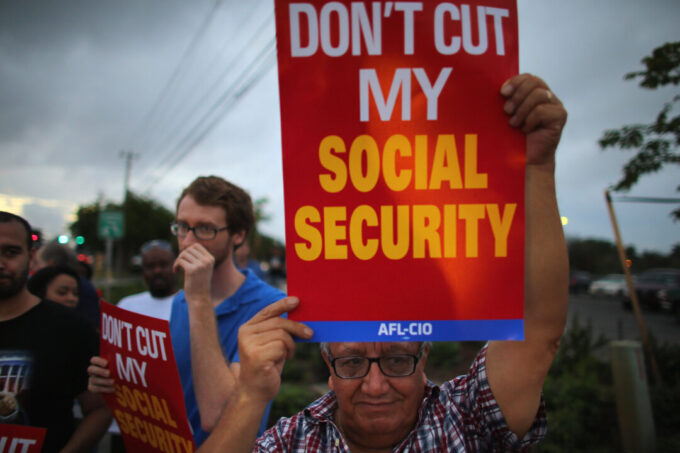
Epoch Readers Weigh In on How to Keep Social Security From Running Dry
Social Security’s trust fund could run out of reserves by 2032 without...

Gold Hits 14-Month Low
Gold prices hit the lowest level in more than 14 months amid...

Wall Street Review: AI Fears Trigger Worst Weekly Tech Sell-Off in More Than 6 Years
Anthropic’s blockbuster initial public offering (IPO) failed to revive investor enthusiasm for...