Doctors Implicated in Organ Harvesting Lead Transplant Programs in China: Report
 HeraklesUpdated 3 hours Ago3 Mins read
Chinese doctors who authored papers on organ harvesting from people before their death have remained professionally active with minimal consequences, a new report found.
Rather than facing backlash, many of the same physicians have gained prominence and lead transplant programs, with no evidence they renounced those practices, the report said.
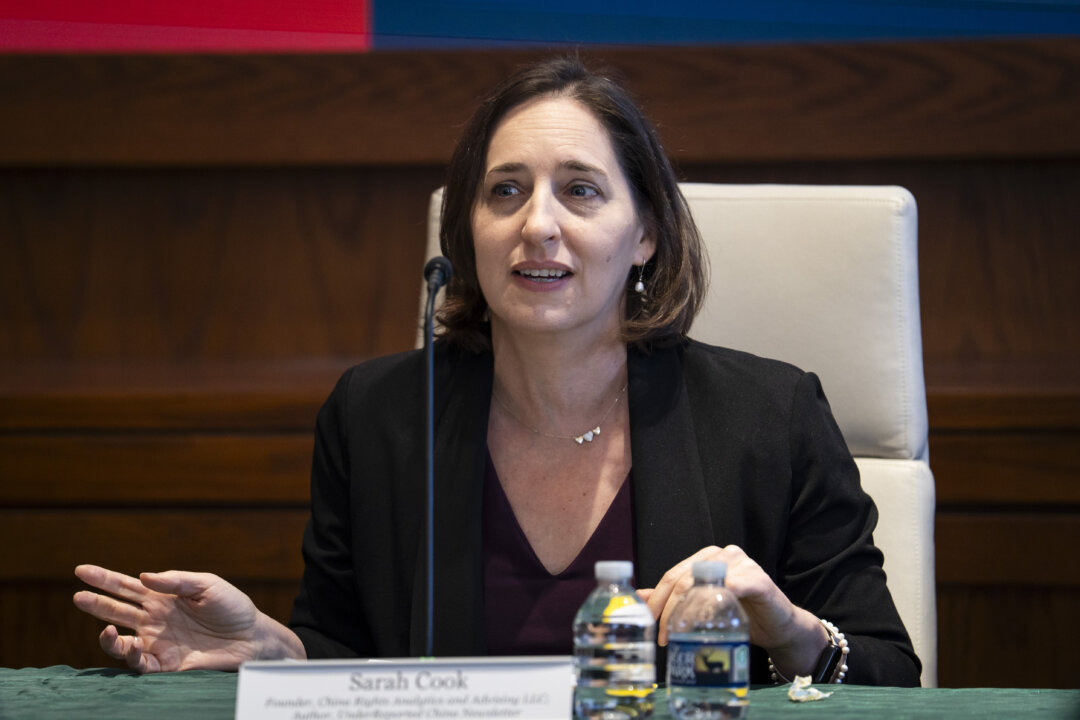
“They are current participants in a system that the international community is being asked to trust,” Sarah Cook, author and human rights researcher, wrote in the report.
The finding, and the number of such doctors involved, show “the unethical and abusive foundation that the entire transplant sector of China today is built upon,” she told The Epoch Times.
Published recently by International Coalition to End Transplant Abuse in China, an Australian charity dedicated to ending forced organ harvesting in China, the report followed up on a 2022 peer-reviewed medical study that first exposed the issue.
The 2022 study, titled “Execution by Organ Procurement,” identified dozens of Chinese clinical papers between 1980 and 2015 where doctors breached the dead donor rule, a foundational medical ethics norm that states doctors can only take organs upon establishing the donors’ death.
The dead donor rule is vital in “separating organ procurement from killing,” and the Chinese doctors “crossed that line,” Cook said.
“This is just such a huge no-no for a transplant doctor,” she said. “And they’re just blatantly violating it, paper after paper after paper.”
A total of 348 Chinese surgeons, nurses, anesthesiologists, and other medical staff were implicated. In a medical system with strong ethical safeguards, such a finding would trigger serious backlash, including the review of medical licenses, sanctions from professional societies, and investigations by government agencies. Instead, Cook wrote in her report, there was only institutional silence.

Advocates stage a dramatic reenactment in lab coats to raise awareness and demand an end to forced organ harvesting in China during a rally in Wellington, New Zealand, on July 21, 2026. Echo Wang/The Epoch Times
In her review, she found at least 100 of these authors across 16 provinces—half of China—who were professionally active at Chinese hospitals and medical institutions in the past six years.
“This is not a fringe problem at a small number of institutions that can be swept under the rug,” she stated.
While authorship doesn’t necessarily indicate participation in medical operations, it endorses the content, and “the timing of the procedures means they almost certainly also entailed physician participation in the execution of prisoners,” Cook said in the report.
She noted that of the original 348 authors, 53 appeared on two or more problematic papers, some on as many as six. Of those 53, 39 were found to have continued working in China’s medical system.
“You can’t say you didn’t know,” she said.

Doctors Against Forced Organ Harvesting hosts a film screening of its documentary “Silent Harvest: The Courage to Speak Up,” at the Senate Dirksen building in Washington on May 15, 2026. Madalina Kilroy/The Epoch Times
Three-quarters of the problematic papers referenced in the 2022 study were published after 1999, the year when the Chinese regime began an all-out campaign to eliminate Falun Gong, a spiritual practice that features teachings based on truthfulness, compassion, and forbearance, along with meditation exercises. Around 70–100 million Chinese were estimated to be practicing it when the persecution started.
The London-based China Tribunal, after a year-long investigation, concluded in 2019 that the Chinese regime had been forcibly harvesting organs from prisoners of conscience on a “significant scale,” with Falun Gong practitioners as a primary victim group.
Under international pressure, the Chinese regime said it would stop using executed prisoners’ organs starting from 2015 and source only from voluntary donations. But Cook wrote that reforms that “leave the same personnel in place, in the same institutions, and with the same lack of accountability” should not be taken at face value.
One of the named Chinese doctors is heart transplant surgeon Dong Nianguo, who has led several programs and departments at a top Chinese transplant hospital.
Dong, also a Chinese Communist Party member, was elected to the American Association for Thoracic Surgery in 2016 and, in 2024, hosted an annual international conference on cardiovascular and thoracic surgery that drew hundreds of overseas experts.
Another doctor, Hu Bin, now serves as department director in thoracic surgery, a graduate supervisor, and secretary of the thoracic surgery department’s Party branch.
Chinese authorities named him “one of 100 ‘outstanding’ CCP members from among health professionals in Beijing” in 2024, and he is a council member of a professional medical body in Beijing supposed to uphold medical standards that his own published work violates, the report noted.
“It just really shows the depth of the impunity,” said Cook. “There’s just been no accountability at all.”


French Left-Wing Protests Shrink but Violence Persists
PARIS—Turnout at France’s now-weekly far-left protests fell again on Nov. 21, although...

Day in Photos: Heavy Rains Flood Galapagos, Brazil Storm Damage, and Protest in Croatia
|November 21, 2026Updated:November 21, 2026A man sits with two dogs outside a...
RFK Jr. Calls Killing Prisoners for Organs an Atrocity as China Bill Awaits House Action
Health and Human Services Secretary Robert F. Kennedy Jr. has condemned the...
US Embassies Issue Demonstration Alerts in France, Belgium
U.S. embassies have issued alerts warning Americans of protests in France and...