Why Are Young Canadians Drinking Less?
 Paul Rowan BrianUpdated 11 hours Ago5 Mins read
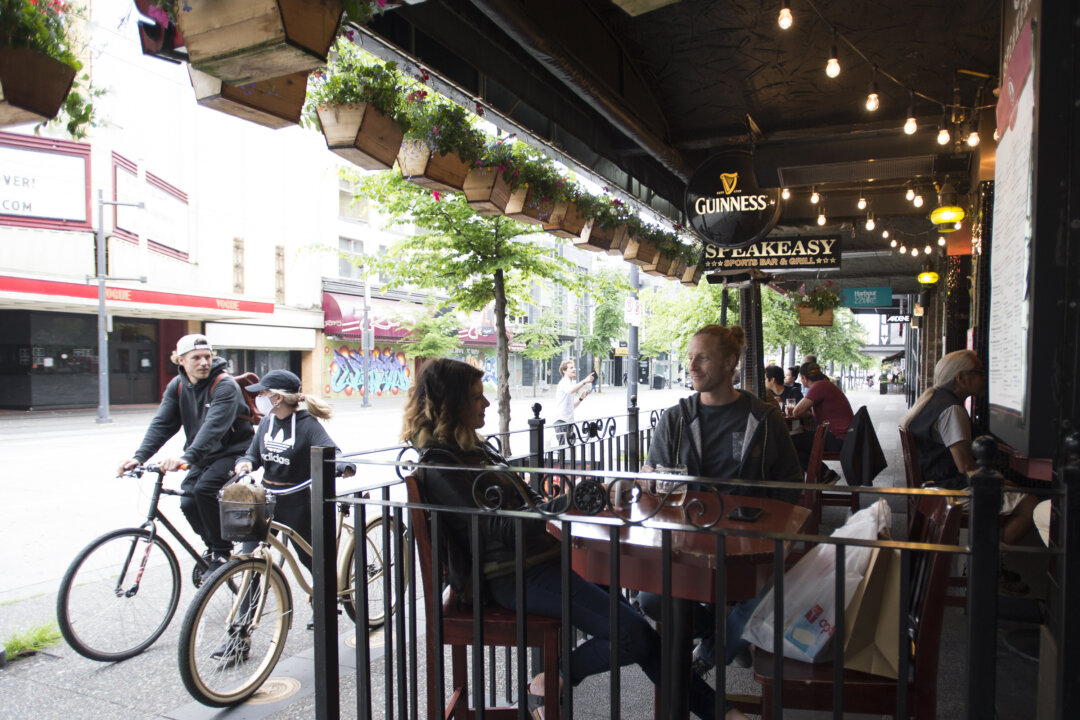
For a growing number of young Canadians, drinking alcohol is no longer the social ritual it was for earlier generations.
According to Statistics Canada, the proportion of men aged 18 to 34 who reported consuming no alcohol in the previous year doubled from 12 percent in 2015, to 24 percent in 2024.
The reasons behind the decline are less clear than the numbers. Researchers have observed similar trends in other developed countries and point to changing social habits, cultural changes, growing health concerns, cannabis use, and financial pressures as possible explanations.
The trend is also evident among teenagers. Statistics Canada found that the proportion of teenage boys who reported drinking no alcohol in the previous year rose from 55 percent in 2015 to 71 percent in 2024.
The decline was less pronounced among older Canadians.
Why the Change?
Statistics Canada told The Epoch Times that its data cannot establish why younger Canadians are drinking less.
“There are many possible explanations for this trend,” the agency wrote in a statement, adding that “it may reflect a change in attitudes and social norms around drinking, with greater awareness of the health effects of drinking and less social pressure to drink alcohol, especially for young people.”
The agency also cited increased cannabis use and demographic changes as possible explanations.
“The increased ethnocultural diversity of the population could mean that different cultural norms around alcohol consumption are becoming more prevalent in Canada,” the agency wrote, noting that some Canadians abstain for religious or cultural reasons.
Tim Stockwell, a University of Victoria professor emeritus of psychology and founding director of its Canadian Institute for Substance Use Research, said the decline in youth drinking extends well beyond Canada.
“The first time this was noticed about youth drinking declining was about 20-25 years ago, and it’s a phenomenon that’s been observed in about 30 economically developed countries worldwide,” he told The Epoch Times.

A woman leaves an LCBO store in Toronto on Aug. 20, 2026. The Canadian Press/Keito Newman
Stockwell cited the decline in face-to-face social interaction among young people as one of may possible explanations.
He said the decline in youth alcohol consumption has coincided with the rise of the internet, suggesting that reduced face-to-face socializing has also meant fewer opportunities for young people to drink, particularly in social settings where alcohol can serve as a “social lubricant.”
In addition, he noted that over the past two decades, young people have significantly reduced the time they spend interacting with others in person, increasingly favouring communication through digital devices.
“[For] the last 20 years, they’re spending less than half the time interacting with people face to face, as opposed to a device of some kind,” he said.
A June 2025 Statistics Canada report found that the proportion of Canadians aged 15 to 24 who spent time with friends on a given day fell from 72.4 percent in 1986 to 40.8 percent in 2022. Across all age groups, the proportion declined from 47.9 percent to 19.3 percent.
The figures show a decline in face-to-face socializing, although they don’t establish that spending less time with friends has caused young people to drink less.
Stockwell identified three other possible factors: growing concern about health and fitness, increased cannabis use, and financial pressures that make spending on alcohol less attractive.
Health
Stockwell said growing awareness of alcohol’s health risks may be contributing to the decline in drinking among young Canadians.
A 2023 Health Canada survey of 9,812 people found that 60 percent of respondents aged 16 to 19 believed consuming one or two standard alcoholic drinks a week increased the risk of heart disease and other health conditions.
The proportion was 51 percent among those aged 20 to 24, followed by 44 percent among those aged 25 to 49, and 41 percent among those 50 and older.
The World Health Organization classifies alcohol as a carcinogen and says drinking increases the risk of several types of cancer.
Stockwell also linked the trend to young people’s interest in fitness and wellness.
“If you’re concerned about your fitness and general alertness and ability to perform at a high level, then clearly alcohol isn’t something that’s going to help you,” he said.
People who temporarily stop drinking often report “feeling better, sleeping better” and “being more alert,” he added.

People jog in a park on a warm fall day in Montreal on Dec. 1, 2020. (The Canadian Press/Paul Chiasson)
Stockwell also called for greater public awareness of alcohol’s health risks, pointing to legislation introduced by Sen. Patrick Brazeau that would require alcoholic beverages to carry cancer warnings and drinking guidelines.
“I think there’s a consumer’s right to know,” Stockwell said.
Cannabis
Stockwell also suggested that some young people may be substituting cannabis for alcohol.
Cannabis consumption has increased in Canada since recreational use was legalized in 2018.
The proportion of Canadians reporting cannabis use in the previous year rose from just over 21 percent in 2017, to 29 percent in 2023, according to research published this year by the Canadian Centre on Substance Use and Addiction and University of Victoria researchers.
Statistics Canada has said it can’t determine whether Canadians are replacing alcohol with other substances. Its earlier research found that drinking alcohol weekly or daily while also smoking cannabis was the most common pattern among people who combined substances in 2020.
Finances
Stockwell said financial pressures may also be discouraging young Canadians from buying alcohol.
“We’ve got high inflation at the moment, and I think that’s huge,” he said.
Stockwell said alcohol is an expense consumers can cut when money is tight, unlike necessities such as food and housing.
“We have less disposable income, and for most of us, it’s a discretionary [expense],” he said. “It’s like a luxury commodity.”
He said alcohol consumption has historically fluctuated with economic conditions, rising during periods of prosperity and falling during downturns.
“When there’s been the financial crisis, consumption’s gone right down,” Stockwell said.
The Bank of Canada’s second-quarter 2026 Canadian Survey of Consumer Expectations found that high prices and economic uncertainty were prompting households to cut discretionary spending and seek cheaper essentials.
FP Canada’s 2026 Financial Stress Index found that 47 percent of Canadians aged 18 to 34 were stressed about having to hold back on major purchases.
Alcohol prices at restaurants and bars rose 3.5 percent in June 2026 from a year earlier, according to Statistics Canada.
Retail alcohol prices also rose, increasing 2 percent in March 2026 from a year earlier.
While recent financial pressures may be affecting alcohol purchases, youth drinking began to decline long before the inflation surge that followed the COVID-19 pandemic.
A Generational Shift
The longer-term figures suggest that the decline in drinking is more pronounced among younger Canadians, although changes are evident across age groups.
Among drinkers aged 18 to 34, 73 percent of men and 62 percent of women reported drinking at least once a month in 2024, down from 86 percent and 76 percent, respectively, in 2015.
The changes were smaller among older Canadians. Between 2015 and 2024, the proportion of men aged 35 to 64 who reported abstaining rose by six percentage points, compared with five points among women.
Among drinkers in that age group, the proportion consuming alcohol at least monthly fell from 87 percent to 81 percent for men and from 73 percent to 69 percent for women.
Drinking habits changed even less among Canadians aged 65 and older, with declines of one percentage point for men and two points for women over the same period.
Although fewer young Canadians are drinking, those who continue to drink are not necessarily consuming less on each occasion.
Statistics Canada found that rates of heavy drinking have remained relatively stable since declining during the COVID-19 pandemic. The agency defines heavy drinking as consuming at least four alcoholic drinks on one occasion for women or five for men, at least once a month over the previous 12 months.
In its April 9 report, Statistics Canada concluded that the decline among young Canadians appeared to be driven more by abstinence than by reduced consumption among those who drink.
The shift is also reflected in alcohol sales. In the fiscal year ending March 31, 2025, sales fell 1.6 percent in dollar value and 3 percent by volume despite higher prices, marking the fourth straight annual decline in sales volume.
Stockwell said the changing habits of younger Canadians could eventually affect alcohol consumption across the country.
“There’s been a fundamental shift,” he said, adding that “as that cohort and ones after it proceed in age, we’ll see the whole population drinking less.”







LIVE NOW: German Chancellor Merz, NATO Secretary General Rutte Speak to Reporters
German Chancellor Friedrich Merz and NATO Secretary General Mark Rutte speak to...

Ukraine Attacks Russian Warship in Libya
Ukraine attacked a Russian warship at Benghazi naval base in eastern Libya...

Tory MPs Call for Stronger Government Action After Attack on Falun Gong Practitioners Outside Toronto Chinese Consulate
Conservative MPs are calling for stronger measures against transnational repression after a...

Rinehart Opens 3rd Brisbane Veterans’ Complex Honouring Chinese-Australian Sniper
BRISBANE, Australia—Australia’s wealthiest person Gina Rinehart has officially opened another veterans’ housing...