Adam Pankratz: Mark Carney’s worthwhile plan for privatizing airports
 Carson JeremaUpdated 4 hours Ago3 Mins read

Article content
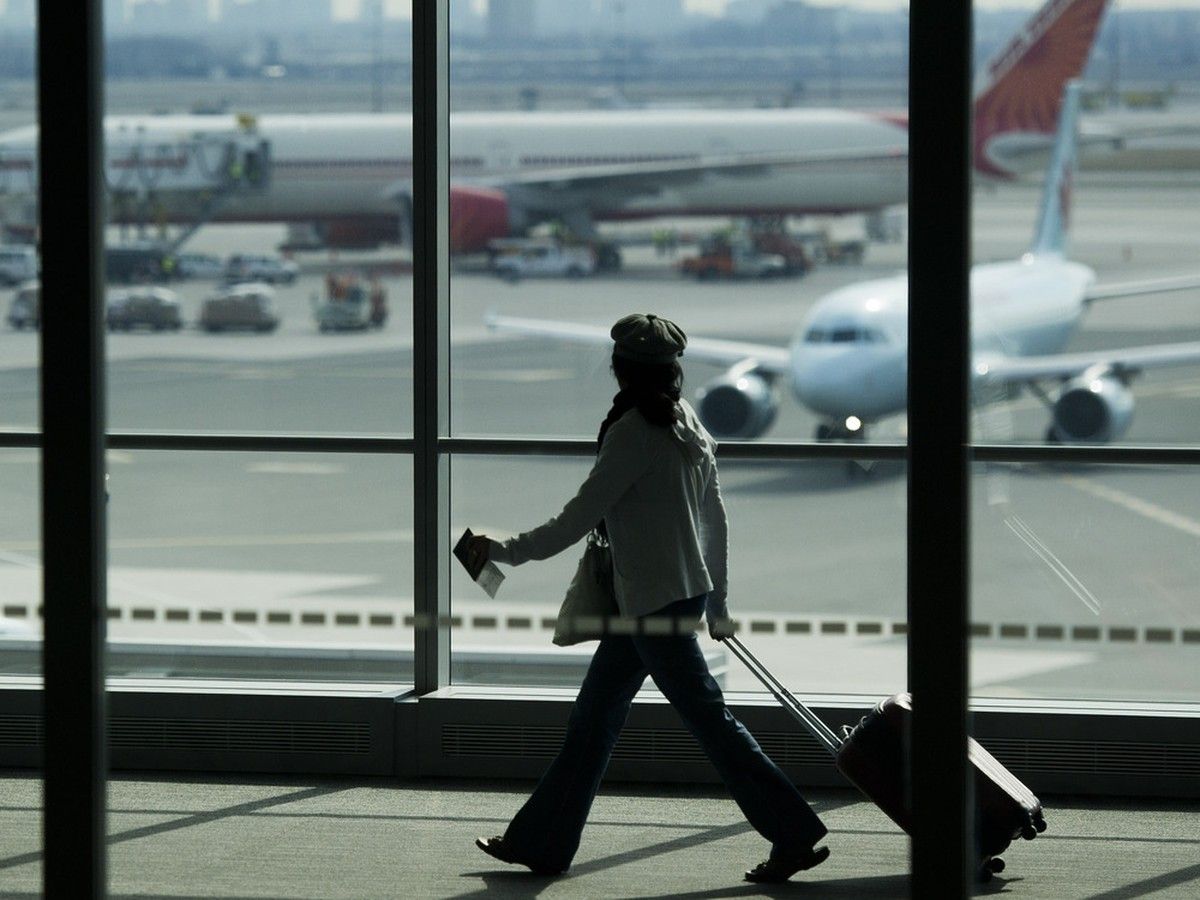
Mark Carney’s investment summit is a sign that perhaps, finally, after a decade of missed opportunities, our government understands that we have to get serious about our lack of productivity, per capita GDP growth and business investment. Among the Prime Minister’s remarks on Tuesday, we learned that the Liberals plan to privatize the operations of Canada’s four largest airports; operations at Toronto, Montreal, Calgary and Vancouver all up for grabs. With any luck, privatizing Canadian airports is a harbinger of further privatization efforts and efficiency in more areas of Canadian life.

THIS CONTENT IS RESERVED FOR SUBSCRIBERS
Enjoy the latest local, national and international news.
- Exclusive articles by Conrad Black, Barbara Kay and others. Plus, special edition NP Platformed and First Reading newsletters and virtual events.
- Unlimited online access to National Post.
- National Post ePaper, an electronic replica of the print edition to view on any device, share and comment on.
- Daily puzzles including the New York Times Crossword.
- Support local journalism.
SUBSCRIBE FOR MORE ARTICLES
Enjoy the latest local, national and international news.
- Exclusive articles by Conrad Black, Barbara Kay and others. Plus, special edition NP Platformed and First Reading newsletters and virtual events.
- Unlimited online access to National Post.
- National Post ePaper, an electronic replica of the print edition to view on any device, share and comment on.
- Daily puzzles including the New York Times Crossword.
- Support local journalism.
REGISTER / SIGN IN TO UNLOCK MORE ARTICLES
Create an account or sign in to continue with your reading experience.
- Access articles from across Canada with one account.
- Share your thoughts and join the conversation in the comments.
- Enjoy additional articles per month.
- Get email updates from your favourite authors.
THIS ARTICLE IS FREE TO READ REGISTER TO UNLOCK.
Create an account or sign in to continue with your reading experience.
- Access articles from across Canada with one account
- Share your thoughts and join the conversation in the comments
- Enjoy additional articles per month
- Get email updates from your favourite authors
Sign In or Create an Account
or
Article content
Article content
Not everyone is happy. Unions oppose the plan almost unanimously, with Unifor releasing a strongly worded statement. In the letter Unifor National President Lana Payne said “Airport workers know from experience that privatization comes at a cost to them and the travelling public and creates worse working conditions across the aviation industry.” Some commentators have also decried the announcement as something the Liberals “have no mandate” for. On some issues an electoral mandate may be appropriate (Associate membership with EU as one potential example) but not for airport privatization. Privatization should be welcomed, not feared, as it should benefit both passengers and the country.
Article content
Recommended Videos
Article content
By signing up you consent to receive the above newsletter from Postmedia Network Inc.
Article content
It is a well established fact that markets and private enterprise are far more efficient than government at running companies and organizations. The reason is simple: corporations and private companies have a clear profit incentive to which they respond. This benefits everyone and is the magic of the market at work. Adam Smith, the father of capitalism, recognized this in his totemic work, The Wealth of Nations back in 1776. “It is not,” Smith wrote, “from the benevolence of the butcher, the brewer or the baker that we expect our dinner but from their regard to their own interest. We address ourselves not to their humanity but to their self-love.” Smith’s recognition that by looking out for their own profit interests, individuals, without any formal coordination, would all move towards producing better products more efficiently and at a lower price. This is the famous invisible hand of the market which makes capitalist societies tick.
Article content
Article content
Yet somehow this observation, which has done more to produce wealth and prosperity than almost any other in the world, is offensive when applied to Canadian airports. Why? Canadian airport fees are high, and passengers are the victims. IATA, the International Air Transport Association, a trade association representing over 370 airlines worldwide, noted in 2024 that Canada’s air transport price competitiveness ranked 101st. On a typical round trip from Toronto to Montreal, Airport Improvement Fees of $70 were charged between the two airports. A domestic round trip in the United States, by contrast, had a passenger facility charge — the U.S. equivalent — of only approximately $12 Canadian dollars. While not all airports are the same — Vancouver is lower than Pearson’s $40 at $25 — the fact remains that Canadian airports are not as cost competitive as their United States counterparts.
Article content
Article content
Currently Canadian airports operate as non-profit entities, meaning any profit is reinvested in the airport, as there are no shareholders. In a private model the airport would have a profit mandate to create returns for investors. Critics will portray this as a downside, when is reality it is the profit incentive which drives efficiency and innovation.





EU Chief Calls for Bloc-Wide Social Media Restrictions for Under-18s
The European Union’s top official has proposed a social media ban for...

Tiny English Village Votes for Independence From UK Over Migrant Camp Plans
A tiny English village has voted to leave the United Kingdom in...
Carney Tells European Parliament Canada Welcomes ‘Associate Member’ Proposal
Canadian Prime Minister Mark Carney told the European Parliament on Sept. 17...

US Military Boards, Destroys Suspected Narco-Terrorist Refueling Boat in Pacific
U.S. forces have boarded and destroyed a vessel in the eastern Pacific...