
A global patchwork of rules is emerging over how AI-generated content must be identified, with Canada taking a lighter approach than several jurisdictions that have imposed binding labelling and disclosure requirements.
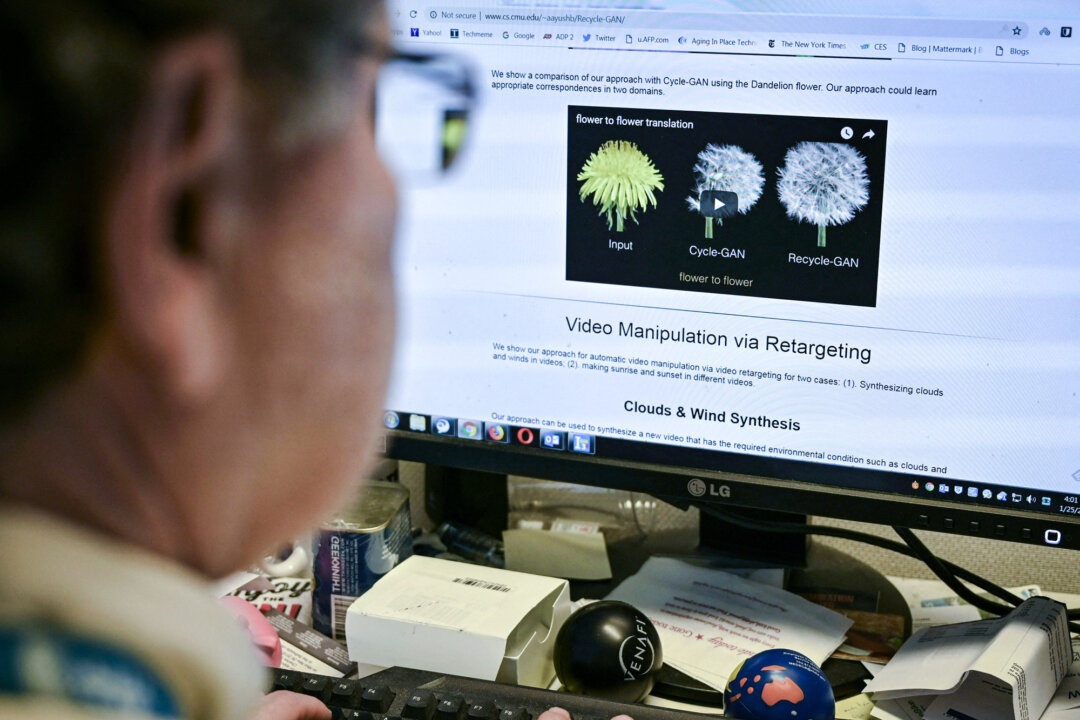
Generative AI tools have made convincing text, images, audio, and video cheap enough to produce at scale, prompting some governments to require disclosure rather than rely on the public’s ability to identify AI-generated material.
The approaches vary widely. The European Union, South Korea, India, and California have introduced requirements ranging from visible labels and machine-readable markers to mandatory disclosure when users are interacting with an AI system.
The latest took effect Aug. 2, when transparency provisions of the European Union’s AI Act, known as Article 50, became binding across the bloc.
Canada hasn’t introduced a comprehensive federal AI labelling or transparency law, relying instead on voluntary measures and laws targeting narrower uses of AI-generated content.
The push for greater transparency comes amid growing concern over the ability to distinguish AI-generated material from human-made content. In an April 2026 survey, two-thirds of Americans who consume online content said they had encountered AI-generated material they believed was false, misleading, or incorrect. At the same time, 35 percent said they could not reliably distinguish AI-generated from human-made content.
Under the EU rules, providers of generative AI tools are responsible for embedding labels, while companies and individuals deploying those tools to the public are responsible for disclosure.
A machine-readable watermarking requirement does not fully take effect until Dec. 2, 2026. Anthropic, maker of the Claude AI models, has signed the EU’s Code of Practice and says it will embed imperceptible watermarks and attach provenance metadata to generated files.
Approaches to Labelling
South Korea’s AI Basic Act came into force on Jan. 22, 2026. Its requirements vary according to the type of content: material that is obviously synthetic, such as cartoons or stylized art, requires only an invisible digital watermark, while realistic content that could be mistaken for genuine material must carry a visible label.
India’s Ministry of Electronics and Information Technology went further with amendments to its IT Rules, which took effect Feb. 20, 2026. Platforms must apply both a visible, persistent label, and machine-readable metadata to “synthetically generated information,” and proactively detect and label such content rather than simply respond to complaints.
California’s AI Transparency Act became operative Aug. 2, 2026. Its initial requirements apply mainly to large generative-AI providers, which must embed machine-readable provenance disclosures in covered image, video and audio outputs, offer users a visible-disclosure option, and provide a free public tool to determine whether content was generated or altered by their systems.
Disclosure in Conversation
Transparency rules can also require disclosure when people interact directly with AI systems.
The EU requires AI systems intended to interact directly with people to disclose their artificial nature. South Korea requires operators of generative AI and so-called “high-impact” AI systems to notify users in advance that a product or service uses AI.
Canada has no equivalent binding federal requirement. Its voluntary Code of Conduct calls on companies to ensure systems “that could be mistaken for humans” are clearly identified as AI. The code, adopted in 2023, also includes a voluntary commitment to watermark content produced by advanced generative AI systems.
Targeted Rules in Canada
Canada’s most concrete AI-related legislation so far has been aimed narrowly at elections, and is about to be tested.
Quebec’s Bill 24 protects individuals against the deceptive or fraudulent use of their identity or image through AI. It took effect June 12, 2026, ahead of the province’s general election in October.
Federally, Bill C-25, the Strong and Free Elections Act, received royal assent on June 18. It bans the creation or distribution of ‘deepfakes’ of political figures—including candidates, party leaders and the chief electoral officer—when there is intent to mislead voters, with an exception for parody and satire.
The EU takes a broader approach to deepfakes, requiring disclosure that content has been artificially generated or manipulated regardless of whether there is intent to mislead.
Enforcement
The differences between these international approaches are most evident in how they respond to non-compliance.
The EU has some of the largest penalties, with fines of up to 15 million euros (CA$24 million), or 3 percent of a company’s global annual turnover, whichever is higher.
India requires platforms to remove certain unlawful synthetic content within three hours of being notified.
South Korea has taken a less punitive approach. Fines under its law are largely deferred during a one-year grace period, except in cases involving serious harm. Penalties are capped at roughly 30 million won (about CA$30,000) during the first year, with a binding penalty structure taking effect after the grace period.
Canada has no comparable enforcement regime for AI labelling. The proposed Artificial Intelligence and Data Act, which would have created Canada’s first binding, general-purpose AI law, died when Parliament was prorogued in January 2025 and has not been revived.
The debate over AI transparency also raises questions about how governments define the content subject to disclosure requirements.
Critics, including free-speech advocates who have challenged similar proposals in the United States such as the proposed NO FAKES Act, warn that government definitions of what counts as “AI-generated” or “deceptive” can edge toward a licensing regime for speech.
Canada’s lighter federal approach may reduce some of those risks, but it also leaves the country without a comprehensive federal framework to help people determine whether online content was created by humans, generated by AI, or altered using AI. Existing election, consumer-protection, privacy, and sector-specific rules address only narrower circumstances.