Alberta Legislation Could Allow Creation of Crown Entity for Natural Gas Transmission
 Jason G. AntonioUpdated 2 days Ago3 Mins read
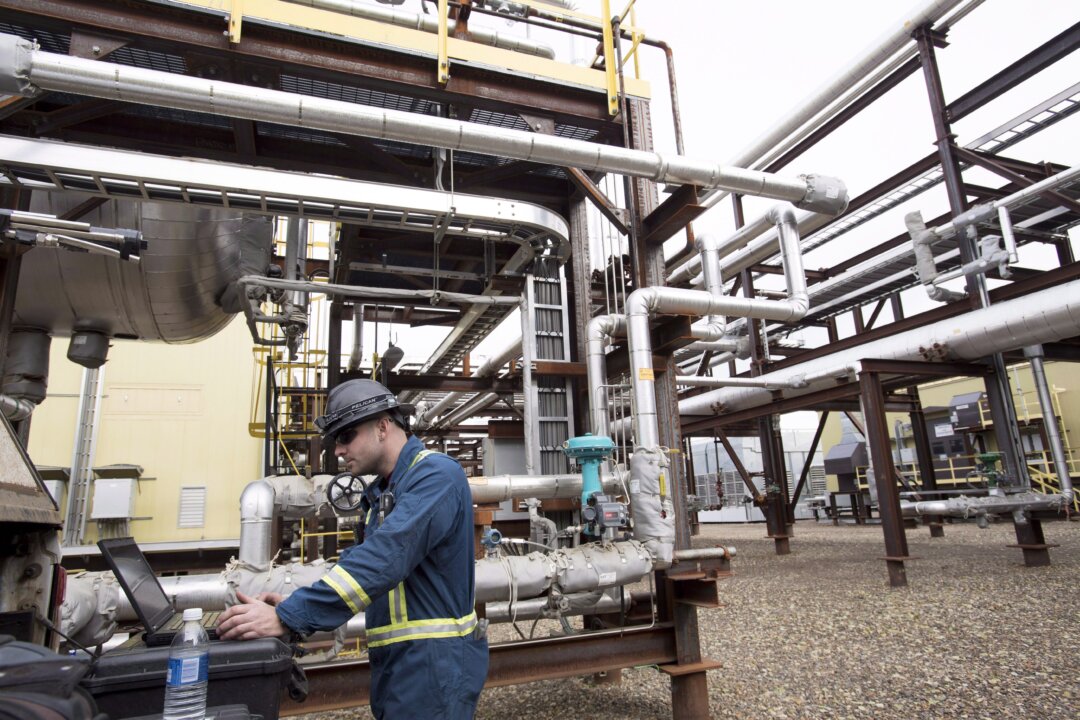
The Alberta government has introduced legislation aimed at expanding the province’s natural gas transmission infrastructure, including provisions to establish a Crown entity as a “last resort” if the private sector can’t provide enough pipeline capacity.
Energy and Minerals Minister Brian Jean introduced the Natural Gas Infrastructure Act on Nov. 23. The government said the legislation would establish a framework for planning and supporting the expansion of natural gas infrastructure as production and demand increase.
“Natural gas is fundamental to Alberta’s economy,” the government said in a press release. “It supports established industries and emerging opportunities, including oil sands growth, electricity generation, petrochemicals, hydrogen, liquefied natural gas exports, and data centres.”
The proposed framework would build on Alberta’s existing regulatory system by identifying future demand, market access opportunities, infrastructure needs, and regional priorities to inform regulatory decisions, the province said.
The privately owned Nova Gas Transmission Line (NGTL) system, Alberta’s primary transmission system, was at full capacity through 2029, with “uncertainty past 2030,” the province said.
The government said Alberta’s proven and probable gas reserves are estimated at 144 trillion cubic feet. The province produced 11.3 billion cubic feet per day of natural gas in 2025—about 60 percent of Canada’s total annual production—and exported roughly 4.5 billion cubic feet per day to the United States.
The province said improved transmission within Alberta would also help export opportunities to global markets that require the province’s “reliable and responsibly produced natural gas products.”
The legislation would allow the province to establish a Crown corporation to participate in natural gas transmission if the private sector could not meet demand, although the government said this would “occur as a last resort.”
Experts Determine Need
Asked during a news conference what conditions would prompt the government to establish or designate a planning authority or create a transmission Crown corporation, Jean said experts would examine the existing system and determine what was needed to remain competitive.
He said this would help the province make better use of its current infrastructure and natural gas while working with partners to “take advantage of what Alberta really is, which is an energy superpower in the waiting.”
Jean said the proposed planning entity would not necessarily be a Crown corporation, even though the legislation would allow the province to create one.
“We’re not going to restrict our hands on what is or is not the best solution going forward. We don’t know if that’s the best solution,” Jean added. “If it is, we will do that.”
The minister said the legislation would allow the government to designate critical natural gas infrastructure and appoint an authority responsible for provincewide planning, although he provided no timeline for establishing that entity.
He said the bill did not approve specific projects or commit public funding, and that any significant future provincial investments would require separate reviews and approvals. Infrastructure projects would also remain subject to existing regulatory, environmental, and Indigenous consultation requirements.
Doubling NG Production
Jean said the government was encouraged by TC Energy’s recent announcement that it planned to expand or build a new natural gas pipeline in Alberta.
However, he said Premier Danielle Smith had tasked him with doubling the province’s oil production, which he said would also require doubling natural gas production.
“It’s exciting times, and we’re hoping that TCE and our other partners … will work with us to make things better for Albertans, and I think they will,” Jean added.
Alberta has said it wants to double oil production to 8 million barrels per day by 2035, up from 5 million barrels today. The government estimated increased production could generate $205 billion in additional revenue by 2040 and more than $1.3 trillion by 2060.
Natural Gas Prices
When asked about potential legal challenges from TC Energy and higher utility costs for Albertans—concerns reportedly identified in a leaked September cabinet document—Jean said he hoped to continue working with the company and believed increasing the availability of natural gas would help ensure affordability.
However, he didn’t identify specific measures to protect consumers from potential utility cost increases.
Jean also acknowledged that insufficient transmission capacity partly contributed to depressed natural gas prices in Alberta, although other factors included constraints within collection and distribution systems and along the Alberta-Saskatchewan border.
He added that the province would work with Ottawa and other jurisdictions to address those issues while continuing to consult with industry stakeholders, including TC Energy and ATCO.
NDP MLA and energy and minerals critic Nagwan Al-Guneid said in a Nov. 23 statement that establishing a Crown corporation would effectively be the same as “nationalizing” Alberta’s natural gas pipeline industry and expose taxpayers to financial and legal risks.
“If there was a strong business case for these projects, companies would be lining up to build them,” she said.
NDP MLA and utilities critic Kathleen Ganley said the legislation could increase energy costs for Albertans already struggling to pay their utility bills while supporting the development of AI data centres.







Taiwan Votes in Local Elections as Dozens of Chinese Warplanes Spotted Near Island
A young voter holds folded ballots while exiting a curtained voting booth...
US Disables Cargo Ship Attempting to Run Blockade in Gulf of Oman: CENTCOM
A projectile is headed to impact a vessel, after its crew attempted...

Premiers Moe and Doerkson Urge Alberta’s UCP to Stay United at Annual Meeting
CALGARY—Saskatchewan Premier Scott Moe and B.C. Premier Lorne Doerkson urged members of...

Italy Chastises Ukraine for Strike on Russian Warship at Libyan Naval Base
Italian Prime Minister Giorgia Meloni reprimanded Ukraine over its destruction of a...