Anthony Furey: Is Becoming an EU Associate Member Wise Given the State of the European Economy?
 Anthony FureyUpdated 2 hours Ago3 Mins read
Commentary
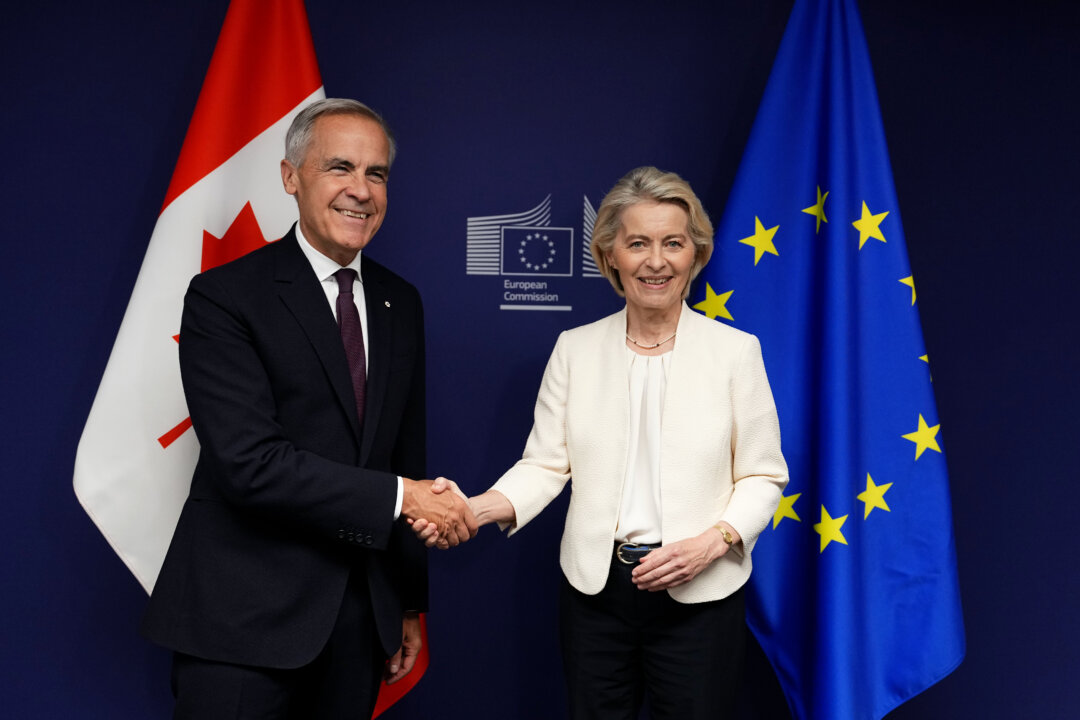
What should be Canada’s relationship with the European Union? That’s a question many Canadians are now discussing after European Commission President Ursula von der Leyen recently said she wants Canada to be an “associate member,” and Prime Minister Mark Carney welcomed the proposal, saying he is seeking a “unique alliance.”
The issue will be formally presented to the nation in a little over a month. At the end of October, the two-day Canada-EU Summit will be convened in Montreal, where European politicians and bureaucrats will gather to discuss further ties between their countries and Canada.
This is when it’s expected the details will be hammered out about what exactly it will mean for Canada to join the political and economic union of 27 countries. We will then have an opportunity to weigh the pros and cons and decide whether it’s something worth pursuing.
Right now, the discussion is a conceptual one. A lot of Canadians are frustrated with Washington for implementing tariffs against Canada and for taunting us about becoming the 51st state.
It’s in this atmosphere that some people are excited about the prospects of drifting away from the United States and into the arms of Europe.
We should be clear-eyed about what this would actually mean, though. Canada shouldn’t join the European Union to spite the White House. We should forge deeper ties if we closely evaluate it and believe it’s genuinely good for us.
“Let me say plainly what Canada proposes,” Prime Minister Mark Carney said in a speech to the European Union parliament last week. “Canada and Europe should secure our strategic autonomy through deep cooperation in the full range of strategic capabilities, including critical minerals, defence industrial capacity, AI and compute, energy security, space, and payments.”
“We should move toward seamless, digital trade in non-agricultural goods and a wide range of services,” he continued. “We should deepen our people-to-people ties, allowing our youth to live, work and study where they want on either side of the Atlantic.”
These are the broad strokes of what might constitute being an “associate member” of the EU—a phrase used by von der Leyen as she floated the idea with her EU colleagues.
The most relatable and romantic part is giving youth the opportunity to move seamlessly across the Atlantic. The trip across Europe has long been a rite of passage for many young Canadians, whether it be a semester abroad, a gap year or—in my case—a brief time spent residing in the iconic Shakespeare & Co bookstore on the banks of the river Seine that provides free lodging for young writers.
The rest of it though should give us pause. The “deep” cooperation Carney touts is in the most forward-looking and fast-growing sectors of the economy, such as AI, minerals, and defence systems.
It makes sense to broaden our market access, trade with as many willing partners as possible, and maintain good relations with all our allies. We can also do business with EU states while still doing business with America and its leading companies.
But we shouldn’t kid ourselves about the state of the European economy. It’s in rough shape. The various economies of Europe are currently projected to grow at around 1 percent per year while the American growth rate is around 2.5 percent.
While that may sound like a minor difference, it adds up over the years. According to the World Bank, American GDP rose almost 90 percent over the past 15 years, while EU GDP only rose 15 percent. This means life, in economic terms, has been charging ahead in America but stagnating in Europe.
Carney went on in his speech to say Canada and the EU could “pool new sovereign compute capacity” (i.e., share AI powers) and create “an integrated market for financial services to broaden choice and reduce costs for our citizens.”
If AI and financial services are the sectors we want to focus on to benefit our economy, the world leader for both those categories is conveniently located just south of our border. If we ramp up cooperation with the Americans in these sectors, we’ll likely yield far stronger results.
We can of course dance with both partners. And we no doubt will, to some degree. But drifting away from cooperating with the Americans in these growing sectors is neither beneficial nor practical.
Canadian AI companies and financial services firms are far more integrated into the U.S. market than the EU. For example, TD Bank has aggressively expanded into America in recent years such that 50 percent of its total reported revenue now comes from south of the border.
This brings to mind a comment a friend of mine who owns a cross-border manufacturing firm always makes: It’s far easier to keep a current customer happy than to lose them and source a new one.
We’ll learn in the lead-up to October’s summit what label will be put on Canada’s proposed relationship with the EU, whether it be “associate member” or something else. But the name doesn’t matter. It’s the terms of the deal that should draw our focus.
If we can develop more meaningful relations with EU member states that benefit Canada’s economy without giving up too much in return, then Carney will have Canadians’ blessing to proceed.






Millions of Canadians got their news from Front Page Challenge
The cast of Front Page Challenge with Gordon Sinclair, Fred Davis (standing),...
Randall Denley: Ontario’s fiscal mess isn’t just bad — it’s getting worse
On the deficit, even the Ford government’s own numbers aren’t good. Ontario’s...
Canada’s population growth continues to slow, consistent with lowered immigration targets
Canada has had its lowest year-over year population growth since World War...

‘There will be surprises’: Netanyahu departs for U.S. ahead of UN General Assembly speech
Israeli Prime Minister Benjamin Netanyahu departed for the U.N. General Assembly in...