Beijing Corners Taiwan in Pacific Despite Economic Pain at Home: Analysts
 Jarvis LimUpdated 15 hours Ago4 Mins read
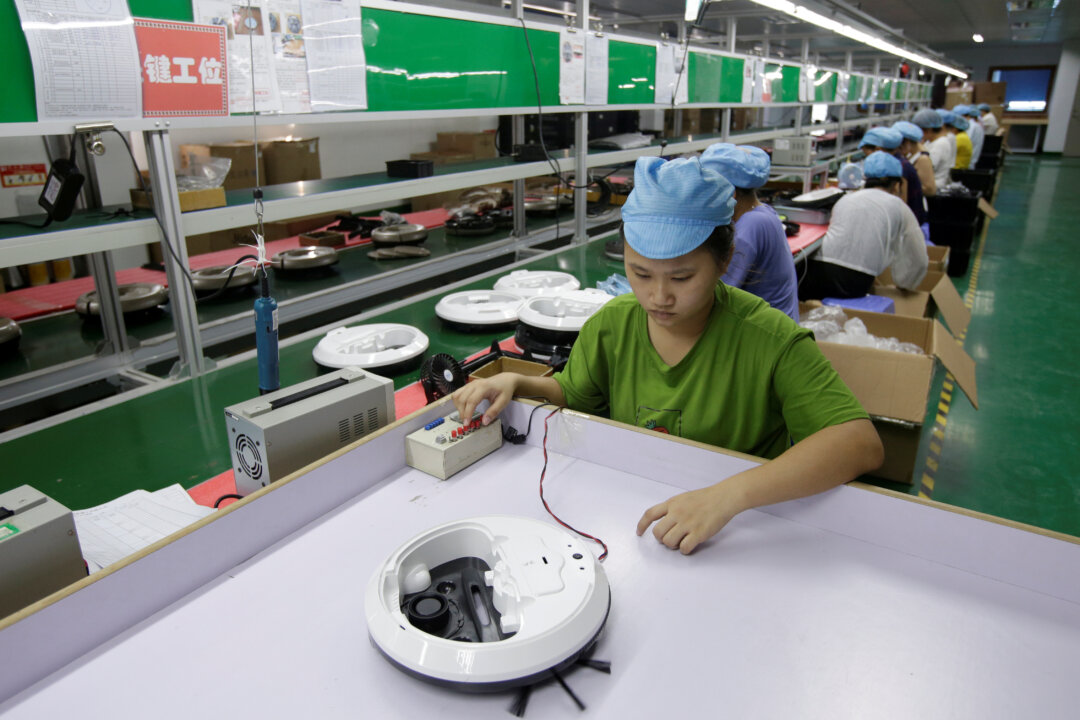
The Chinese regime will keep pouring money into Pacific nations to lure them away from Taiwan, even as its own growth weakens, analysts say.
Taiwan’s Ministry of Foreign Affairs said on Nov. 12 that the one-week deadline Papua New Guinea set for Taipei’s diplomats to leave the country could be linked to Beijing’s hint at natural gas purchase from Port Moresby, Taiwan’s national media outlet Central News Agency reported.
On Nov. 6, Taipei
said
it would proactively shut down the office after Port Moresby ordered it to cease operations in July and promised a grace period of about a year.
On Nov. 9, the Chinese regime welcomed Papua New Guinea’s decision and signaled it would buy more of the Pacific nation’s liquefied natural gas, according to China Daily, the mouthpiece of the Chinese Communist Party (CCP).
“China likely bribed certain key officials to make the decision to close the local Taiwan representative office,” Grant Newsham, a retired U.S. Marine officer and former U.S. diplomat, told The Epoch Times.
“This is common Chinese practice throughout the Pacific—bribing and co-opting local leaders and elites in government, business, and all parts of society.”
Newsham said Beijing will “go to great lengths to bully Taiwan” and increase its isolation, regardless of cost.
“China’s pettiness and hatred of free, democratic Taiwan—as a constant embarrassment to the PRC’s totalitarian dictatorship—is unlimited,” he said, using the acronym for China’s official name, the People’s Republic of China.
“China’s economy is weak in many aspects. But Beijing always finds the money for its Pacific Islands influence and subversion efforts.”
Data released by China’s National Bureau of Statistics on Oct. 31 showed the official manufacturing purchasing managers’ index, a monthly gauge of factory activity,
fell
to 49.3 in October from 50.1 in September, back below the 50 mark that separates growth from contraction.
The non-manufacturing purchasing managers’ index, which covers services and construction, slid from 50.2 to 49.7.
Taiwan is a self-governed democracy that the CCP has never controlled but has vowed to
annex
by force.
Henryk Szadziewski, an affiliate at the University of Hawaii at Manoa’s Center for Pacific Islands Studies, said the offer to buy more natural gas aims to cast the regime as a “reliable partner” and score another point in its rivalry with Taiwan.
“However, this is more about narrative projection than any economic commitment from Beijing,” Szadziewski told The Epoch Times.
Taipei’s office in Papua New Guinea lacks official status, as it has formal ties with only 12 countries.
That number has shrunk in recent years after three Pacific nations switched diplomatic recognition to Beijing. Nauru
made
the move in January 2024, and the Solomon Islands and Kiribati
did
so in September 2019.
‘Strategic Corruption’
Szadziewski said buying more energy from Papua New Guinea could deepen the regime’s foothold in the Pacific.
“The optics of China having the back of Pacific nations when market access elsewhere closes is one way Beijing could boost its influence,” he said.
“Like most states, PNG [Papua New Guinea] and other Pacific Island countries are pragmatic in their dealing with external powers.”

An official gestures as China’s President Xi Jinping (L) and Papua New Guinea’s Governor General Bob Dadae pose for photos before a meeting at Parliament House in Port Moresby on Nov. 16, 2018, ahead of the Asia-Pacific Economic Cooperation (APEC) Summit. Mark Schiefelbein/AFP/Getty Images
Offering a contrasting view, Newsham said the natural gas offer would not expand Beijing’s sway in the South Pacific “in any lasting way.”
“China reminded Pacific Islanders a few months ago of its true nature when it launched a missile unannounced into the heart of the Pacific,” Newsham said.
The People’s Liberation Army Navy
fired
a long-range missile from a submarine into the South Pacific on July 6, a move condemned by the United States, Japan, Australia, New Zealand, and Taiwan.
Newsham said Washington, Canberra, Taipei, and others must collectively expose China’s “strategic corruption,” through which it buys influence.
“Chinese corruption cannot withstand public exposure,” he said.
“Canberra and Washington in particular need to take the initiative on this front.”
Squeezing Out Taiwan
Szadziewski said economic incentives will remain Beijing’s main lever to pry the region away from Taiwan.
“Undermining the attachment of Taiwan’s remaining allies in the region to Taipei remains a core objective,” he said.
Newsham agreed, saying Beijing will keep offering bribes and illicit flattery to local leaders among Taiwan’s Pacific partners, as it has long done in the Marshall Islands.
“It also uses tourism as a weapon by getting a country used to having many Chinese tourists—and then turning off the tap as a way of coercing the local government,” he said.
Newsham said Beijing’s pressure does not always pay off, as Palau, another of Taiwan’s allies, has resisted it more than once.
In an exclusive interview with The Epoch Times in August, Palauan President Surangel Whipps Jr.
said
he had rebuffed a Chinese envoy’s demand at a Fiji meeting ending July 1 to bar Taiwan from the Pacific Islands Forum his country was set to host.
The diplomat warned of retaliation, and on Aug. 19, China’s Ministry of Culture and Tourism issued a travel warning for Palau.

Palauan President Surangel Whipps Jr. (L) and Taiwanese Vice President Hsiao Bi-khim (R) hold a bilateral meeting in the Palauan capital of Ngerulmud on June 8, 2026. Official Photo by Wang Yu Ching/Office of the Taiwan President
Beijing applied similar pressure in November 2017 by barring Chinese travel agencies from selling package tours to Palau, a move widely seen as punishment for the Pacific nation’s diplomatic ties with Taipei.
Still, Newsham said the regime will keep courting South Pacific nations with offers of roads, wharves, and public buildings, as well as Chinese-supplied communications networks.
“All Pacific nations are Chinese targets, even if they don’t recognize Taiwan,” he said.



Former Hubei Party Chief Wang Zhonglin Under Investigation, Family Members Also Probed
Former Hubei Province Party chief Wang Zhonglin is under investigation for suspected...

Is Autumn Glow the Next Winx? Inside the Making of a Racing Superstar
Autumn Glow now has six Group 1 victories—and she is fast becoming...
Womens’ Rights Advocate to Run for One Nation in NSW
Former Liberal candidate for Warringah Katherine Deves waits for Prime Minister Scott...
MP Marks ‘Positive Moment’ in Recovery Following Car Ramming Attack Outside Office
Australian independent Member of Parliament Helen Haines speaks to journalists in the...