Article content
This legal saga, which embroiled a university bureaucracy and now hangs on a decision in court, is one that should serve as a lesson — and a warning — to all Canadians interested in free speech. It’s the story of one student, but it could be any student at any North American university. Tim Haggstrom could be your son. His experience is a cautionary tale to anyone who challenges the system, whose underlying message is very clear: Don’t try.

THIS CONTENT IS RESERVED FOR SUBSCRIBERS
Enjoy the latest local, national and international news.
- Exclusive articles by Conrad Black, Barbara Kay and others. Plus, special edition NP Platformed and First Reading newsletters and virtual events.
- Unlimited online access to National Post.
- National Post ePaper, an electronic replica of the print edition to view on any device, share and comment on.
- Daily puzzles including the New York Times Crossword.
- Support local journalism.
SUBSCRIBE FOR MORE ARTICLES
Enjoy the latest local, national and international news.
- Exclusive articles by Conrad Black, Barbara Kay and others. Plus, special edition NP Platformed and First Reading newsletters and virtual events.
- Unlimited online access to National Post.
- National Post ePaper, an electronic replica of the print edition to view on any device, share and comment on.
- Daily puzzles including the New York Times Crossword.
- Support local journalism.
REGISTER / SIGN IN TO UNLOCK MORE ARTICLES
Create an account or sign in to continue with your reading experience.
- Access articles from across Canada with one account.
- Share your thoughts and join the conversation in the comments.
- Enjoy additional articles per month.
- Get email updates from your favourite authors.
THIS ARTICLE IS FREE TO READ REGISTER TO UNLOCK.
Create an account or sign in to continue with your reading experience.
- Access articles from across Canada with one account
- Share your thoughts and join the conversation in the comments
- Enjoy additional articles per month
- Get email updates from your favourite authors
Sign In or Create an Account
or
Article content
Article content
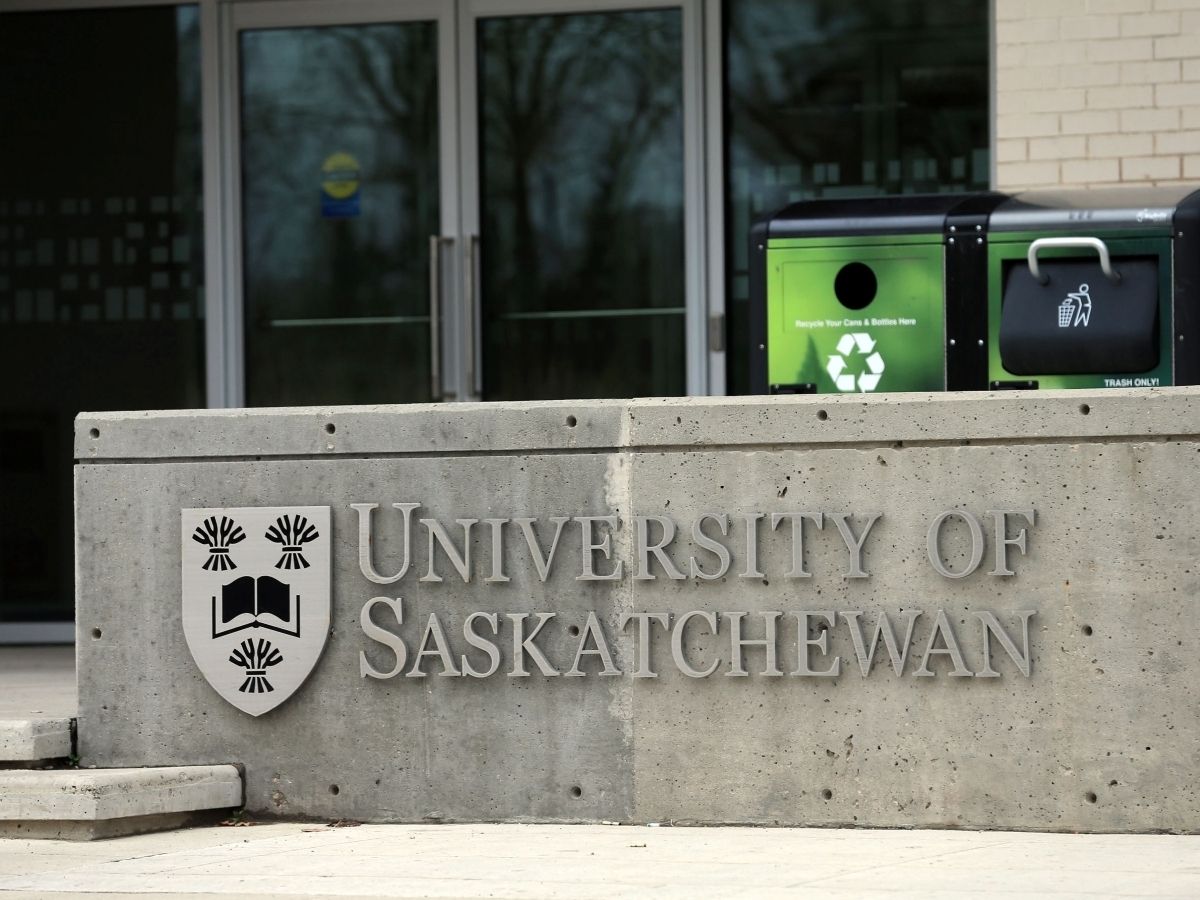
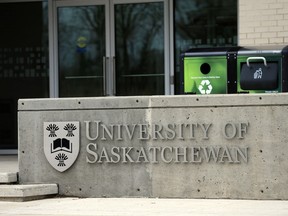
In the fall of 2023, Haggstrom, then a law student, was formally censured by the University of Saskatchewan for “harassment,” after he challenged critical race theory in open letters to faculty and peers. He appealed the administrative decision and lost. He then filed a judicial review and constitutional challenge with the Saskatchewan Court of King’s Bench. In May, the court heard the university’s motion to dismiss his case. A decision will be released any day.
Article content
Recommended Videos
Article content
By signing up you consent to receive the above newsletter from Postmedia Network Inc.
Article content
Haggstrom was in his third and final year when, following an academic exchange, he returned to the University of Saskatchewan to hear rumblings of a great controversy. Law students had learned that up to one-third of their peers were being allotted extra time on exams.
Article content
The university’s official position, including when I attended back in the 1990s, has always been that extra time levels the playing field. Keep in mind, however, that many law exams account for 100 per cent of a student’s grade. Timing, and properly managing it, is critical to this high-pressure, competitive exercise.
Article content
In this case, concerned students asked the Law Students’ Association (LSA) to broach the issue. There was no substantial discussion at the next meeting, and the agenda item was simply listed in the minutes on the association’s Facebook page.
Article content
Article content
It was then that other students, who had been silent during the meeting, took to the comments section, saying that it was racist to even raise the issue of extra time because it’s commonly allocated to students who self-declare as Indigenous.
Article content
Haggstrom was then-student president of the Runnymede Society, whose purpose — ironically — is to foster debate. He reached out to peers. “There appeared to be no interest in resolving misunderstandings,” he said in a phone interview this month.
Article content
“Many interpreted the situation through the prism of ‘race scholarship’ and critical race theory (CRT). According to CRT, you can’t question a claim of subjective harm made by a member of a racialized group.”
Article content
Quoting John Stuart Mill, John Locke and Nelson Mandela, Haggstrom penned a letter to peers, writing that “courageous discourse does not run from irritation or offence.” At the next Law Students’ Association meeting, he asked to read the letter aloud, then posted it on the association’s Facebook page.
Article content
It was quickly removed. And that was the end of the discourse.
Article content
Within days, a classmate, subsequently joined by 15 others, filed a harassment complaint against Haggstrom under the university’s misconduct policy, citing the “harm” caused by his letters. Astoundingly, while the university could have pursued a mediated discussion and informal resolution, it opted instead for a formal disciplinary hearing, which took place on Aug. 23, 2023.
Article content
Leading up to the hearing, Haggstrom says he had some supporters, “but none on the record. One student I’d never met before sent me a thoughtful, private message about her shared agreement with John Stuart Mill. We became friends as a result.” As for his detractors, “at least two had privately expressed their support, but were facing pressure to publicly denounce my letter. Most of those who participated in the complaint against me I’d never met before.”
Article content
Formal sanction
Article content
The disciplinary hearing was presided over by board chair Russell Isinger, a political studies instructor. According to Haggstrom, other board members said little to nothing, and most of the time was taken up with legal submissions and testimony on behalf of complainants, who by that time included only six: Jordan Calladine, Rory Erickson, Chris Hinchcliffe, Kristyn McDougall, Nicolas Olson and Dominga Robinson.
Article content
During the hearing, Haggstrom says lip service was paid to freedom of expression, but it wasn’t “defined or grappled with, let alone considered as any sort of shield for perceived harassment and harm.” No transcript of the hearing exists, he says.
Article content
Article content
The disciplinary committee issued a letter of reprimand and asked Haggstrom to provide a letter of apology, which he did not. Following an unsuccessful appeal on July 4, 2024, Haggstrom applied to the Court of King’s Bench for a judicial review. The grounds: that the university hearings unreasonably offended fundamental freedoms of conscience and expression under the Charter of Rights, and that under its misconduct policy, the university has no authority to define harassment so broadly.
Article content
“The university’s institutional commitment to critical race theory improperly relies on misconduct proceedings to enforce ideological conformity, which creates a reasonable apprehension of bias,” Haggstrom says.
Article content
For the judicial review, he hired one expert witness to guide the court on critical race theory’s specialized terminology, and another to interpret “principles of academic freedom” — which, according to the University of Saskatchewan’s enabling statute, must be given effect in all proceedings.
Article content
The university’s legal arguments, in turn, were purely administrative. It claimed that Haggstrom’s judicial review application, which he filed 10 months after his administrative appeal, constituted “undue delay” and that there was no longer a “live controversy” between the parties because Haggstrom had been allowed to graduate. In other words, there was nothing for the court to remedy and the issue was legally moot.
Article content
Article content
Of course, that’s not strictly speaking the case. When Haggstrom applied to become a lawyer in his home province of Alberta, the provincial law society launched an investigation against him. To be admitted to the bar, articling students must formally declare on an enrolment questionnaire that they are of “good character” and have never pleaded guilty or been found guilty of non-academic misconduct.
Article content
While Haggstrom was ultimately allowed to practise law in Alberta, the regulator’s decision, issued on June 18, 2024, noted that “discrimination and harassment are not determined by the intent of the person engaged in them.” The decision expressed concern about the “content of Mr. Haggstrom’s letters” as well as “generalizations about Indigenous students at the College.”
Article content
It went on: “these generalizations and assertions (are) concerning as they imply that Mr. Haggstrom is better equipped to understand and/or discuss the complex nature of race relations than those impacted by them to a far greater extent.”
Article content
Haggstrom says he reads that paragraph as “enforcing race-based thought control.” Its characterization, which he has also challenged, is currently in abeyance pending the Saskatchewan judicial review.
Article content
As part of that review, procedural motions were heard on May 20, 2026. Scheduled for a full day, Haggstrom says, they wrapped up by lunch. The judge reserved his decision. If Haggstrom loses this court battle, his formal status as a lawyer could rest on the condition that he not express himself on issues including race relations.
Article content
In the meantime, he says he’s been fortunate to have the support of Freedoms Advocate, without which he would have had to self-represent or abandon his case altogether. “At various stages, I’ve had to cover thousands of dollars in legal fees myself and have also self-represented,” he says.
Article content
Chilling effect
Article content
Haggstrom’s story comes at a turbulent time for university freedom of expression.
Article content
The University of Saskatchewan, for one, was embroiled in further controversy last year when former law dean and president Peter MacKinnon criticized its program of mandatory racism and decolonization training for professors on tenure track.
Article content
In a statement to the Post’s Jamie Sarkonak last year for a column about Haggstrom’s case, university spokesperson Heather Persson said, “These are politically charged times on university campuses across North America, and USask is committed to not taking political stands that may have a chilling effect on free speech at the university by faculty and students.” The irony.
Article content
Article content
In a July piece, MacKinnon cited a Yale University report on declining trust in post-secondary institutions. Reasons for that declining trust, he wrote, include “admissions without transparency, often driven by non-academic criteria, pressures toward conformity, intimidation and social shaming, self-censorship and ideological echo chambers resulting from homogeneity in the professoriate.”
Article content
The solution? Refocus, MacKinnon wrote, quoting Yale’s report, on “what makes a university a university” — in this case, Yale’s historical mission to “create, disseminate, and preserve knowledge through research and teaching.”
Article content
To that end, other universities are also trying to encourage uncomfortable debate. “Some academics and administrators have worried that a chill has descended, threatening scholars’ ability to freely express the broadest range of thought and opinion and making speech feel less free,” wrote the Globe and Mail’s Joe Friesen in April.
Article content
Friesen cited the University of Toronto’s Victoria University, for example, which is creating “special seminars” to encourage students to tackle thorny subjects and engage in “uncomfortable exchanges.” But not everyone is on board. In an interview with the Globe and Mail, Professor Rhonda McEwen said, “Recent undergraduate cohorts haven’t seemed as comfortable with that notion and struggle to mount a public counterargument whenever they encounter views they dislike.”
Article content
So, what makes a university a university? Cardinal John Henry Newman, author of The Idea of a University (1852), famously wrote that its purpose was to inspire a “collision of minds.”
Article content
Tell that to Tim Haggstrom.
Article content
National Post
Article content
Hon. Bronwyn Eyre, LLB, is a Senior Fellow with the Aristotle Foundation for Public Policy and Saskatchewan’s former Minister of Justice and Attorney General.
Article content