
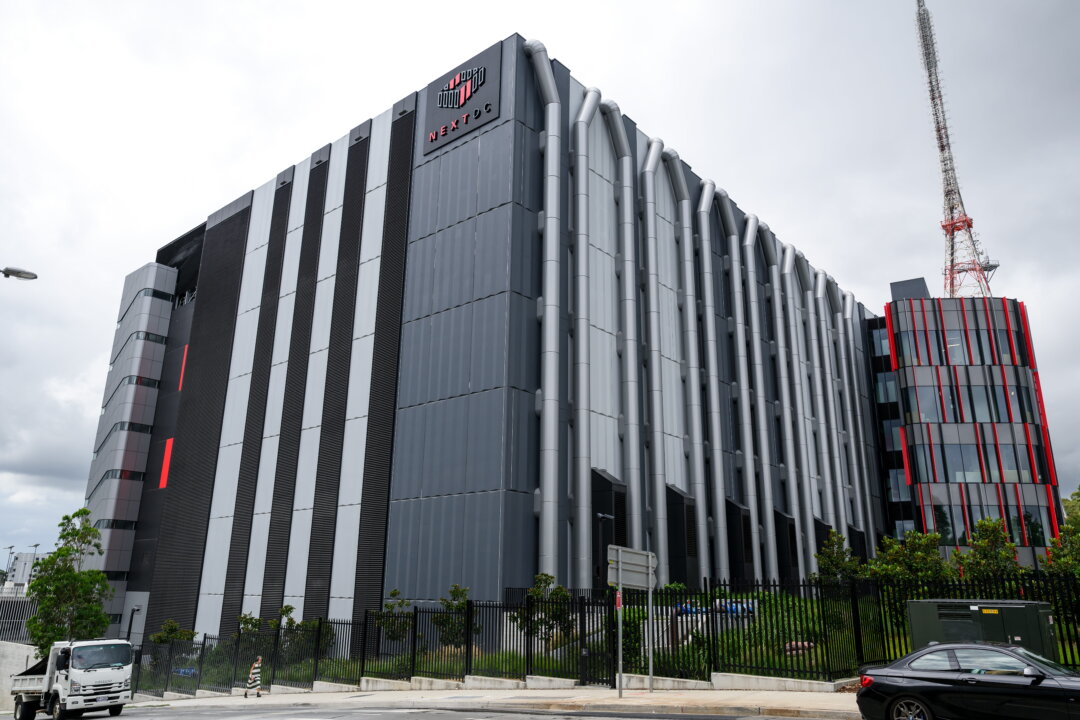

Queensland and the Northern Territory have refused to sign up to a new framework to compel data centres to build renewable energy generation, at a recently concluded Energy and Climate Change Ministerial Council (ECMC) meeting.
The Australian Energy Market Operator (AEMO) forecasts that data centres will account for around 10 percent of total demand by 2050. It says Australia is currently home to 162 operational data centres nationally, predominantly in Sydney and Melbourne, accounting for around 2 percent of current grid-supplied electricity use, and 90 more are currently planned. Industry estimates put the national development pipeline at roughly $150 billion.
The council, chaired by federal Climate Change and Energy Minister Chris Bowen, agreed to advance a suite of measures built around Prime Minister Anthony Albanese’s proposed AI Standards, which would set minimum requirements on energy, water and location for large-scale data centres.
The federal government had hoped to gain commitment from states and territories to legislate nationally consistent rules compelling the next generation of facilities to underwrite new renewable generation, so that consumers would face no price impact from data centres entering the grid.
The Northern Territory opposed almost every element, while Queensland went further, declining to endorse the communique at all.
Under the plan, data centres would be required to offset their demand by investing in new renewable generation within the state or territory that hosts them, unless a jurisdiction is too small to build its own and opts out.
Ministers agreed—despite objections from Queensland and the Territory—to draft National Electricity Rule changes by September that would treat large data centres as market participants and require them to show they can offset their demand by procuring new renewable generation, and that they have enough reliable, on-demand power sources to back up unstable or weather-dependent wind and solar generation.
Queensland Treasurer and Energy Minister David Janetzki said in a statement to The Epoch Times that the state supported affordable, sustainable power but would not back “underdeveloped ideas that hand increased power to Canberra” at the expense of Queenslanders.
He has repeatedly demanded detailed costings and advice from the Australian Energy Regulator and the Australian Energy Market Commission, which are due later this year, before committing.
Queensland is part of the National Energy Market (NEM)—a shared, real-time wholesale trading pool across Queensland, New South Wales, the ACT, Victoria, South Australia, and Tasmania—and is a prime target for data centre investment.
It officially repealed its legally binding net zero targets—70 percent by 2032 and 80 percent by 2035—late last year in favour of a “more realistic and market-driven approach” to the energy sector.
In the Northern Territory, the Finocchiaro Country Liberal government is championing a $40 billion gas-powered data centre industry that draws on Beetaloo Basin gas, including a proposed two-gigawatt hyperscale precinct at Weddell, south of Darwin.
Both holdout governments are Coalition-aligned—the Liberal National Party in Queensland, the Country Liberal Party in the Territory—lending a partisan edge to the standoff with federal Labor.
Climate Council CEO Amanda McKenzie accused the pair of putting big tech and fossil fuel interests first, warning that “Queenslanders and Territorians will be left paying higher power bills.”
The impending federal AI Standards are due before National Cabinet in August, with national electricity rule changes to be weighed by ministers in September and legislation expected in early 2027.
Minister Bowen has previously urged the states and territories to adopt a unified approach to net zero, but has so far not made a statement on the current split.
It’s a far cry from his optimism in February of this year, when he told a press conference that “energy ministers across the country are all of the same mind on this matter.”