China’s ‘Buy Chinese’ Rules Squeeze Foreign Medical Equipment Suppliers
 Michael ZhuangUpdated 6 hours Ago2 Mins read
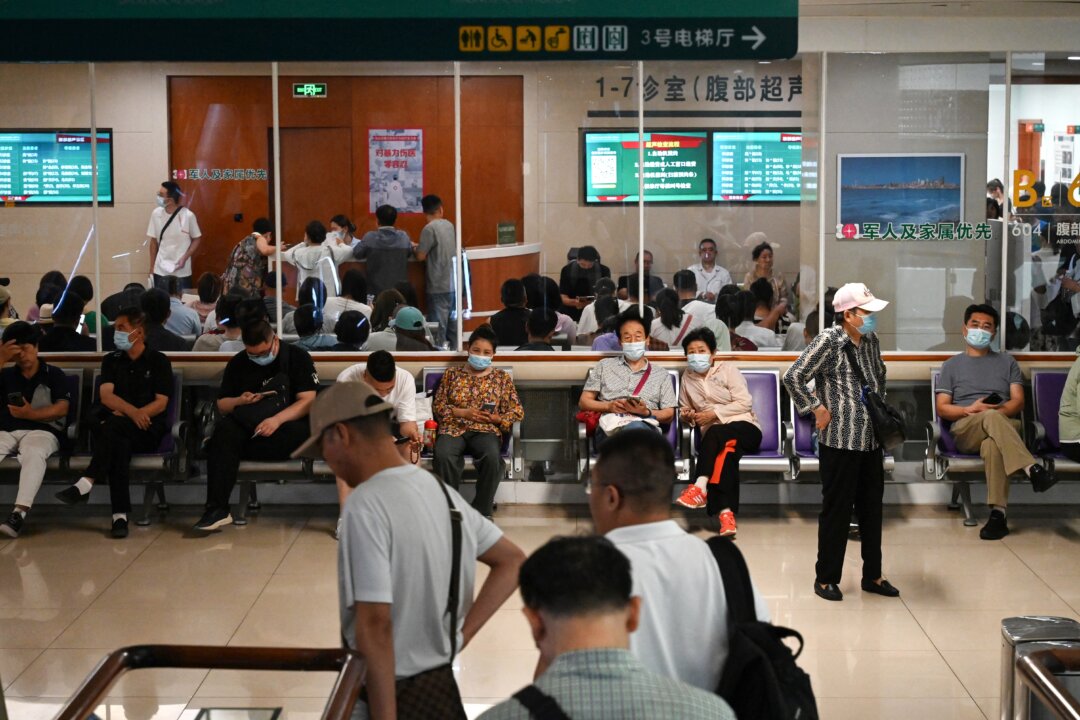
China’s new state procurement rules are making it increasingly difficult for foreign medical-equipment makers to sell to public hospitals, as the regime steers orders toward domestic manufacturers to cut costs and support struggling Chinese companies.
Several medical sector insiders in China
spoke
to The Epoch Times on condition of anonymity, fearing reprisal.
An insider familiar with procurement at a Beijing university-affiliated hospital told the publication that public hospitals in the city have been instructed this year to prioritize domestic manufacturers when purchasing medical equipment.
“Now the health insurance funds are tight, and a number of medical equipment companies have had difficulty operating in recent years, with some already shutting down,” said the insider. “The instructions issued this year are meant to protect these companies.”
The insider said imported medical equipment generally offers better quality and a wider range of products.
The shift follows a procurement policy that took effect Jan. 1, requiring products to qualify as “domestic products” under standards that are being developed by the Chinese regime. Over five years, the Ministry of Finance will establish requirements for the proportion of component costs produced domestically, as well as requirements for key components and manufacturing processes for certain products.
The policy also gave domestic products a 20 percent price advantage in procurement evaluations. Imported products manufactured overseas do not qualify for the same treatment.
The rules cover a wide range of medical equipment, including CT scanners, MRI machines, ultrasound equipment, patient monitors, surgical instruments, and implantable medical supplies.
For foreign companies that manufacture in China, the distinction is particularly important. U.S. medical-equipment companies such as GE HealthCare have multiple manufacturing facilities in China. Whether those products qualify as domestic products will depend not only on where they are manufactured but also on the component and key-process standards the Chinese regime introduces.
Foreign Suppliers Face Shrinking Market
The procurement rules are adding pressure on foreign medical-equipment suppliers already facing weaker demand in China.
A French medical-device distributor in eastern China, surname Xue, told The Epoch Times that public hospitals that were financially healthier in the past generally chose medical products based on performance. As economic conditions have deteriorated, however, the regime is increasingly restricting hospital procurement spending.
“Public hospitals need to apply to purchase foreign products,” Xue said. “Imported products are mainly used in the senior officials’ wards of Beijing 301 Hospital, while ordinary public hospitals can only purchase domestic products.”
The People’s Liberation Army General Hospital, commonly known as Beijing 301 Hospital, is one of China’s most prominent military hospitals and is known for treating senior officials and other high-profile patients.
Xue also raised concerns about the quality of some domestically manufactured medical equipment, saying that shortcomings have affected surgical procedures at some hospitals.
A staff member in the equipment department of a public hospital in Hubei Province, surnamed Liu, told The Epoch Times that hospitals have already received internal instructions requiring procurement officials to verify a product’s specifications, registration certificate, place of origin, and budget.
Domestic equipment is listed as a “priority consideration,” he said.
Liu said there is a gap between the appearance of fairness in public tender documents and how procurement decisions are actually made.
“The bidding documents look very fair, treating foreign and domestic companies equally, but in the actual evaluation, the place of origin and price are both important indicators,” he said.
Distributors that rely on foreign medical-device sales to Chinese public hospitals are already feeling the effects.
A distributor of U.S. medical equipment in Guangdong Province told The Epoch Times that her company’s business in China has contracted sharply.
“After 2010, our company had branches in Shanghai, Wuhan and Guangzhou, with more than 150 employees,” she said. “The year before last, that number fell to 30, and now only three people remain. We also gave up our office, and everyone works from home.”
Xiao Bin contributed to this report.







US Agencies Accuse China-Based AI Firms of ‘Malicious’ Copying of American Models
Federal cybersecurity and intelligence agencies on Tuesday accused six China-based artificial intelligence...

Transportation Chief Tells Ford to Cut China Ties and Build in America
The nation’s transportation chief told Ford Motor Co. on Tuesday to back...
China Requires Up to 99.2 Percent Cash Deposits on Japanese Chipmaking Chemical Imports
China has begun requiring importers to put up cash deposits of as...
Free Flights and Free Hotels: Recruiters Line Up Crowds to Welcome Xi in Washington
Chinese leader Xi Jinping is due at the White House on Sept....