Defence Logistics Gap Leaves Northern Australia Vulnerable, Experts Warn
 Rex WiderstromUpdated 3 hours Ago2 Mins read
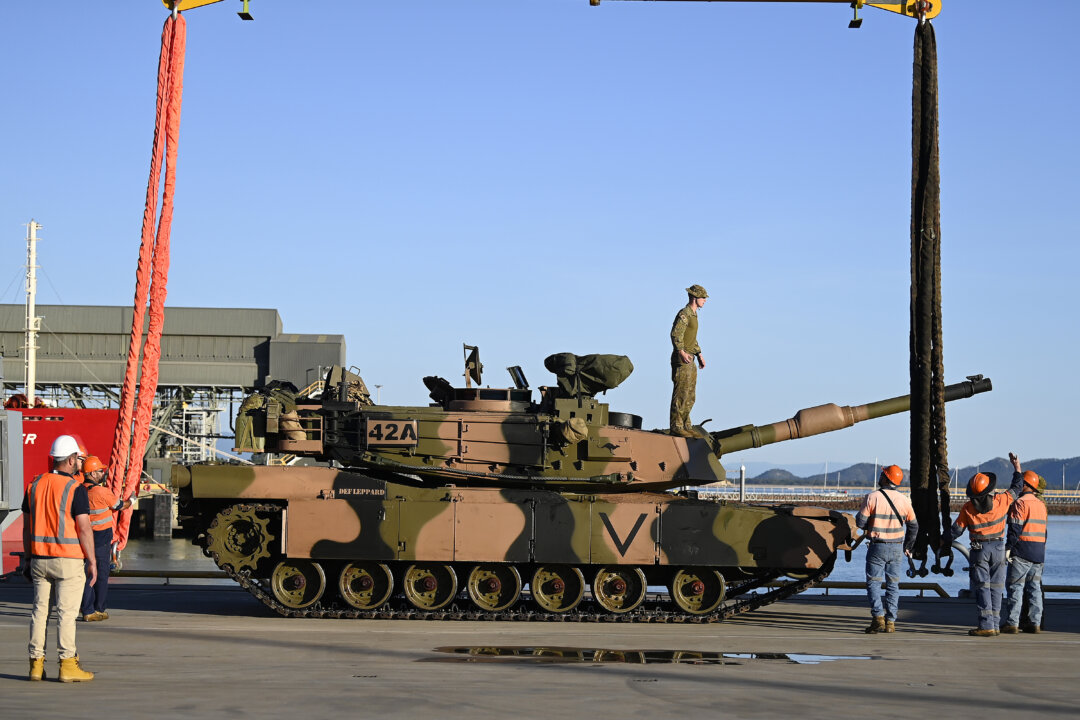
Evidence to a federal parliamentary committee and a new Australian Strategic Policy Institute (ASPI) report have identified a shortfall in infrastructure needed to support Australian Defence Force (ADF) operations in northern Australia, particularly facilities to maintain, repair and resupply key military assets.
Chris McDougall, chair of the Defence Industry Working Group and a representative of Townsville Enterprise, gave evidence to the Parliamentary Joint Committee on Defence, which is considering the Department of Defence’s 2024-25 annual report.
He said Townsville is home to most of the Army’s armoured and infantry fighting vehicles, tanks and tracked artillery, as well as the 3rd Brigade. However, heavy maintenance on the vehicles is carried out in Geelong, Bandiana and Ipswich, with no formal points of sustainment or repair designated in Townsville.
In addition, the ships needed to transport the vehicles are based in Cairns, which hosts the Navy’s regional maintenance capability.
“It is extraordinarily difficult to move a 70-tonne tank from Townsville to Cairns and get it onto a boat. So the boats will need to come to Townsville, and they’ll need a facility at which they can load and unload, and that’s just for peacetime,” he said.
“In the event that we end up in an operational scenario where we are projecting the third brigade as … the fighting force of the Australian Army, if we are sending them into the Indo-Pacific, then they will need to deploy in amphibious and littoral vessels, which will need to come into the Port of Townsville.”
In 2023, Australia relocated hundreds of troops north to prepare for possible future conflict in the Indo-Pacific.
“The port, at the moment, does not have the fixed facilities to support heavy defence operations. They go above and beyond to support the demand that defence puts upon them now. As we increase that demand, they will not be able to keep up,” McDougall warned.
“If our nation wishes to respond to an emergency in the Indo-Pacific … or a major conflict, then time will be of the essence. And storing the manoeuvre assets for our primary response capability a day’s transit away doesn’t seem to make a whole lot of logical sense to me.”
McDougall also pointed out that strategic warning time had shortened considerably from the 10 years estimated in the 2016 Defence White Paper, a shift he said had taken hold from 2020 onwards and left less time to establish logistics points for collecting and distributing supplies after a crisis begins.
The ASPI Report
The ASPI report, “Closing the distance: Australia’s northern theatre logistics distribution gap,” identifies a similar imbalance, arguing that while Australia has the logistics capacity it needs, it lacks the capability to turn that capacity into sustained combat power in the north.
It said Australia’s deep sustainment capacity—industrial, maintenance and storage—remained concentrated in the south and south-east, while the ADF might need to operate over supply lines stretching thousands of kilometres to the north.
While maritime sustainment capability can provide additional distribution capacity, the report (pdf) pointed out that unexpected circumstances can render it unusable.
For example, in mid-2024, the Navy’s two replenishment ships, HMAS Supply and HMAS Stalwart, were both non-operational, leaving the Navy without a replenishment capability.
Ship-to-shore movement also relies on ageing LCM-8 landing craft and HMAS Choules, but their use is limited where port infrastructure is unavailable or contested.
On funding, the report revealed that the 2026 Integrated Investment Plan allocates between $14 billion (US$10 billion) and $21 billion to theatre logistics and health, and between $13 billion and $16 billion to northern bases.
It described the spending as “an important foundation,” but said “the next step is to ensure these investments function as an integrated system.”
The ASPI report concluded that “the measure of success is therefore not how much infrastructure Australia possesses, but whether it can generate, deploy, sustain and regenerate combat power in the north at the required tempo and for as long as the mission demands.”






China Watchers Raise Alarm as Ottawa and Beijing Resume Military Talks
China’s Ministry of National Defence says Ottawa and Beijing have reopened military...
Russian Strike on Kyiv-Area Ammunition Depot Triggers Blast, Killing 37
Residents pass by the site of a Russian drone strike as smoke...
Poland, US Discuss Establishing Permanent American Military Bases
US Under Secretary of War for Policy Elbridge Colby (L) and NATO...

Iceland Votes on Reopening EU Talks in Referendum Too Close to Call
REYKJAVÍK, Iceland—Icelanders vote Saturday on whether to reopen negotiations to join the...