EU to Grade Big Data Centers on Energy and Water Use
 Owen EvansUpdated 4 hours Ago2 Mins read
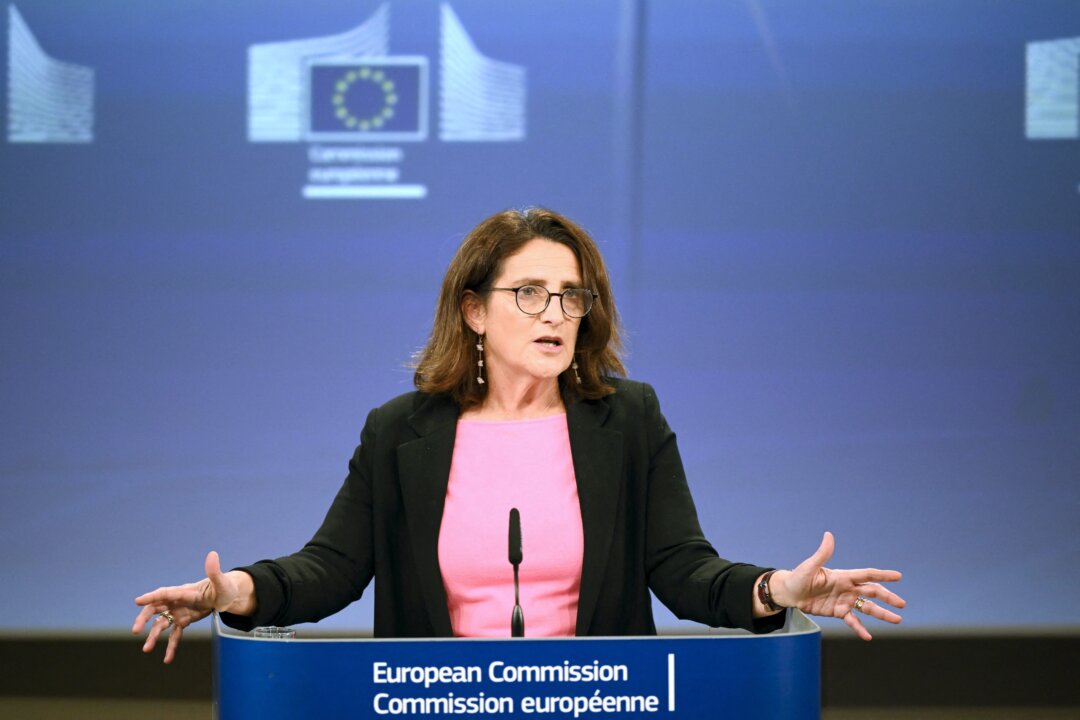
The European Commission on Monday set out rules to grade large data centers on energy and water efficiency, starting in 2027.
The rating requires operators of facilities with a capacity of 500 kW to disclose their energy and water efficiency using an EU-designed labelling system.
The commission said the “common rating scheme,” which works a bit like the A-to-G sticker on appliances such as refrigerators, will help ensure that there is “transparent information” about the actual use of resources (energy, water) by data centers.
This will also cover data centers’ contribution to the grid, such as the reuse of waste heat, the addition of clean energy generation capacities, as well as flexibility.
It said that the first sustainability labels for individual data centers are expected to be displayed in 2027.
The commission estimated that reusing about half of the waste heat generated by Europe’s data centers could provide enough heating for 4 million households.
EU countries and lawmakers have two months to object to the rules, or they will enter into force.
The EU said it wants to triple its data center capacity over the next five to seven years.
According to the European Data Centre Association (EUDCA), there are 6826 data centers in Europe.
Power use by European data centers, lifted by artificial intelligence, is set to rise from 68 terawatt-hours in 2024 to 114 TWh by 2030, according to the International Energy Agency.
The commission presented those figures as more than 3 percent of EU electricity demand.
Its leaders have also prioritized a renewables-first energy approach as part of the bloc’s aim to become “climate neutral” by 2050, a central goal of European Commission President Ursula von der Leyen’s Green Deal.
A member of the Spanish parliament since 2019, Teresa Ribera, now Executive Vice-President for Clean, Just and Competitive Transition at the EU, said in a Sept. 21 statement that “tripling our data centre capacity cannot mean tripling the pressure on our grids, our water and our energy bills.”
“That starts with transparency, rating large data centres depending on their impact on our energy system,” the Socialist Party representative added.
In an interview with Politico on Sept. 21, Dan Jorgensen, Commissioner for Energy and Housing, said he wanted tech companies to view their regulation as an “opportunity.”
“We do see some places where public opinion is maybe turning a little bit against these data centers; we’ve seen it in some places in Europe, and we see it even more so in the United States of America,” said Jorgensen.
“So I firmly believe that it’s also in the interest of the data centers to be able to show how sustainable they are.”
The Computer & Communications Industry Association (CCIA Europe) in a Sept. 21 statement said that the scheme forces data center operators “into a zero-sum game in which improving their ‘water use’ rating could actually push them towards solutions that consume more energy and increase carbon emissions.”
CCIA Europe’s Policy Manager, Leonardo Veneziani, said that the “rating scheme risks pushing data centre investment outside the EU, undermining both Europe’s competitiveness and the scheme’s original environmental goals.”
Europe lacks the infrastructure needed to build artificial intelligence data centres and is not investing enough to keep business from moving to China and the United States, the head of Nokia said in April.
Justin Hotard said the “issue today” is Europe doesn’t have the infrastructure.
“We’ve seen the movie before, right? If you don’t build that infrastructure, then ultimately the business and the developers will move to where that is,” he said.
“The reality is right now, that’s in China and in the United States for the large part.”
Reuters contributed to this report.







ABC’s Four Corners Program Found in Breach of Standards Over Use of Anonymous Sources
The Australian Broadcasting Corporation (ABC) logo is seen in the press gallery...

Trump, Zelenskyy Push for Russia–Ukraine War to End Before Winter
U.S. President Donald Trump and Ukrainian President Volodymyr Zelenskyy are pushing for...

Ceuta’s President Says City Is ‘Living in a Pressure Cooker’ as EU Center-Right Leaders Visit
CEUTA, Spain—Ceuta President Juan Jesús Vivas told The Epoch Times on Monday...

Trump, Zelenskyy to Discuss Ceasefire of Energy Infrastructure Attacks, Rubio Says
President Donald Trump welcomes Ukrainian President Volodymyr Zelenskyy to the White House,...