Young Canadians suing the federal government over its 2030 climate plan can proceed following a Federal Court judge’s rejection of a bid to dismiss the case.
The Sept. 18 decision by Justice Patrick Gleeson doesn’t say Ottawa broke the law. Instead, it says the case raises enough of a legal question to move forward.
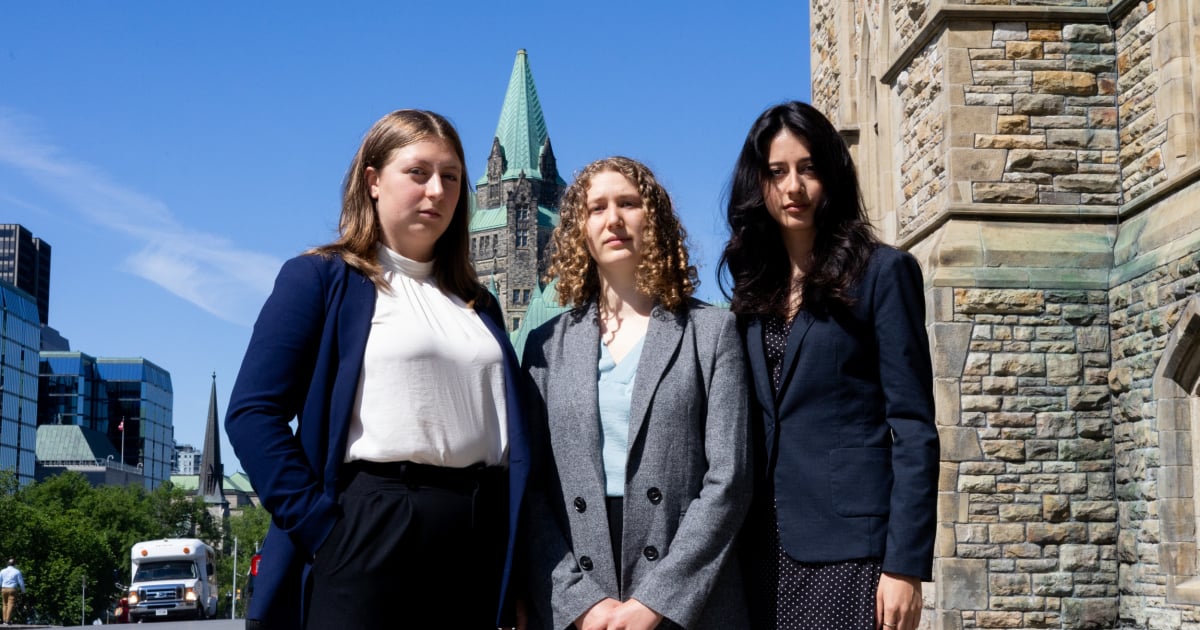
Three young people — Marie Maltais, Sophia Mathur and Shirley Barnea — filed the case in June alongside Environmental Defence and the Canadian Association of Physicians for the Environment. They are represented by lawyers at Ecojustice.
The trio argue that Canada’s plan to hit its 2030 target — a 40 to 45 per cent cut in emissions from 2005 levels — is no longer attainable. Under the Canadian Net-Zero Emissions Accountability Act, the federal government must have a plan describing the key measures it will take to reach each target. The three argue that after a series of policy rollbacks by the Carney government, the 2030 plan no longer does that. They asked the environment minister to amend it in May but claim no action was taken. They want the court to order the minister to act or declare that the plan doesn’t comply with the law.
In August, the government asked the court to strike the case before it could be heard. Its main argument was about wording — it claimed that the net-zero emissions act said the minister “may” amend the plan, indicating a choice rather than a duty. Courts, it said, can’t force a minister to use a power they’re not compelled to use. It also argued the three young people had no right to bring the case.
Justifying his decision, Gleeson said the bar for tossing a case at this stage is high, reserved for situations with an obvious, fatal flaw. Whether “may” means what the government says depends on how the word fits into the rest of the law and what Parliament intended, he wrote, and that requires “a full interpretive analysis.” The same goes for whether a court can review a climate plan at all and whether the trio can bring the case. He said those arguments are best decided with a full record.
“Today’s decision brings us one giant step closer to getting to the heart of our case: is the federal government following its own climate laws?” Maltais said in a news release.
Julia Levin, associate director of national climate at Environmental Defence, said the federal government’s lack of a climate plan “isn’t just irresponsible — it’s against the law.” The court has not ruled on that question.
“This marks a significant win for our clients and an important step forward for this case,” Fraser Thomson, the Ecojustice lawyer representing the applicants, told Canada’s National Observer. “The Federal Court has dismissed the government’s motion in its entirety and confirmed that the case should proceed to a hearing … The time for delay is over.”
“At its core, this case is about accountability under Canada’s climate laws,” Thomson said. “Parliament has established a legal framework for Canada’s 2030 climate target, and the government’s own reporting raises serious questions about whether it is meeting those.”
Keean Nembhard, senior strategic communications advisor at Environment and Climate Change Canada told CNO in an email, “The Government of Canada is committed to fighting climate change and reaching net-zero emissions by 2050.” The government “cannot comment further” on a matter before the courts, he said.
The government now has 45 days to provide its evidence. The case will then move toward a hearing.
The applicants had also asked for elevated costs, arguing the government’s motion caused unnecessary delay. But they received the standard amount.
September 22nd 2026