How are political parties getting their messages out in 2026?
 Stephane BaillargeonUpdated 7 hours Ago2 Mins read
Université Laval political science postdoctoral researcher Marc-Antoine Martel recently co-authored La bataille des enjeux électoraux au Québec (PUM) with professor Richard Nadeau, an analysis of news releases, Facebook posts and tweets published by political parties between 2012 and 2022. His research now focuses on how political parties communicate with younger people. As the campaign in Québec is entering the home stretch, Le Devoir spoke with him for an overview of political communication.
Should we distinguish between political communication through old and new media?
There is indeed a distinction to be made between digital and traditional media. Digital media give parties the opportunity to get their messages out without having to go through traditional media as intermediaries. Social media also force us to consider the interactions among the various players involved — political parties, the media and the electorate.
That said, the distinction needs to be nuanced. New media are not replacing traditional media. Rather, we are seeing an addition and duplication of communication formats. These different formats create a media ecosystem in which various players interact. An interview broadcast by a traditional media outlet, which lends credibility to what is being said, can then be republished on new media.
So is the distinction more about form than content?
The changing media environment has consequences for electoral practices. There have been some significant precedents: the advent of television, for example, was associated with the personalization of campaigns and a greater focus on party leaders’ images. Beginning in 2012 in Québec, all parties embraced platforms such as Facebook and Twitter. And starting in 2018, big data became increasingly important for compiling voter lists and using voter-tracking apps.
Has the proliferation of platforms put even more emphasis on party leaders?
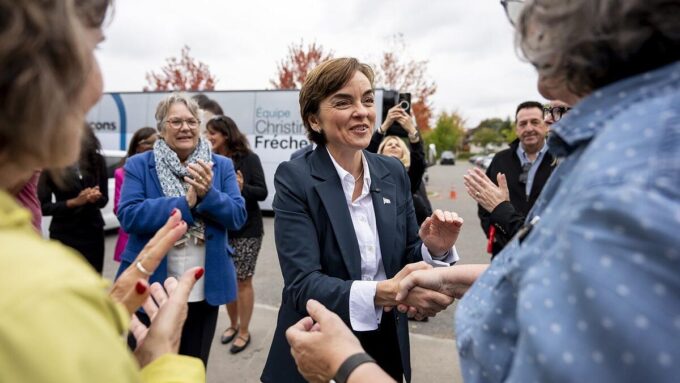
It is much easier today to craft and tailor messages online. That said, campaigns are indeed still very much focused on the image of party leaders. Charles Milliard [Parti Libéral du Québec] added his photo to his campaign bus after being criticized for not having done so. Christine Fréchette embodied a renewal of the Coalition Avenir Québec through a change in leadership.
What innovations in political communication have you observed in the current campaign?
The United States is at the forefront in this area. The most recent U.S. presidential campaign was marked by the prominence of podcasts. In Québec, in recent weeks, we have seen party leaders take part in lengthy podcast conversations, where they have been able to present themselves differently and show different sides of their personalities.
This is also the first campaign in which artificial intelligence (AI) can be used. But there is a certain degree of caution here, whereas Donald Trump makes extensive use of AI-generated images and videos. Here, too, however, I am seeing a proliferation of formats — both short-form and long-form videos, for example.
Does the growing number of platforms force parties to adapt their message?
For a time, we thought that might be the case, but ultimately we are not seeing parties’ messaging become fragmented. In fact, parties maintain a certain degree of consistency. They cannot afford to change their message every time they move to a different platform.
Parties seek to build a brand and get their message across, which requires consistency and repetition. On issues, for example, parties adopt positions and maintain them from one platform to another.
Do you see any notable differences from one party to another?
There has clearly been a professionalization of digital communications. The Parti Conservateur du Québec stands out in that regard. I would also point to Québec solidaire’s very colourful ads, which strike a highly positive, hope-focused tone.
Charles Milliard has talked about his hobbies — we saw him playing curling. Some people liked it, others did not. His party has always been very organized when it comes to political communications: as early as the 2018 and 2022 campaigns, excerpts from the leaders’ debates were turned into clips for social media.



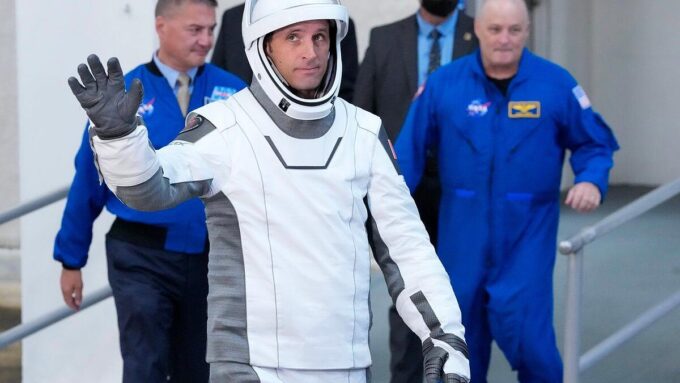
Canadian astronaut arrives at International Space Station for six-month mission
Canadian astronaut Joshua Kutryk's first thought after being told Thursday he had...
Quebec party leaders shore up support as campaign enters final stretch
Quebec's main party leaders are shifting their campaigns into top gear, with...
Michael J. Fox set to be promoted within Order of Canada at Rideau Hall today
The actor and Parkinson’s disease advocate Michael J. Fox is set to...
Trump tried to make an ally out of fishermen. Now some have started to turn on him
John Evich, a commercial fisherman in Washington and Alaska, has voted for...