Hungarian Money Stops Flowing to Brussels’ Last Conservative Think Tank
 Owen EvansUpdated 2 hours Ago6 Mins read
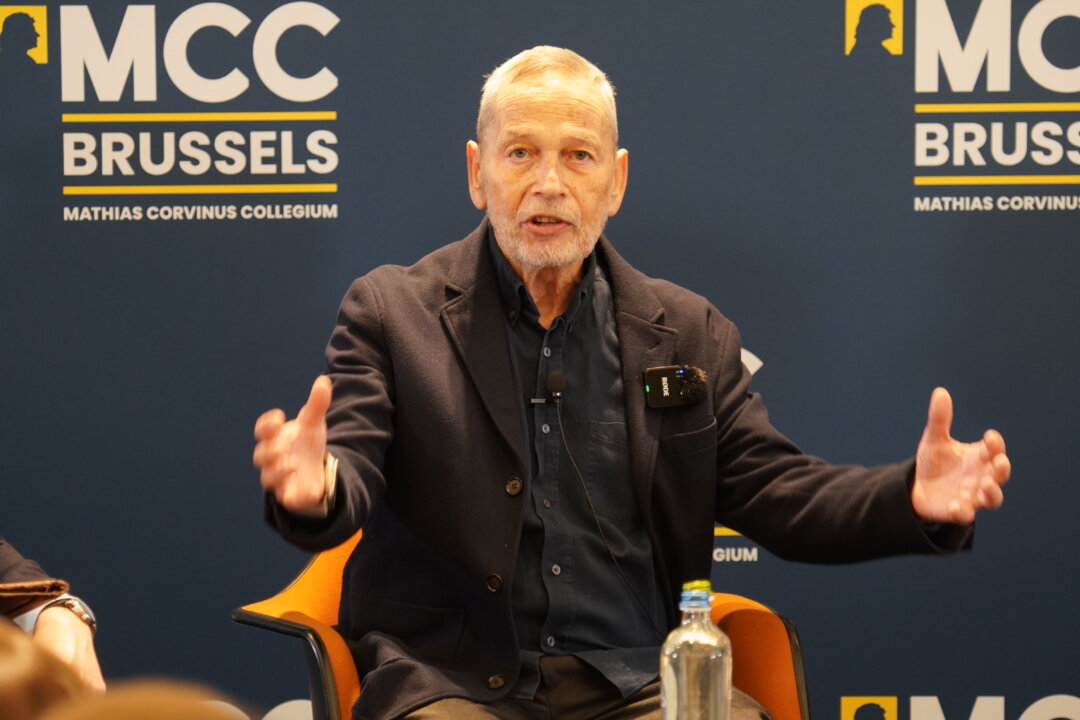
Just four years after it opened, think tank MCC Brussels, a thorn in the side of the EU’s progressive establishment, has closed after Hungary’s new government cut off the money that kept it running.
The office, set up in 2022 as the Brussels outpost of former Hungarian Prime Minister Viktor Orbán’s linked Mathias Corvinus Collegium, aimed to give national-conservative ideas a home in a city dominated by EU institutions and left-leaning advocacy groups.
However, now, its executive director has resigned, staff have gone without salaries, and the organization says its activities have effectively been paralyzed. So what happened?
‘No Dialogue’
MCC Brussels Professor Frank Furedi resigned with immediate effect on Aug. 31, citing the “persistent failure to provide the contractually agreed funds.”
“Well, we saw this would be coming. There was no doubt about it,” Furedi told The Epoch Times.
“But what I never expected was that they would behave in such unprofessional manners. So basically, there was no dialogue.
“Our emails were never answered.”
He said employees had gone without pay for July and August.
“They have families, their rents to pay, and everything else,” he said.
In parts of the EU establishment, Orbán was seen as an illiberal disruptor of the bloc, who repeatedly clashed with Brussels over immigration, LGBT policy, Ukraine, and its veto powers, resulting in billions of EU funds being
frozen
.
However, Péter Magyar’s Tisza Party won Hungary’s April election, ending Orbán’s long period in power, and quickly moved against the system of public-interest foundations created during his era, including the foundation behind MCC Brussels.

Then-Hungarian Prime Minister Viktor Orbán speaks at the press conference during a heads of state meeting of the Visegrad group at the International Congress Center in Katowice, Poland, on June 30, 2021. Omar Marques/Getty Images
‘Operation Purgatory’
Magyar called the drive “Operation Purgatory.”
“The state will not finance these things—neither the event called CPAC, nor the Mathias Corvinus Collegium and other affiliated institutions. I say it should not have financed them until now. This was a crime,” Magyar said at the day of his election win press conference on April 12, as reported by Euronews.
MCC Brussels was legally a Belgian nonprofit, with Viktor Orbán’s former political director Balázs Orbán, no relation, as its board chairman. It was funded almost entirely by a grant from Mathias Corvinus Collegium’s foundation in Budapest. In 2024, the Brussels office had a budget of about 6.37 million euros ($7.25 million).
Nearly all of that came from the Hungarian foundation.
That foundation became state-backed in 2020, when the Orbán government put public assets into it, including 10 percent of oil company MOL and 10 percent of drugmaker Gedeon Richter.
But Richard Schenk, a MCC Brussels research fellow, told The Epoch Times that the structure left the operation dependent on a single source of funding.
“This was by Hungarian law a single source of income,” Schenk said. “Also it came with a lot of restrictions on how to spend this money.”
He said that [Victor] Orbán wanted these big subjects debated because of “his experiences of communism in the 1990s.”
“He had this experience that you can win government without being actually in power if you don’t have support from outside institutions,” Schenk said.
‘Mission Creeps’
Its investigations looked into how Brussels funds civil-society groups that the think tank said helped shape EU policy.
Furedi said even their opponents “recognized that we’re probably the most influential political think tank in Brussels.”
“We were able to, for the first time, create a viable, coherent, and appealing conservative intellectual alternative to our political opponents,” he said.

Hungarian Prime Minister Peter Magyar addresses the media at EU headquarters in Brussels, on May 29, 2026. Virginia Mayo/AP Photo
One report last year, “Mission Creeps,” claimed that at least 220 million euros ($251 million) in EU funding had gone over the previous decade to projects involving NGOs promoting gender ideology.
Report author Ashley Frawley
told
The Epoch Times at the time that activists had played a direct role in drafting EU policies by “radically” redefining gender.
A European Commission spokesman said at the time the funding was “provided in full transparency and in line with the Financial Regulation.”
A 2024 report looked at how the EU relies on officially designated fact-checkers, some of them NGOs, who flag content for platforms to review and take down.
Norman Lewis, a visiting research fellow at MCC Brussels, former PwC director, and former director of technology research at Orange UK,
told
The Epoch Times at the time that the fact-checkers were not accountable to anyone.
“In the end, the commission can claim they’re not censoring but Big Tech is, despite the fact that the commission created the environment that forces this censorship,” he said.
Commission spokesman Thomas Regnier said at the time that fact-checkers in the EU work on the basis of “high ethical and professional standards, which guarantee their independence.”
In June, the EU Transparency Register, a public database that lists organizations seeking to influence EU law-making and policy, suspended MCC Brussels after a complaint by nonprofit research and campaign group Corporate Europe Observatory.
MCC rejected claims that it had failed to cooperate.
A spokesman for Corporate Europe Observatory, which is funded by private foundations including the Open Society Foundations, the Sigrid Rausing Trust, Adessium Foundation, and Luminate, accused MCC Brussels of a “far-right witch hunt” against NGOs and their funding, in an email to The Epoch Times.
‘Run Us Out of Town’
Furedi rejected the “far right” label.
“People use it as a way of trying to marginalize your voice so that people don’t take it very seriously,” he said.
He said MCC had faced hostility from parts of the Brussels political establishment.
“They basically did everything possible to isolate us and try to run us out of town,” he said.
Antifa’s website, he added, said that MCC Brussels was “the biggest danger to civilization in Brussels.”
‘Looking for a Post-Liberal Alternative’
Under Orbán, Hungary became a draw for American conservatives looking beyond the traditional Republican establishment.
MCC Feszt, the foundations’ festival, brought international figures including Peter Thiel and Christopher Rufo to Hungary.
Rod Dreher, an American writer who spent several years living in Budapest, said that Hungary had become “a beacon” for what he called “alternative American conservatives.”
“Those who were not conventional Republican Party types, but who were looking for a post-liberal alternative,” he told The Epoch Times at the sidelines of the Alliance for Responsible Citizenship (ARC) conference in London in June.

Rod Dreher, author of “Live Not by Lies” and a senior editor at The American Conservative, in New York on Jan. 21, 2022. Samira Bouaou/The Epoch Times
Dreher said he first went to Hungary in 2019 while researching his book “Live Not By Lies” to learn what lessons people who grew up under communism had to teach others about resisting the “dictatorship of wokeness.”
“And I thought this is a normal country,” he said.
In 2021, Tucker Carlson spent a week broadcasting from Budapest, which Dreher said changed how MAGA-leaning Americans saw the country.
“The Hungarian government was funding that. This was public diplomacy because they had to get their story out somewhere, and so it really did become a sort of haven,” Dreher said.
New Think Tank Launched
Furedi sees the shutdown of MCC Brussels as more than a policy shift.
“There was and still is an atmosphere of not just political differences being acted out, but of vengeance,” he said, adding that he believed that Magyar regarded MCC Brussels as “an enemy that had to be crushed.”
He said that he believed there was a “certain synergy” between the new Hungarian government and parts of the European Commission.
He added that EU officials had signaled to Hungary that restoring access to EU funding withheld during the Orbán years required the new government to “clean up” Hungary’s political institutions.
The Epoch Times could not independently verify that claim. The European Commission said on Sept. 23 that it had proposed unlocking 4.2 billion euros ($4.8 billion) in cohesion funds for Hungary.
Furedi said the ideas behind MCC Brussels will not necessarily disappear with the institution.
On Sept. 22, he and much of the old MCC Brussels team launched Freedom and Sovereignty Initiative Europe, or FSI Europe, a new Belgian nonprofit that says it will argue for a Europe of sovereign nation-states and back what it calls the “patriotic movement” with research and media.
“Instead of regarding the situation that we’re in as just simply a setback or a defeat, I look upon it as an opportunity to build a new kind of organization that tries to mobilize political and financial support from people who genuinely believe in a kind of radical conservative project that we’re trying to undertake,” Furedi said.
The Epoch Times asked the Hungarian government whether the dismantling of MCC and other Orbán-era foundations was politically motivated, why operational funding was withheld despite leaving Brussels staff unpaid, and whether Hungary still sees itself as a center of European conservatism.
The government did not respond.
Reuters contributed to this report.






Avi Benlolo: Carney doles out cash to Palestinians. Canadians ask ‘what about us’?
365 Bloor Street East, Toronto, Ontario, M4W 3L4 © 2026 National Post,...
FIRST READING: Mark Carney’s left-wing enemies
Article contentGeneralized anti-capitalistsArticle contentEarlier this month, Carney held his Canada Investment Summit...

Cook This: 3 recipes from Mary’s Comfort Classics, including pickle dip
Article content“It would be amazing if everybody cooked all of the things...

How a medical drone pilot program aims to help residents in rural Ontario with medical emergencies
Peel Region Paramedic Services have launched a medical drone pilot program. (Photo...