
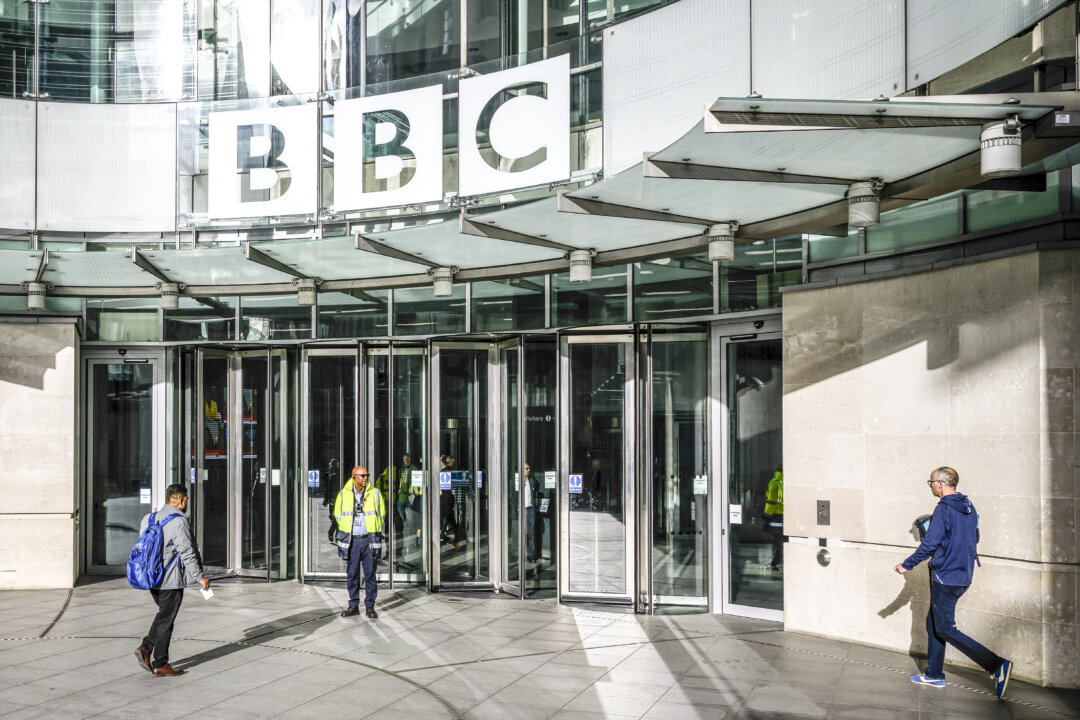
A federal judge on Aug. 6 temporarily paused an order requiring U.S. President Donald Trump to give financial information to the BBC as part of his $10 billion defamation lawsuit against the British broadcaster.
The emergency stay, granted by U.S. District Judge Roy Altman in the Southern District of Florida, pauses a looming Aug. 6 deadline that would have compelled the president to hand over tax returns, financial statements, and ownership records for some 400 corporate entities owned by the Trump family trust.
Trump is suing the BBC over its editing of a speech he made on the day of the 2021 U.S. Capitol breach in its broadcast on Oct. 28, 2024, titled “Donald Trump: A Second Chance?” The program spliced together portions of Trump’s speech in a way that appeared to show him directly urging supporters to attack the Capitol, and omitted a lengthy section in which he called for peaceful protest.
The BBC apologized for the editing, which came to light through a leaked internal report in November 2025, but maintains it was an unintentional error and does not meet the legal threshold for defamation.
BBC Director-General Tim Davie and CEO of News Deborah Turness both resigned amid the scandal.
In an emergency motion filed on Aug. 5, Trump’s lawyers said the BBC’s demands were “shockingly broad” and argued that disclosure would cause irreparable harm because once confidential financial information is turned over, its disclosure cannot be reversed even if the order were later overturned.
The stay does not permanently shield the records, and the court must still decide whether the broadcaster is entitled to them as part of the discovery process.
Lawyers for the BBC argue the corporation needs to view the records to assess whether Trump’s businesses suffered the losses he claims and whether any damage can be tied to the Panorama broadcast. The BBC has also argued that the program was not broadcast in the United States and was geo-restricted.
Trump’s lawsuit alleges injury to his business and personal reputation, as well as economic harm to his brand, properties, and businesses, through what the complaint calls efforts to “falsely, maliciously, and defamatorily portray President Trump as a violent insurrectionist.”

President Donald Trump looks on during a rally in Washington, on Jan. 6, 2021. Jim Bourg/Reuters
Judge Enjoliqué Lett in July granted a motion by the BBC’s legal team to compel the release of financial records held by the Donald J. Trump Revocable Trust, which manages his businesses.
If the BBC ultimately obtains the records, an existing protective order could restrict disclosure of confidential material and require additional measures before such records could be filed publicly.
Emphasis on Personal Harms
Trump’s lawyers are also seeking to amend the complaint to focus on alleged harm to his personal reputation rather than his businesses, a shift that could sharply narrow the scope of financial discovery.
“The First Amended Complaint focuses on personal reputational harm as the compensatory injury, and renders the Order obsolete,” his lawyers stated in the Aug. 5 filing. “If that amendment is granted, as it should be, the stated basis for the Trust-wide financial production will be moot.”
In March, the BBC attempted to have the lawsuit dismissed, claiming the court in Miami has no jurisdiction because it did not broadcast the program in Florida, and that the president could not prove damages because he was reelected in 2024 after it aired.
The BBC claimed Trump’s lawsuit was “politically motivated” and could have a “chilling effect” on its ability to report freely, but U.S. District Judge Roy Altman in February ruled the case could proceed.
Trump is unable to sue the BBC for defamation in the UK, as the one-year limitation period has passed since the program was broadcast. In Florida, where the suit was filed in December, the time limit is two years.

People protest at the U.S. Capitol following a rally with President Donald Trump in Washington on Jan. 6, 2021. Samuel Corum/Getty Images
To win damages, Trump’s lawyers will have to prove that the episode of Panorama in question was viewed in the United States and that it caused serious damage to his reputation.
The BBC disputes Trump’s claim that the Panorama episode in question was available in the United States on the BritBox streaming service. BBC’s iPlayer streaming service is geo-blocked, although lawyers have argued it could be watched in the United States using a VPN.
The Panorama documentary at the center of the case is no longer available to view on the iPlayer app.
Beyond saying it will defend the lawsuit, the BBC has said it will not comment on active legal proceedings.