
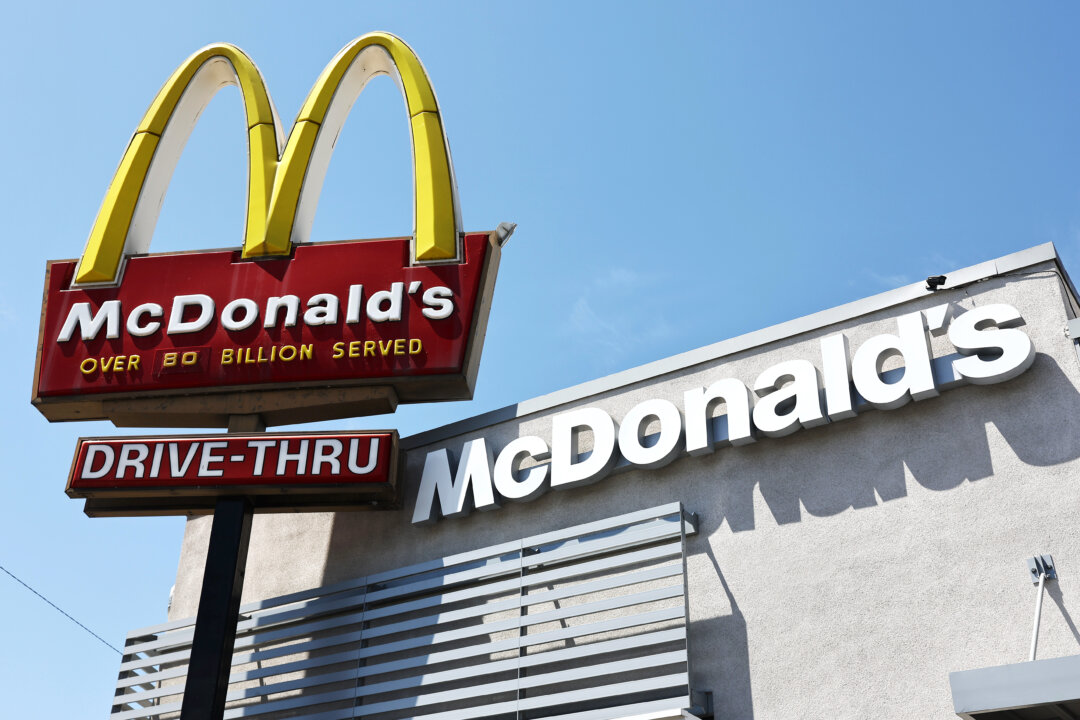

McDonald’s has named a new president of its U.S. business after the fast-food chain reported its weakest domestic sales growth in more than a year.
Skye Anderson, chief operating officer of McDonald’s USA, will become president of the division effective immediately, the company announced Tuesday.
Anderson will replace Joe Erlinger, who is leaving the company but will remain as an adviser through early 2027 to assist with the transition.
Erlinger joined McDonald’s in 2002 and became president of its U.S. operations in 2019. During his tenure, he helped steer the company through the COVID-19 pandemic and a 2024 E. coli outbreak linked to onions served on Quarter Pounders.
He also played a central role in defending McDonald’s against intense public backlash over menu price increases during a period of elevated inflation, disputing viral claims that McDonald’s prices had doubled.
The appointment marks a rapid rise for Anderson, a 26-year McDonald’s veteran who was promoted to U.S. chief operating officer in April.
Before taking that position, Anderson led the McDonald’s global business services unit. She has also held leadership roles in the United States and Australia.
“She’s a proven change agent who can act with urgency to mobilize our system,” McDonald’s CEO Chris Kempczinski said in a statement.
The leadership change was announced as McDonald’s reported a sluggish second quarter of U.S. sales.
Comparable sales at U.S. restaurants rose 0.8 percent in the three months ended June 30, the company’s slowest domestic growth since the beginning of 2025. Comparable sales measure revenue at locations open for at least 13 months.

A McDonald’s Quarter Pounder hamburger and fries are displayed at an outlet in New York City’s Times Square on Oct. 23, 2024. Richard Drew/AP Photo
The increase was driven by higher average spending per order as customers purchased more higher-priced items, McDonald’s said, but that was partially offset by a decline in visits.
Comparable sales rose in the international markets. McDonald’s highlighted growth in Australia, Germany, Japan, and the United Kingdom, while comparable sales declined in China and France.
“While our playbook is working around the world, we see an opportunity to raise the bar in the U.S. and accelerate performance in our largest market,” Kempczinski said.

McDonald’s CEO Chris Kempczinski listens as U.S. President Donald Trump delivers remarks at the McDonald’s Impact Summit at the Westin DC Downtown in Washington on Nov. 17, 2025. Win McNamee/Getty Images
McDonald’s has been working to win back customers in its home market, as Americans have become more cautious about spending over the past two years. Lower-income consumers, in particular, have cut back on restaurant visits amid elevated menu prices and broader increases in living costs.
In September 2025, McDonald’s reintroduced Extra Value Meals, which bundle an entrée, side, and drink for about 15 percent less than the cost of purchasing the items separately.
In June, the company unveiled a new corporate strategy called “McDonald’s > NEXT,” focused on expanding automation, raising hospitality standards, expanding social media marketing, and improving the taste of its core menu items.
Executives said the strategy is intended to make McDonald’s restaurants “easier to run and more enjoyable to visit,” while helping the brand “re-earn” customer loyalty.
Those efforts come as Americans’ perceptions of fast-food prices increasingly influence their spending habits.
According to a 2024 survey by online loan marketplace LendingTree, some 78 percent of consumers see fast food as a luxury because it’s “become increasingly expensive,” while 69 percent of the 2,000 Americans it polled who are making less than $30,000 a year said they are cutting back on eating out because of high prices.
A 2025 survey by consumer-insights platform Zappi found that 23 percent of U.S. consumers viewed fast food as a “treat” or “reward,” while another 20 percent described it as a “guilty pleasure.” Just 14 percent considered quick-service restaurants a budget-friendly option.