
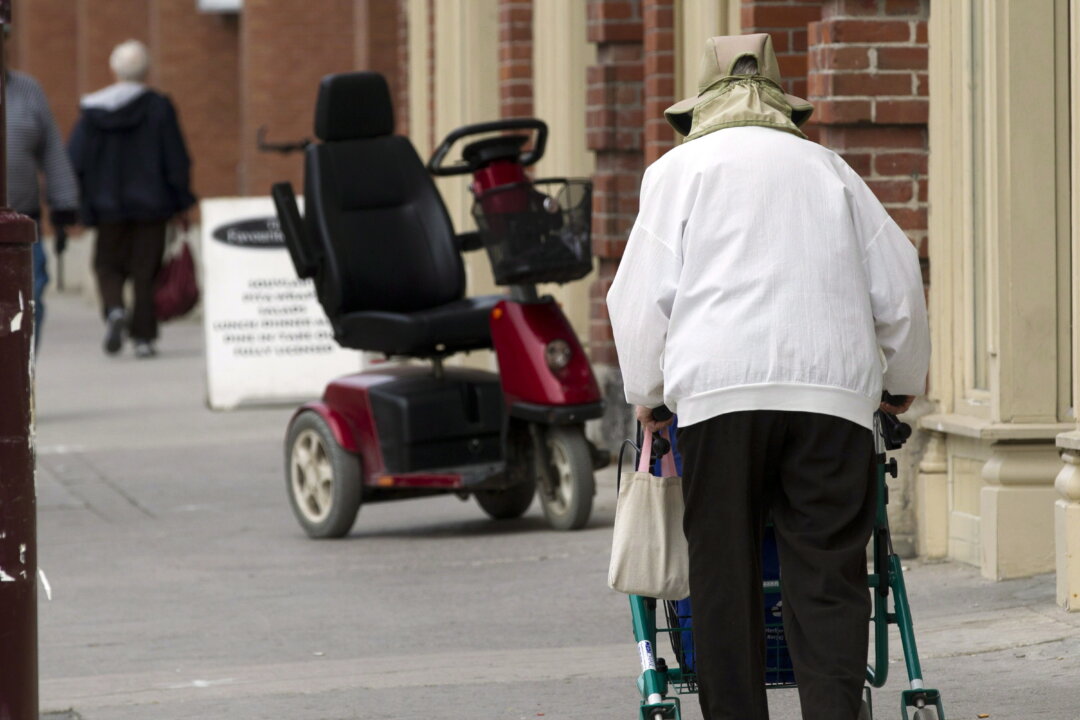


A senior citizen walks down the main street in Peterborough, Ont., in a file photo. The Canadian Press/Frank Gunn
Canadians who qualify for Old Age Security (OAS) payments will notice a modest increase when the next deposit is made to their accounts on July 29.
The payment amounts for OAS are updated quarterly by Service Canada, using the Consumer Price Index (CPI) to adjust for the ever-changing cost of living.
Payments from the Canada Pension Plan are issued at the same time, but there will be no increase to this benefit because it undergoes a yearly inflation adjustment in January.
Here’s everything you need to know about the upcoming OAS increase.
How Much Will OAS Increase?
The monthly benefit has been increased by 1.2 percent until September in a bid to help Canadian seniors with the rising cost of living. It marks the largest single-quarter increase of 2026 thus far, the government agency said in an online update.
The amount received is determined by the recipient’s age, net income, and how long they have lived in Canada since turning 18.
The maximum monthly payment for those aged 65 to 74 will rise from $743.05 to $751.97 if their 2025 net income is below $152,062, the agency said. Individuals aged 75 and older with net incomes of less than $157,923 will see an increase from $817.36 to $827.17.
Net income refers to employment earnings, pensions, RRSP withdrawals, investments, capital gains, and rental income.
Canadians signed up for automatic deposit receive the increased payments on July 29. Those who receive cheques in the mail can expect their payment to arrive in the following days.
Will Payments Ever Decrease?
OAS benefit amounts are adjusted quarterly based on the CPI. When the cost of living rises, the payments are also raised. If the cost of living decreases, the legislation guarantees that benefit rates will hold steady until inflation goes up again.
OAS payments can also be reduced it a senior’s income exceeds the clawback threshold.
Benefit amounts are recalculated every July, taking into account net income from the previous calendar year.
The “safe zone” where no clawback applies starts at net incomes of $93,454 or less for the 2025 tax year.
Incomes above that face a 15 percent pension recovery tax, the government said in a post on its website. Every dollar earned above the $93,454 limit is subject to a 15 cent recovery tax until the benefit hits zero at the maximum threshold of $152,062 for ages 65 to 74 or $157,923 for ages 75-plus.
The recovery tax functions with a one-year delay, meaning income from one calendar year determines the deduction adjustments made starting the following July. The government typically spreads this recovery out by automatically subtracting a portion from the affected monthly OAS payments.
Low-Income Seniors
Cost-of-living adjustments have also been made to Guaranteed Income Supplement (GIS) payments, a monthly, tax-free government benefit given to low-income seniors aged 65 and older who already receive the OAS pension in Canada.
A single, widowed, or divorced senior in Canada with annual income of less than $22,800 will receive a maximum GIS payment of up to $1,123.17 per month, up from $1,097.75.
Individuals with a spouse or common-law partner who receives the full OAS pension can receive a maximum GIS payment of $676.09 per month if their combined annual income is less than $30,096.
These indexed rates are adjusted quarterly and recalculated every July based on the previous year’s net income.
How Big Was the Change?
The monthly benefit increased by 2.3 percent compared to the same month last year, the agency said. This represents the quickest growth rate recorded since late 2024, although it still falls short of Canada’s overall inflation rate of 2.8 percent.
The CPI inflation rate increased by 2.8 percent over the 12 months leading up to June 2026, a decrease from 3.2 percent in May, according to data from Statistics Canada. The agency is expected to report the latest stats in August.