
This earnings season highlighted differing trends at some of the biggest U.S. retailers.
At Target and Ross Stores, customer traffic increased, seeking style, deals, and what one analyst called the “treasure hunt.” At TJX’s Marmaxx division, purchases were lower than expected. And at Walmart, the country’s biggest retailer, a strong headline quarter still wasn’t enough to meet Wall Street’s expectations.
The divide, which unfolded last week as the nation’s biggest retailers reported second-quarter results, is less about whether Americans are spending—they are—and more about where and on what.
Contrasting Trends
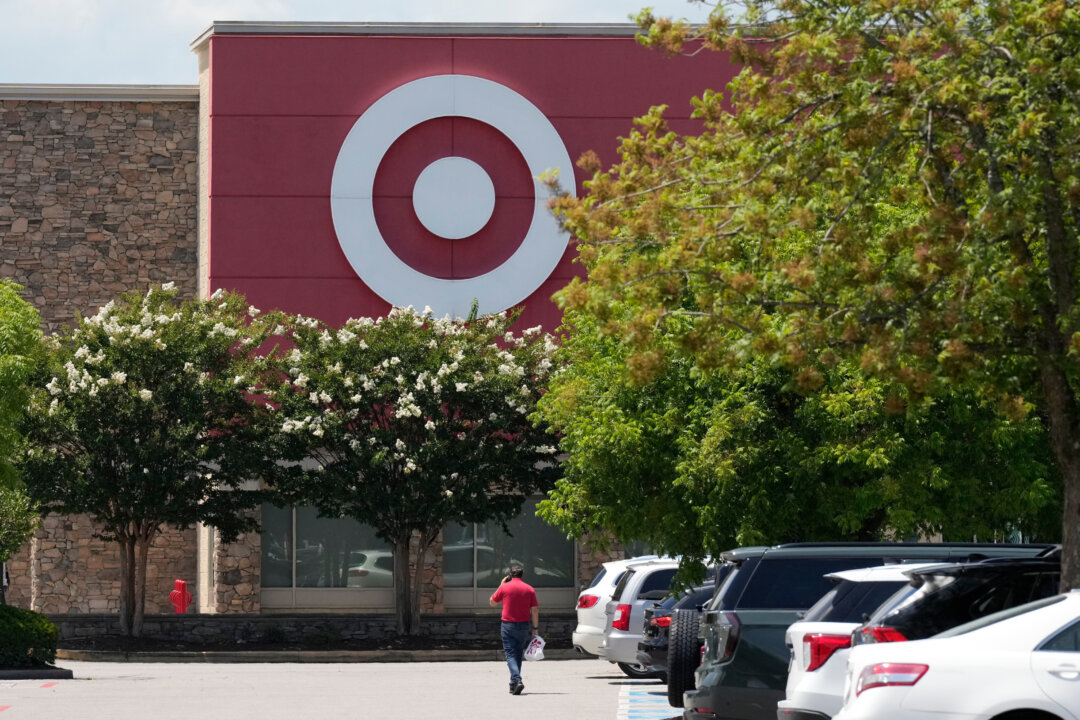
Target’s turnaround finally showed up in the numbers. Sales climbed, profit margins improved, and the company raised its outlook for the year—enough to send its shares up 7 percent for the week.
Chief Executive Michael Fiddelke credited a strategy built around “busy families,” one he said blends style, quality, and value in a way he called “uniquely Target.” The company, he said, is executing on four fronts at once: sharpening its merchandising, improving the in-store experience, leaning into technology, and investing in its workforce and communities.
“Across each of these four priorities, we’re seeing encouraging momentum,” Fiddelke told analysts during the company’s earnings call on Aug. 19. “Our results show that our strategic choices, combined with the hard work of our team, are delivering change that is resonating with guests.”
John Zolidis, president of Quo Vadis Capital and longtime Target watcher, said much of the quarter’s strength came from easy comparisons to a weak year-ago period and shoppers flush with unusually generous tax refunds.
Meanwhile, he said, Target occupies a sturdier position between Walmart and Amazon than markets give it credit for. “Customers appreciate Target’s better shopping environment and will buy when the service levels are appropriate, the product is compelling, and the prices are attractive,” he told The Epoch Times.
Ross Stores also reported strong results on Aug. 20 after the market closed. Total sales in the second quarter jumped 13 percent from the same period in 2025, comparable-store sales surged 10 percent, and the off-price chain raised its guidance for the rest of the year—sending shares up nearly 4.4 percent on Aug. 21.
Chief Executive Jim Conroy attributed the strong results to more foot traffic, more new customers, and deeper engagement from returning ones.
“Our performance was fueled by our compelling merchandise offerings, engaging marketing initiatives, and continued enhancements to the in-store experience,” he said in the statement, adding that the momentum appeared consistent “throughout the quarter.”
Not every chain found the right mix. TJX Companies, parent of T.J. Maxx and Marmaxx, posted respectable growth on paper—total sales up 5 percent annually in the second quarter of fiscal year 2027, comparable sales up 4 percent.
However, the company’s shares fell by more than 7.6 percent over the week.
During its earnings call on Aug. 19, the company’s executives described the shortfall as “self-inflicted”—a failure to get the right basics and impulse-buy items onto the right shelves at the right time.
Walmart, meanwhile, delivered strong second-quarter fiscal 2027 results that would have stood out in almost any other environment: a 5.1 percent jump in constant-currency sales from a year earlier, a 17.4 percent surge in adjusted operating income, and a raised full-year sales forecast.
Chief Financial Officer John David Rainey pointed to the breadth of the company’s business as the key to the quarter. “This quarter demonstrates the benefits of our diversified portfolio of businesses across channels, formats, and markets,” he told analysts during the company’s earnings call on Aug. 20.
But the details told a more complicated story. U.S. sales growth came in a touch below expectations, dragged down by softer health and wellness sales tied to pricing pressure. Walmart’s shares fell 10 percent for the week.
Spending Squeezed, Not Retreating
The split-screen earnings season is unfolding against a backdrop of economic strain. Hiring has cooled, while wage growth has slowed and failed to keep pace with inflation.
U.S. nonfarm payrolls fell by 23,000 in July, according to the Bureau of Labor Statistics. The annual average hourly wage growth eased to a lower-than-expected 3.2 percent, down from a downwardly adjusted 3.4 percent in June and below the 3.4 percent annual inflation rate in that month.
Consumer confidence, as measured by the University of Michigan Consumer Sentiment Index, slid in early August after two months of improvement. Retail sales overall fell 0.6 percent in July, the sharpest monthly drop in more than a year.
“Those results arrive as key macroeconomic data has softened,” Bret Kenwell, U.S. investment analyst at eToro, told The Epoch Times, pointing to the wage and inflation gap as evidence that “purchasing power may be coming under pressure.”
Yet those who track shopping behavior up close say the story isn’t decline—it’s redirection.
“Our distributors are seeing smaller baskets with more frequent trips, more sub-$5 and single-serve items, and steady trade-down into private label and value tiers,” Joel Goldstein, president of Mr. Checkout Distributors, told The Epoch Times.
“That is exactly the pattern that makes Walmart and off-price look strong while a discretionary-weighted mix looks soft. It’s a reallocation inside the same wallet, not a collapse in demand.”
Patrizia Porrini, a professor of management at Long Island University, described a consumer who has grown sharply more deliberate—prioritizing daily essentials over “home clutter or impulse shopping” without pulling back on spending altogether.
“A higher level of economic discernment is taking place, yet spending has not stopped; it has simply pivoted toward low-price finds and off-price value formats,” Porrini told The Epoch Times.
She pointed to the gap between Ross and TJX’s Marmaxx as proof. Ross, she noted, pulled off a double-digit comparable-sales jump built entirely on foot traffic—without the built-in draw of a grocery aisle to lure shoppers in the door. Marmaxx, operating under a similar off-price model, achieved comparable sales growth of just 1 percent.
“Ross won on tight inventory execution and a compelling treasure-hunt mix that appealed across income and age groups,” Porrini said. When that mix falters, she added, the “treasure hunt” collapses—and shoppers leave without buying anything.
Lipstick Effect
Even in a cautious economy, small indulgences are surviving—just cheaper ones. Porrini pointed to Ross’s strength in home goods and cosmetics, and to Target’s roughly 7 percent growth in beauty sales, which outpaced the company’s overall performance and dwarfed weaker results in apparel and home goods.
“Shoppers have not abandoned small-scale self-indulgence; they have redirected it toward affordable, high-frequency treats available at value and off-price formats,” she said—a modern-day version of the so-called “lipstick effect,” in which consumers facing tighter budgets still splurge on small luxuries.
Porrini also pointed to outside forces reshaping the retail landscape this summer. Amazon’s Prime Day, held earlier than usual in late June, pulled in $26.4 billion in discretionary online spending, she said, while aggressive discounting from mid-tier department stores temporarily closed the price gap that off-price retailers typically rely on.
The result: Shoppers with limited budgets skipped stores that didn’t deliver a strong enough deal.
What Comes Next
Looking ahead, most industry watchers expect the same forces to continue shaping the season into the holidays.
“Shoppers will continue to be hunting for discounts,” Kenchen Bharwani, a fashion consultant for Empire Apparel LLC in New York, told The Epoch Times, predicting off-price chains will keep winning if they maintain a strong mix of recognizable brands.
Walmart, she said, can hold onto higher-income shoppers if it stays sharp on price and speed, while Target still shows signs of caution. “I see the same caution being shown; the overall vibe is careful,” she said.
Goldstein expects consumables and value formats to keep outperforming while big-ticket discretionary spending stays soft.