
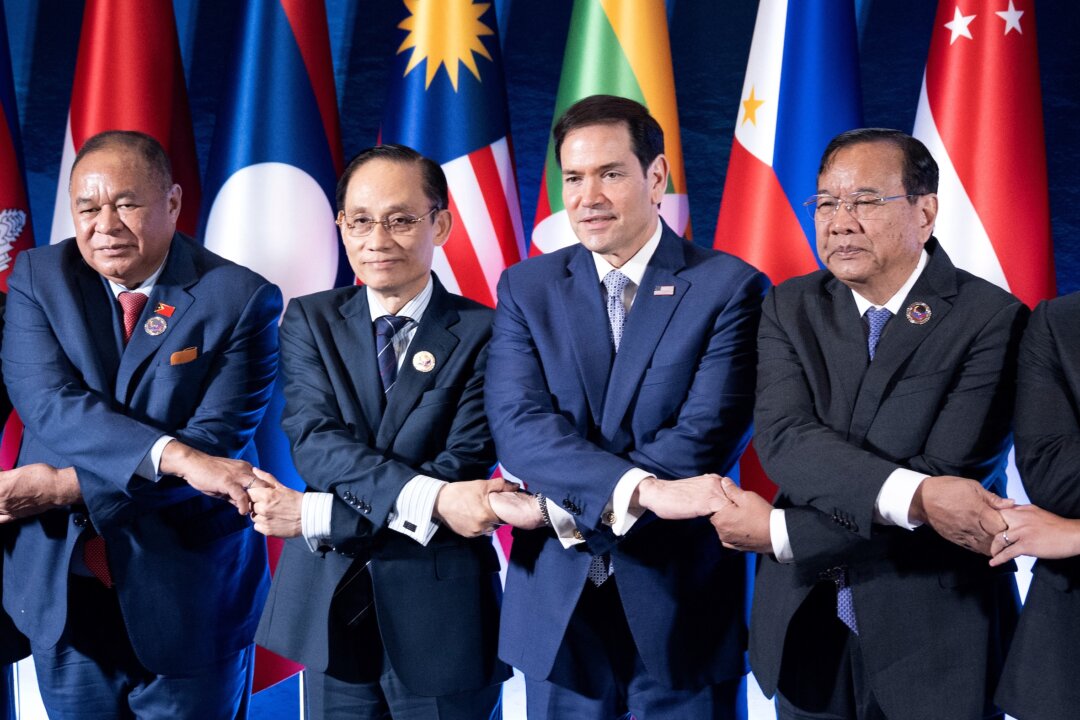

U.S. Secretary of State Marco Rubio told the United States’ partners in the Association of Southeast Asian Nations on July 22 that the United States stands “open-minded and always willing” to negotiate with an Iran that is serious about keeping its commitments.
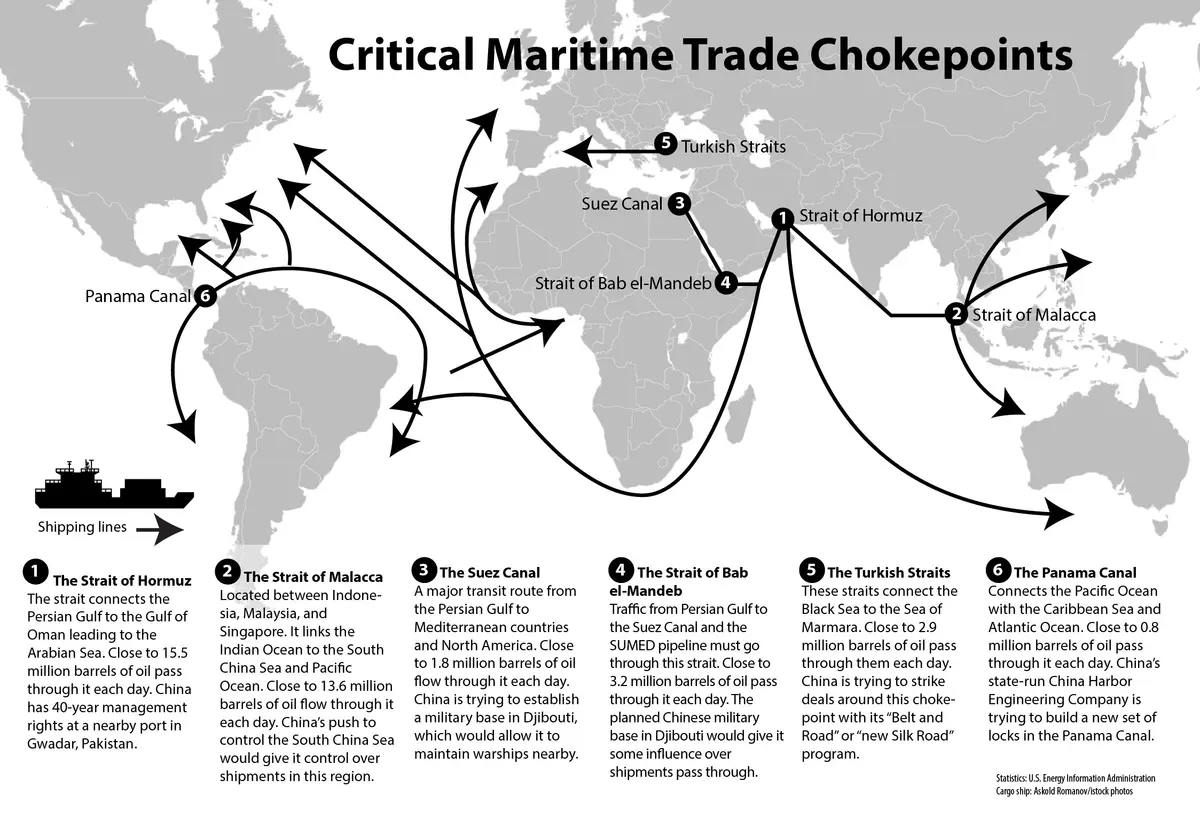
Foreign ministers from the 11-member Association of Southeast Asian Nations (ASEAN) and major partners have meetings in Manila this week against a backdrop of instability since the United States and Iran resumed open conflict, raising fears about energy supplies through the Strait of Hormuz, as well as inflation and global growth.
In remarks made at a post-ministerial conference, Rubio assured U.S. partners that “the United States is always committed to diplomacy.”
“And that remains true in the case of Iran,” he said.
He said that although Iran has made both direct and indirect approaches to the United States to reach a settlement, “they have not kept their commitments.”
Rubio said the challenge to ending the conflict now is that Tehran has shown “that they’re not serious about talks.”
“If they’re serious, we’re serious,” he said. “If they’re not, then we will do what is necessary to protect that, our interests, and also the interests of our allies.”
He also warned that if the United States and its allies allow the Iranian regime to “control the transit of traffic” through the Strait of Hormuz, it creates a precedent for a nation state to “decide that they are going to control an international waterway, charge a toll, and if you don’t pay them, blow up your ships.”
He said this would inevitably “repeat itself in other parts of the world,” including in Southeast Asia, where China’s ruling communist party is pushing claims of sovereignty over almost the entire South China Sea, including maritime areas belonging to the exclusive economic zones of the Philippines, Malaysia, Vietnam, Brunei, and Indonesia.
He said that as with China, Iran does not have “any existing legal mechanism” under international law to progress its demands.
Maritime Tensions
ASEAN members met in the Philippines on July 21, where their foreign ministers expressed deep concern about the effects of disrupted transits through key maritime trade routes in the Middle East and disputed territorial claims in the South China Sea.
In attendance at the summit were the 11 ASEAN member states—Brunei, Cambodia, Indonesia, Laos, Malaysia, Myanmar, the Philippines, Singapore, Thailand, East Timor, and Vietnam. ASEAN’s external partners—including the United States, Australia, Canada, China, the European Union, India, Japan, South Korea, New Zealand, Russia and the UK—are participating in related meetings in Manila this week.
On July 20, Yemen’s Iran-aligned Houthis declared a naval blockade against Saudi Arabia, opening a potential new front in the Middle East conflict. China and the Philippines were locked in a dispute on July 20 after another violent clash in the Philippines’ exclusive economic zone that left a Filipino sailor wounded by Chinese coast guard crewmen.

Houthi fighters brandish their weapons during a protest in the Houthi-controlled capital Sanaa on Jan. 12, 2024. Mohammed Huwais/AFP via Getty Images
The United States called on the Chinese communist regime to cease its “destabilizing conduct” with the Philippines in the South China Sea.
ASEAN ministers addressed China’s aggression in a statement.
“We are deeply concerned that these developments severely undermine the ongoing efforts of key mediators and diminish the prospects for a peaceful resolution through dialogue and diplomacy,” they said.
“We reaffirmed the importance of maintaining maritime safety and security, and upholding freedom of navigation in and overflight above straits used for international navigation, in accordance with international law, in particular the 1982 UNCLOS.”
Chinese Foreign Minister Wang Yi, during talks with ASEAN Secretary-General Kao Kim Hourn on July 21, addressed the July 20 clash, saying that certain elements of the Philippines’ security apparatus had “deliberately engaged in provocations and created maritime incidents,” according to Beijing’s readout of the meeting.
Tensions between the Philippines and China have increased in recent years as Beijing continues to press its claims—widely viewed as illegal under international law—to islands and features in the sea. As a result, Philippine President Ferdinand Marcos has pursued closer defense ties with Washington and expanded security relationships with Australia and Japan.
In an op-ed published by Inquirer.net ahead of the summit in Philippine media, Rubio reiterated that the United States stands ready to back Southeast Asia as a “region that determines its own future.”
He expressed the United States’ shared concern with its ASEAN partners that if freedom of navigation in the region’s sea lanes is disrupted by “a power willing to use commerce as a geopolitical weapon,” they would all face “dire new threats to their sovereignty, security, and economic futures.”
He wrote that in marking the 10th anniversary of the 2016 Arbitral Tribunal ruling on the South China Sea, which ruled in favor of the Philippines against China’s claims, the United States is also stepping up its “active role in deterring conflict” and protecting sovereign interests in the region.
“The [United States] will continue to stand for lawful maritime rights and freedom of navigation in the region. And we will honor our obligations to the Philippines and other allies as they confront new and coercive threats to our shared interests,” he wrote.
2nd Middle East Front
Following the Houthis’ July 20 threat, three oil tankers carrying Saudi crude to China and India reversed course in the Red Sea on July 21, heading toward the Suez Canal rather than braving the Yemeni coast at the sea’s mouth.
The Houthis are designated a terrorist group by the United States, alongside the internationally recognized government of Yemen, Saudi Arabia, the UAE, Malaysia, Israel, the UK, Canada, and other countries.
Trump said he would act against the Houthis if they closed Bab el-Mandeb. The Epoch Times
U.S. President Donald Trump said the Houthis had not yet shut the Bab el-Mandeb, the strait leading into the Red Sea, and threatened to act against them if they do.
“So far, it hasn’t happened,” Trump said. “If something like that happens, we take care of it.”
With Iran already restricting shipping through the Strait of Hormuz, the Red Sea has served as an alternate route out for millions of barrels of Saudi oil per day.
Oil prices rose further in Asian trade on July 22 after climbing by more than 2 percent on July 21 following the Houthi threats; Brent crude was hovering at more than $91 per barrel, and U.S. gasoline was back to more than $4 per gallon.
Ceasefire Proposal
Iranian Ministry of Foreign Affairs spokesman Esmaeil Baghaei confirmed on July 20 that Tehran had received proposals from several mediators seeking to ease tensions with the United States, while responding to reporters’ questions about Qatar’s new initiatives, including a possible 10-day ceasefire.
Baghaei said diplomatic efforts were continuing alongside Iran’s military response, including mediators working to prevent further escalation.
“The proposals put forward through mediators have been conveyed to us, and we have received them,” he said. “However, I would rather not go into their details at this stage.”
Trump declared the ceasefire over on July 8, calling agreements with Iran a “waste of time.”
“They’re a bunch of lying guys,” he said, while leaving the door open for further talks.
Trump threatened on July 20 to strike the Iranian nuclear site at Pickaxe Mountain.
“There’s not a thing they can do about it. You know, normally I wouldn’t say that. If I thought they could do something about it, I would never say that. But we’ll be hitting that area pretty soon, and very heavily,” the president said in response to a question about whether Iran moved its nuclear centrifuges to Pickaxe Mountain.

A satellite view shows an overview of the Natanz nuclear facility and Pickaxe Mountain, near Natanz, Iran, June 30, 2026. Vantor/Handout via Reuters
Iran’s Khatam al-Anbiya central military command responded by warning that an attack on the facility would mark a major escalation.
“In that event, all U.S. assets, along with those of its allies and backers, will be subject to a decisive strike by the Islamic Republic of Iran’s Armed Forces,” Iranian state-run media outlet IRNA said in a statement citing the central command.
Senior Israeli officials told Epoch Magazine Israel they believe that the Iranian warning was also directed at Israel, and they said that Tel Aviv was preparing for the possibility that it may have to join the campaign if Trump carries through with the strikes.
They said that Israel is proceeding with great caution to avoid being accused of pushing the U.S. president into a wider war. If Iran attacks first, Israel will respond on a broad scale and make full use of the military options available to it, they said.
Qatar is leading the proposal for the 10-day ceasefire, they said. The United States has already stepped up its military preparations in the region.
Jack Phillips, Tom Ozimek, and Reuters contributed to this report.