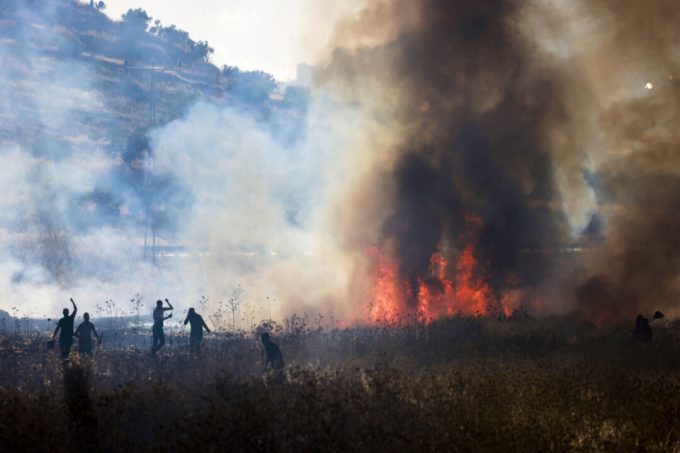

An unidentified projectile struck a commercial tanker in the Strait of Hormuz, maritime authorities said on Aug. 27, as Iran and Oman negotiate new transit arrangements for the critical shipping lane.
The United Kingdom Maritime Trade Operations (UKMTO) said local authorities reported that the projectile ignited a fire on the vessel that was later brought under control. All crew members were safe and accounted for, and there was no reported environmental impact.
Iran and Oman have reached a potential agreement to manage ship traffic in the Strait of Hormuz, which would exclude military vessels from traversing one of the world’s most important maritime routes for oil exports.
Iranian Deputy Foreign Minister Kazem Gharibabadi told Iranian state television on Tuesday that inbound commercial vessels entering the Persian Gulf would temporarily transit through Iranian territorial waters, while outbound traffic would travel partly through Iranian waters and partly through Omani waters.
He said the arrangement would be temporary and that Tehran and Muscat would work toward a permanent maritime traffic plan within 30 to 60 days.
The talks come after months of tensions over navigation through the waterway, which has become a central point of dispute between Iran and the United States during their conflict.
U.S. President Donald Trump on Aug. 17 told Fox News chief foreign correspondent Trey Yingst that the United States would bomb Oman if it “gets in the way.”
The Epoch Times reached out to the Omani Foreign Ministry for comment but didn’t receive a response by publication time.
Hormuz Operations
Before the attack on the commercial tanker on Thursday, Trump said the Strait of Hormuz continues to function.
“We got rid of the mines,” Trump told radio host Glenn Beck on Aug. 26. “But the strait, it’s functioning, it’s a functioning strait. Yes, every once in a while there will be a drone or a rocket or something shot, but it is a very functioning strait. A lot of oil is pouring out.”
Trump said about 10 million barrels of oil moved through the strait on Aug. 26, and he repeated that “we cannot let Iran have a nuclear weapon.”
His comments followed an Aug. 25 post on social media in which he said U.S. forces had removed “all mines” that Iran had allegedly placed in the waterway and warned that vessels believed to be laying additional mines would “be immediately and systematically destroyed.”

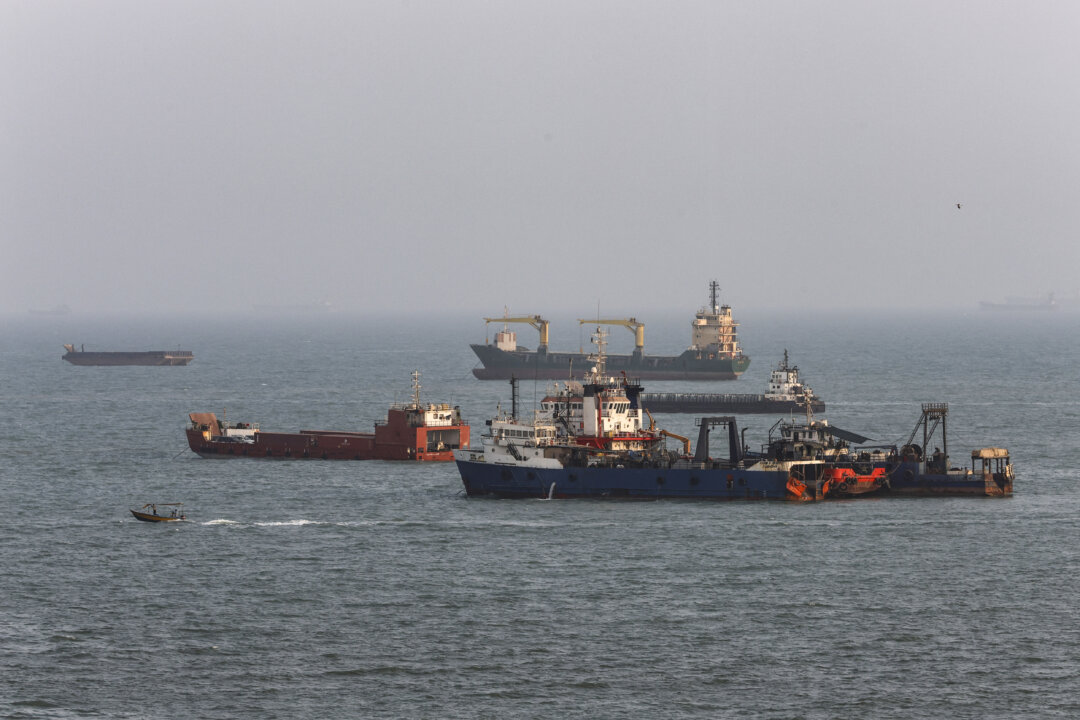
Vessels near the Strait of Hormuz, as seen from Musandam, Oman, on Aug. 17, 2026. STR/Reuters
Commercial shipping through the Strait of Hormuz increased modestly despite the security concerns, data showed on Thursday.
Visible commodity vessel transits totaled 10 on Aug. 26, up from eight the previous day but still below the 10-day moving average of about 15 vessels, according to shipping analytics company Kpler.
The traffic included two medium-range fuel tankers, a liquefied petroleum gas carrier, a Panamax tanker, and three Handymax tankers entering the strait from the Gulf of Oman.
A medium-range fuel tanker, a bitumen tanker, and a bulk carrier exited the Persian Gulf through the waterway.
Traffic also slowed for a second day at the Bab el-Mandeb Strait, another strategic maritime chokepoint, where 19 commodity vessels transited on Aug. 26 compared with 24 the previous day.
Kpler noted that some ships may be sailing with their transponders switched off, meaning actual traffic could be higher than visible tracking data indicates.
Analysts said a maritime agreement between Iran and Oman alone would not be enough to restore normal shipping patterns.
“Any agreement between these two parties does not mean we will see normalisation in oil flows through the key chokepoint,” ING Economics said in an Aug. 26 research note. “We would likely need to see the US lift its blockade on Iranian ports and ease sanctions on Iran before we see any move towards normalisation.”
Qatar Presses Diplomatic Efforts
The latest maritime incident came as Qatar renewed efforts to mediate between Tehran and Washington.
Qatari Prime Minister Sheikh Mohammed bin Abdulrahman Al Thani traveled to Tehran on Aug. 27 for talks aimed at finding “ways to de-escalate tensions & create the conditions conducive to dialogue,” Qatari Foreign Ministry spokesperson Majed al-Ansari said in an Aug. 26 post on X.
“The discussions will also address freedom of navigation in the Strait of Hormuz & the need for it to return to the status quo prior to February 28.”
Qatar, a close U.S. ally that also maintains ties with Iran, played a key role in brokering the June ceasefire and has continued to act as a back-channel mediator between the two sides.
Reuters and The Associated Press contributed to this report.