The Meaning of the Market Crash
 Jeffrey A. TuckerUpdated 3 hours Ago5 Mins read
Commentary
It’s been a rough few months in the stock market. It should serve as a reminder. Those numbers you see in your brokerage account are not your savings. They are your current valuations. You should never regard them as your assets unless you cash them out. Otherwise, they are always and everywhere at risk.
Media has a bad habit of treating valuations as assets. So when one man’s stock portfolio reaches $1 trillion, they call him a trillionaire. They should always add: in valuation. The money only arrives when one sells the ownership stake. Then you no longer have the assets. You miss both the upside and the downside.
The scale of what just happened to the financial markets does not yet compare with the dot-com bust of 2000 but it does compare with the pandemic panic of March 2020.
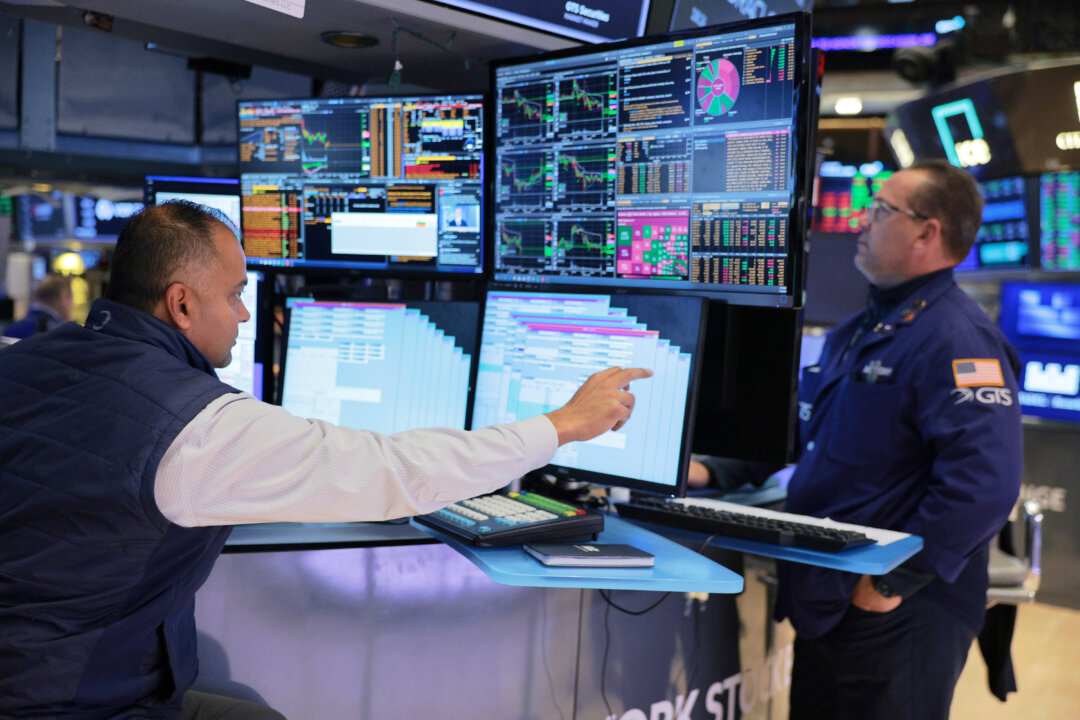
The S&P 500 fell roughly 11.6 percent from its October 6 all-time high. The Nasdaq Composite dropped about 18 percent from its October peak, erasing its year-to-date gains. The Dow moved into correction territory. This included a seven-session losing streak for the S&P 500, the longest since the early COVID period, and the worst weekly performance since the April 2025 tariff selloff.
Trillions in global market value were wiped out, concentrated in semiconductors, AI, and related risk assets. Bitcoin and other speculative assets also fell hard. The Bitcoin crash is deeper and more intense than anyone in the industry expected. The “to the moon” culture of this industry is dialing back, with more people wondering if the rocket will actually crash to the earth.
By comparison, the 2000–2002 dot-com bust was vastly deeper and more prolonged. The Nasdaq plunged roughly 78 percent from its March 2000 peak to its 2002 low as internet and tech valuations with little supporting revenue collapsed. The broader S&P 500 fell about 49 percent over a multi-year period. Recoveries took years for the S&P and more than a decade for the Nasdaq.
“Dot-coms are revolutionary. Buy, buy, buy!”
“Dot-coms are stupid. Look at Pets dot com. Sell, sell, Sell!”
Then, eventually, dot-coms came to rule all.
The March 2020 pandemic panic was more similar in character and speed, if larger in ultimate scale so far. The S&P 500 dropped about 34 percent from its mid-February peak to its March 23 low in roughly one month, with extreme single-day declines.
It was a compressed, fear-driven liquidation amid sudden uncertainty. Key drivers this time have included doubts about the returns on massive AI infrastructure spending, heightened inflation that has raised expectations for further Fed rate hikes, related financing and leadership concerns in the chip sector (including at Nvidia), and a record Anthropic IPO that failed to calm anxieties.
Like the dot-com bust, this one feels like a classic case of overexuberance experiencing a sudden turn to exaggerated pessimism. A man next to me on the plane asked if I thought Anthropic’s valuation was too high or too low. The question has no rational answer and I said so. For my own part, I suspect that everyone has undervalued the meaning and import of AI. It is far more powerful than people think. Far more!
“AI is revolutionary. Buy, buy, buy!”
“It’s a stupid parlor trick, a fancy search engine. Sell, sell, sell!”
You can fill in what happens next.
AI is fully capable of absorbing every routine operation within today’s professional world. The implications of this are profound in ways we cannot fathom. I would be cautious about overly apocalyptic scenarios and predictions of soaring levels of prosperity too. We heard the same things about the Internet. The actual results come closer to what Joseph Schumpeter called creative destruction: some economic structures die while others emerge in ways that are surprisingly great.
That such an upheaval—AI is at least as significant as internal combustion or telephony—would be accompanied by stock-market disturbances in all directions is not surprising in the slightest. If you are concerned about your portfolio, look back to 2000: those who paid no attention to the crash—or bought at the lows—found themselves rich beyond all expectations 15 years later. Approaching investing without mercurial emotion is really the best way.
This time, there are unusual challenges for the Federal Reserve. In 2000, the Fed started its rotten experiment with zero interest rates. This intensified in 2008. The monetary regime flipped the whole investing dynamic of capitalism in ways that we’ve never seen. Saving and frugal investing were punished while leverage and speculation became the main path to seeing returns on one’s money. Carrying debt was more rewarding than holding assets.
This topsy-turvy new world generated the financialization that ate so much of the old world, and led to the buy-out boom that crushed small business and consolidated nearly everything else. This was mainly a consequence of misguided policy decisions by the Fed. To top it off, these policies did not stop the stock-market correction in 2000 or 2008.
The Fed faces no such options today. In real terms, short-term rates are already at zero. It would be beyond foolish to push them lower just as inflation is heating up again, as can be seen in all the latest price figures. The drop in gas and energy prices helps but they are still only half fallen to pre-Iran war levels. A second wave of inflation is a genuine and growing threat.
So markets are correct in perceiving no help coming from the Fed. That alone could have been what drove markets down. If the Fed does anything now, it will have to prioritize controlling inflation over bailing out AI. This is exactly the right decision. Financial markets need a good cleansing from time to time.
Long term, the outlook for all AI enterprises heavily depends on whether we can preserve open-source models or whether closed-source models alongside government regulation will consolidate the industry, as many of the dominant market players clearly desire. A consolidated and cartelized AI market will throttle advances and raise prices on users of all sorts. This is why everyone has an interest in keeping this market free of government interference.
I’m particularly concerned about the tightening alliance between big pharmaceutical companies and Anthropic, with the usual intermediary of the Gates Foundation.
“We’re partnering with the Gates Foundation to commit $200 million in grant funding, Claude usage credits, and technical support for programs in global health, life sciences, education, and economic mobility over the next four years,” Anthropic announced in May 2026. “These programs will be implemented with partners in the US and around the world. This commitment is central to Anthropic’s efforts to extend the benefits of AI in areas where markets alone will not.”
Call me skeptical that any good comes from this alliance.
To return to market indexes, if you did not sell it all in the fall—and few did—your best move might be not to panic. And also learn the great lessons: valuations are not assets, financial prices are not your money, and your stock portfolio is always and everywhere a risky way to earn money. That’s the truth of the matter, no matter how much popular culture seeks to confuse you.
Views expressed in this article are opinions of the author and do not necessarily reflect the views of The Epoch Times.







Federal Audit Finds the CFPB’s Information Security Program Still Not Effective
On Oct. 27, the Federal Reserve’s Office of Inspector General, which also...

Nvidia Reinstates Jensen Huang as CEO
Then-Nvidia CEO Jensen Huang presents his keynote speech at the Computex 2026...

Australia Defends Role as UN Climate Summit Ends Without Deal
COP31 President of Negotiations Chris Bowen speaks to the media after the...

Patriotism Is a Virtue We Need to Reclaim
CommentaryIn 1917, as World War I raged, British soldier Wilfred Owen drafted...