US Coast Guard Seizes Vessel With $2.4 Million Worth of Suspected Marijuana
 Naveen AthrappullyUpdated 3 hours Ago2 Mins read
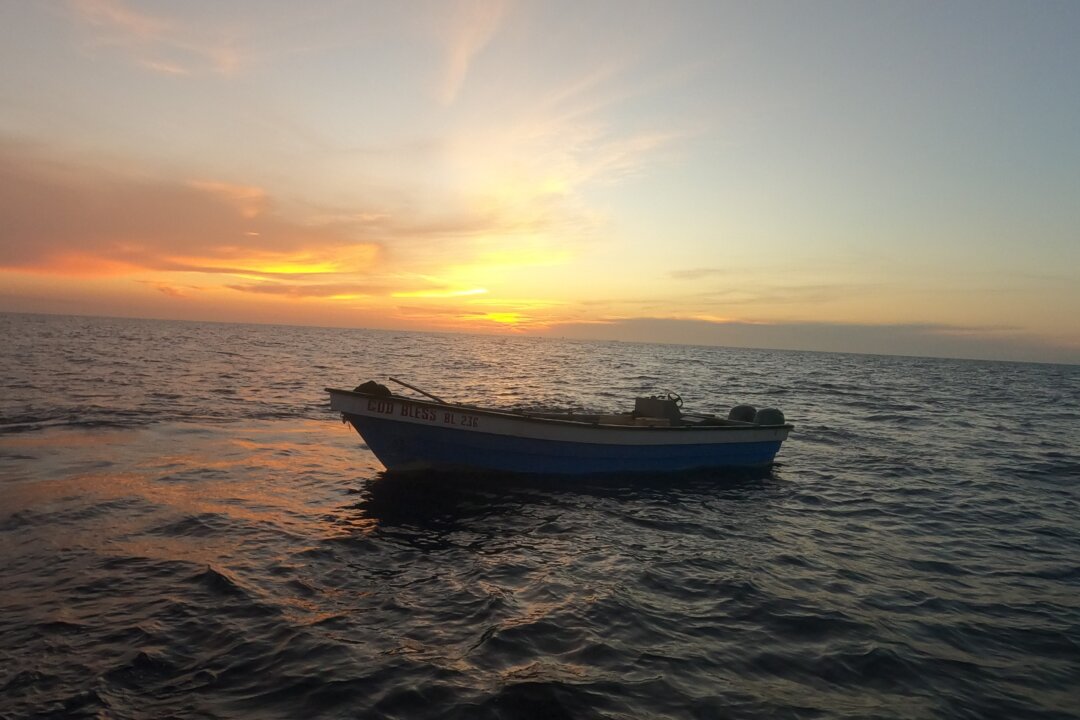

During a routine patrol, the crew of U.S. Coast Guard Cutter Escanaba detected a suspicious go-fast vessel and launched a boat crew to investigate. Courtesy of the JIATFS
The U.S. Coast Guard detected a suspicious go-fast vessel during a routine patrol, leading to the confiscation of suspected marijuana worth more than $2.4 million, authorities said.
Joint Interagency Task Force South (JIATFS) said in a Sept. 3 post on X that after the vessel stopped without incident, the crew of USCG Cutter Escanaba investigated and discovered a bale field along the vessel’s route.
The task force said the Coast Guard “recovered 47 bales of suspected marijuana, weighing a total of 2,082 pounds.” Four individuals were detained. The task force did not say where the incident happened, but thanked the Joint Rescue Coordination Center Haiti for its support.
JIATFS, a Florida-based task force, is an alliance of 13 domestic and 20 international partners that monitors and facilitates the interdiction of drug traffickers in maritime and air domains. The task force operates across 42 million square miles and aims to disrupt the flow of illegal drugs and dismantle transnational criminal organizations.
Last year, the Coast Guard’s activities stopped 231 narco-terrorists and interdicted a total of 231 metric tons of drugs in 2025, according to the agency.
Drug Trafficking Crackdown
The Caribbean is a “critical transshipment zone” for narcotics trafficking, according to the 2026 National Drug Control Strategy report released in May.
Most of the shipments are cocaine that originates from South America and is destined for the United States and Europe. U.S. territories, such as the Virgin Islands and Puerto Rico, act as the staging point from which the narcotics are shipped to the U.S. mainland, the Office of National Drug Control Policy said in the report.
Transnational criminal organizations use the Caribbean’s geography—thousands of islands spread across vast distances—to hide their operations. South American drug manufacturing and shipping networks exploit corruption to facilitate their operations.
The organizations “use highspeed ‘go-fast’ boats, low-profile vessels, submersibles, and semi-submersibles to move multiton quantities of cocaine,” the office stated in the report. “This threat has led to a fundamental shift in the U.S. Government’s posture from a law enforcement-led mission to a security-focused campaign.”
A drug trafficking network, based in Ecuador and linked to cartels and gangs from Mexico, faced sanctions from the Treasury last month, the Department of the Treasury said in an Aug. 20 statement.

U.S. Coast Guard Cutter Escanaba in Panama City on June 24, 2025. Anna Moneymaker/AFP via Getty Images
In total, 15 Ecuador-based targets were sanctioned by the Treasury’s Office of Foreign Assets Control. The network used vessels to ship thousands of kilograms of cocaine from South America to Mexico every month, with the narcotics sold in the United States.
The vessels operated as legitimate fishing businesses while discreetly conducting drug trafficking. In total, 10 vessels alleged to have been used to traffic the drugs were designated as blocked property.
U.S. Treasury Secretary Scott Bessent said in the statement that the department was “relentlessly targeting the narcoterrorist networks that profit from poisoning Americans.”
The Centers for Disease Control and Prevention said in a March 2025 report that around 19 percent of Americans used marijuana, or cannabis, at least once in 2021.






Delaware Festivalgoers Voice Outrage Over Forced Organ Harvesting in China
Amid cultural celebrations at the Baila Con Dover Latin Festival at the...
Ohio State Agrees to $2.1 Million Federal Settlement Over Undisclosed China Research Ties
Ohio State University has agreed to pay $2.1 million to resolve federal...

Australian Government Admits Tax Changes Contributed to Housing Downturn
A ‘SOLD’ sticker is seen on a sale sign in front of...
New Jersey Asks Supreme Court to Uphold State Regulation of Prediction Markets
New Jersey asked the U.S. Supreme Court on Sept. 2 to decide...