US Crude Production Projected to Hit Record High in 2026
 Naveen AthrappullyUpdated 3 hours Ago2 Mins read
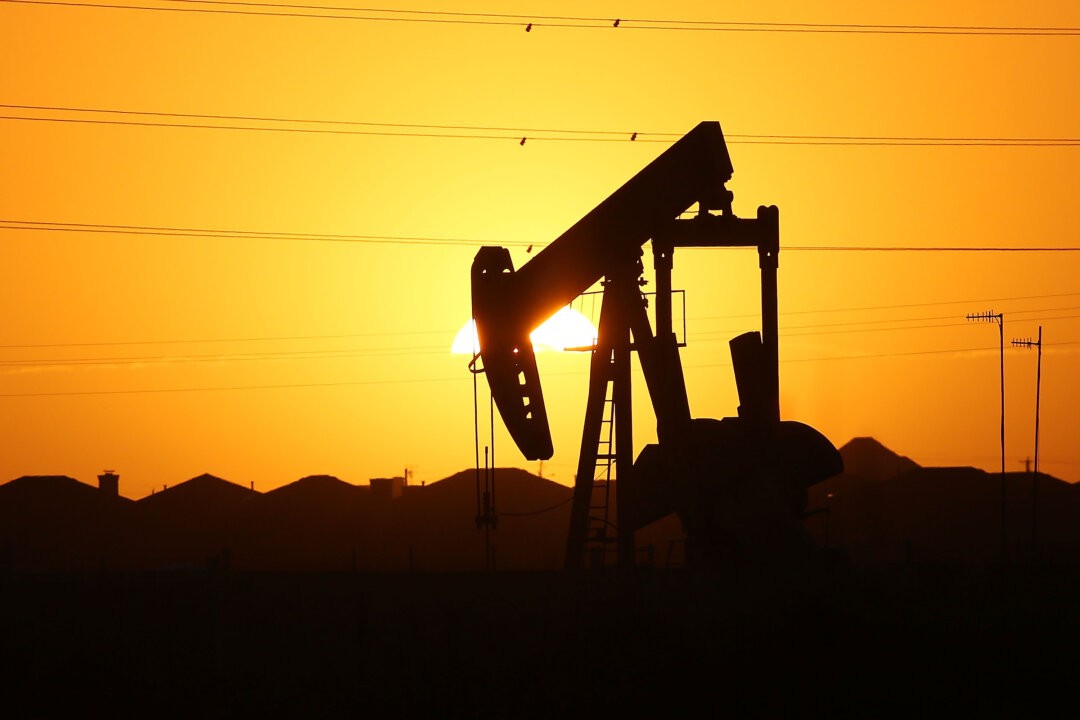
The United States is expected to output a record 13.8 million barrels per day (b/d) of crude oil in 2026, with four new oil production projects expected to come online by year-end.
If the 2026 output projections materialize, it would surpass the U.S. oil output record of 13.7 million b/d set last year, the Energy Information Administration (EIA) said in a Sept. 10 statement.
Oil production in the first half of 2026 has already exceeded output from the same period last year, with most of the growth concentrated in the Federal Gulf of America and the Permian region in Texas and New Mexico.
In the Federal Gulf of America region, crude oil output rose by 10 percent in the first half of 2026 compared to 2025. Oil output is forecast to rise 3 percent in 2026 overall in the Federal Gulf of America.
The EIA said it is expecting four new oil production projects to go live in the region by the end of 2026, “further contributing to forecast production growth this year.”
However, the agency warned that hurricanes could disrupt these projects’ development and production timelines.
Oil production growth in the Federal Gulf of America in the first half of 2026 was driven by four oil projects that came online in the past year. In January 2025, the Whale Floating Production Unit (FPU) came online and has produced an average of 38,000 b/d. In April 2025, the Ballymore project went live and averaged 58,000 b/d.
The Shenandoah FPU has averaged 70,000 b/d since going online in July 2025. The fourth project, Salamanca FPU, went live late last year and has averaged 25,000 b/d.
In the Permian region, production is forecast to grow 3 percent annually, driven by higher oil prices.
Last year, the United States was the world’s largest crude oil
producer
. Russia ranked second, followed by Saudi Arabia.
Moreover, the gap in oil production between the United States and other top producers widened, with Russian output largely unchanged year over year, while Saudi Arabia reported a modest increase.
The EIA’s forecast for a record U.S. oil output this year comes amid concerns about declining global demand. The International Energy Agency (IEA) said in a Sept. 11 report that global oil demand is expected to shrink by 2.5 million b/d in 2026.
“With the protracted US-Iran diplomatic standoff and renewed attacks in both the Gulf and the Red Sea’s Bab el-Mandeb choke point continuing to hamper the normalization of oil flows, we have further cut our supply and demand projections for the remainder of the year,” the report said.
The conflict between the United States and Iran has escalated in recent days.
On Thursday, the U.S. Treasury Department’s Office of Foreign Assets Control
announced
sanctions against networks it said supported Iran-backed terrorist groups Kataib Hezbollah and Lebanese Hezbollah. Meanwhile, Iran’s military previously
warned
on Wednesday that it would sharply escalate its response to American strikes.
Oil Market Forecast
The EIA said in a September 2026 Short-Term Energy Outlook report that Middle East oil output is expected to improve over the next year.
“We forecast oil production in the Middle East will rise in the coming months because of gradually increasing flows through the Strait of Hormuz and the use of alternative routes out of the region,” the report said.
“However, we assume some constraints to exporting oil from the Middle East will persist through the end of the year, which keeps crude oil production in the region below pre-conflict averages until the second quarter of 2027.”
President Donald Trump recently
said
that America’s war with Iran could likely end after the midterm elections, set to be held on Nov. 3.
In a Truth Social post on Monday, Trump
said
that gasoline prices could go down to $3 per gallon and ultimately below $2 once the United States wins the war against Iran. A gallon of regular gasoline cost $4.31 per gallon on average nationwide on Saturday.





US Blockade of Iran Redirects 100 Ships in 60 Days, CENTCOM Says
U.S. forces have redirected 100 commercial vessels over the past two months...

Trump Lands in Dublin, Talks Trade Deficits, Unified Ireland
DUBLIN—U.S. President Donald Trump landed in the Irish capital on Saturday for...

Why Your Long-Term Care Insurance Premium Has Soared
Individuals who have purchased long-term care insurance are now facing significant premium...
US House to Vote on Russia Sanctions Bill Next Week
The U.S. Capitol building on Aug. 17, 2026. Madalina Kilroy/The Epoch TimesThe...