US Economy Adds 162,000 New Jobs in August, Far Higher Than Market Expectations
 Andrew MoranUpdated 1 hour Ago3 Mins read
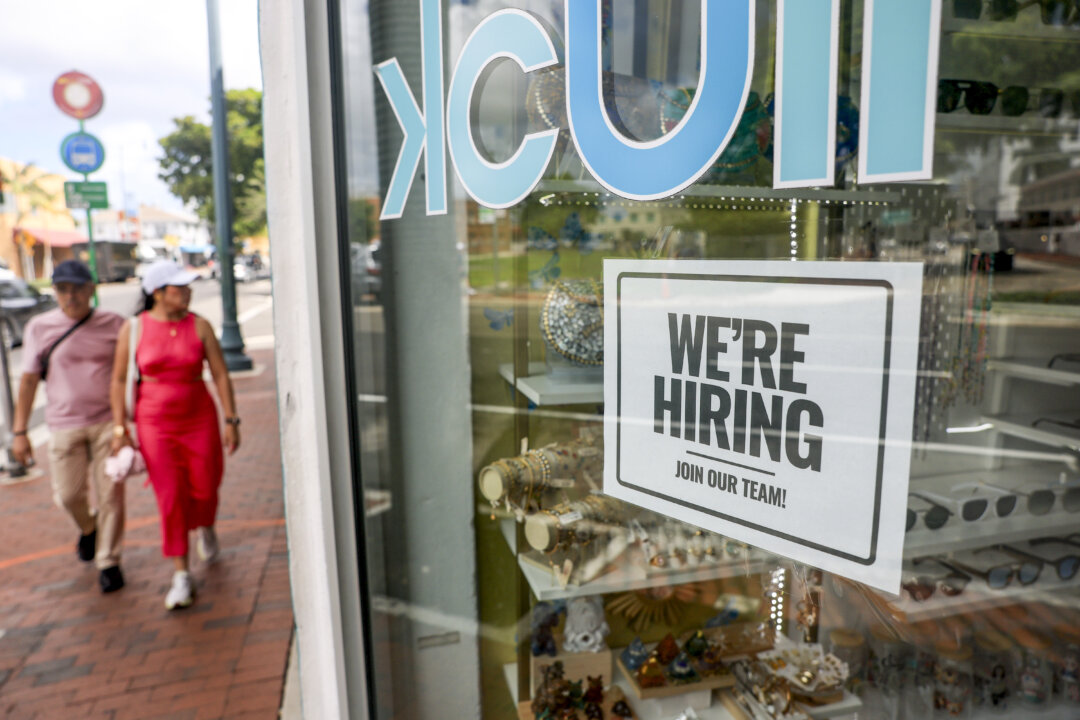
The U.S. economy reversed a summertime hiring slowdown as August payrolls accelerated at their best pace since March.
Last month’s nonfarm payrolls surged by 162,000, far higher than the consensus estimate of 56,000, according to data released by the Bureau of Labor Statistics—a government agency tracking jobs, inflation, and wages—on Sept. 4.
Payrolls were also revised up for the past two months.
July’s was adjusted higher, from a loss of 23,000 to a gain of 21,000. June’s number was also revised up by 11,000, from 20,000 to 31,000.
Year-to-date, the economy has added 643,000 jobs, eclipsing last year’s pace of 156,000.
The unemployment rate, meanwhile, was unchanged at 4.1 percent for the second consecutive month, in line with economists’ expectations.
Average hourly earnings edged up 0.3 percent, from an upwardly revised 0.2 percent in the previous month.
On a 12-month basis, average hourly wages eased to a higher-than-expected 3.1 percent—below the annual consumer inflation rate of 3.4 percent.
Employment gains were broad-based, with restaurants and bars leading the way, adding 59,000 jobs.
Local government education payrolls increased by 42,000, “largely offsetting a decrease in the prior month,” the bureau reported. The industry’s payrolls have changed little since January 2025.
The construction and manufacturing sectors logged sizable job growth, with 22,000 and 16,000, respectively.
Healthcare, which has accounted for a notable share of payroll gains over the past few years, saw employment rise by 13,000, “a slower pace than the average monthly gain over the prior 12 months” of 32,000, according to the bureau.
The artificial intelligence boom might have affected U.S. payrolls, with information-related industries losing 23,000 jobs. This places the 12-month average at a loss of 8,000, the bureau said.
After plummeting to its lowest level since the 1970s in July (excluding the COVID-19 pandemic), the labor force participation rate rebounded to 61.6 percent, from 61.4 percent.
With a shrinking labor supply and shifting dynamics—including changes to immigration policies and the retirement of baby boomers—workforce participation has been steadily declining.
Employed full-time workers jumped by more than 700,000. Conversely, employed part-time workers slipped by 223,000. The number of individuals working two or more jobs rose by 112,000.
The average workweek ticked up to 34.4 in August.
Overall, the numbers indicate that employers could be on a hiring spree heading into the fall after a quiet summer.
“The August jobs report shocked just about everybody,” Ken Mahoney, CEO at Mahoney Asset Management, said in a note emailed to The Epoch Times.
“In a normal world, that is good news. Employers hired. The labor market did not roll over.”
Market Reaction
Despite a solid jobs report suggesting the national economy is humming along, Wall Street showed little reaction.
The blue-chip Dow Jones Industrial Average and the broad-market S&P 500 were in the red after the August jobs report. The tech-heavy Nasdaq Composite Index picked up a 0.2 percent gain.
“One of the head-scratching terms that come out of Wall Street is that ‘good news is bad news,’ and that’s the case this morning, where a great Jobs report … had an instant reaction of stocks and bonds selling off,” Chris Zaccarelli, chief investment officer at Northlight Management, said in a note emailed to The Epoch Times.
Yields on Treasury securities were up across the board. The benchmark 10-year yield—a key rate that influences business and household borrowing costs—topped 4.78 percent. The 30-year ticked up to almost 5.25 percent. The 2-year, which generally tracks monetary policy expectations, surged to nearly 4.39 percent.
A better-than-expected nonfarm payrolls report could give the Federal Reserve breathing room to either leave interest rates higher for longer or follow through on a rate hike at this month’s policy meeting.
Investors are split on whether officials will continue to hold off or pull the trigger on a rate hike as they assess the fallout from war-driven inflation, according to CME FedWatch data.
“The big issue for markets is whether or not the Federal Reserve will raise interest rates later this month and although inflation has been an issue, the job market has been more variable, and for some members of the [Federal Open Market Committee], it has been something they had kept an eye on and has been one reason they weren’t raising rates more quickly to fight inflation,” Zaccarelli added.
The Federal Open Market Committee will convene its two-day meeting on Sept. 15.





Most US Workers Fear Obsolescence in AI Era, Experts Say Adaptation Goes Beyond Tech
Just as “The Obsolete Man,” which aired in 1961, depicted a future...
US Home Delistings Decline as Sellers Become More Willing to Make Deals
Property delistings nationwide recorded a year-over-year decline toward the end of this...

The 401(k)-to-IRA Rollover Expenses You Never See
Often, when leaving a job, people want to roll over their 401(k)...

US Diesel Prices Hit Record High as Global Supply Crunch Deepens
Average U.S. diesel prices jumped to a record high on Friday as...