Why Beijing Is Gaining the Upper Hand in Deals With Ottawa
 HeraklesUpdated 5 days Ago5 Mins read
News Analysis
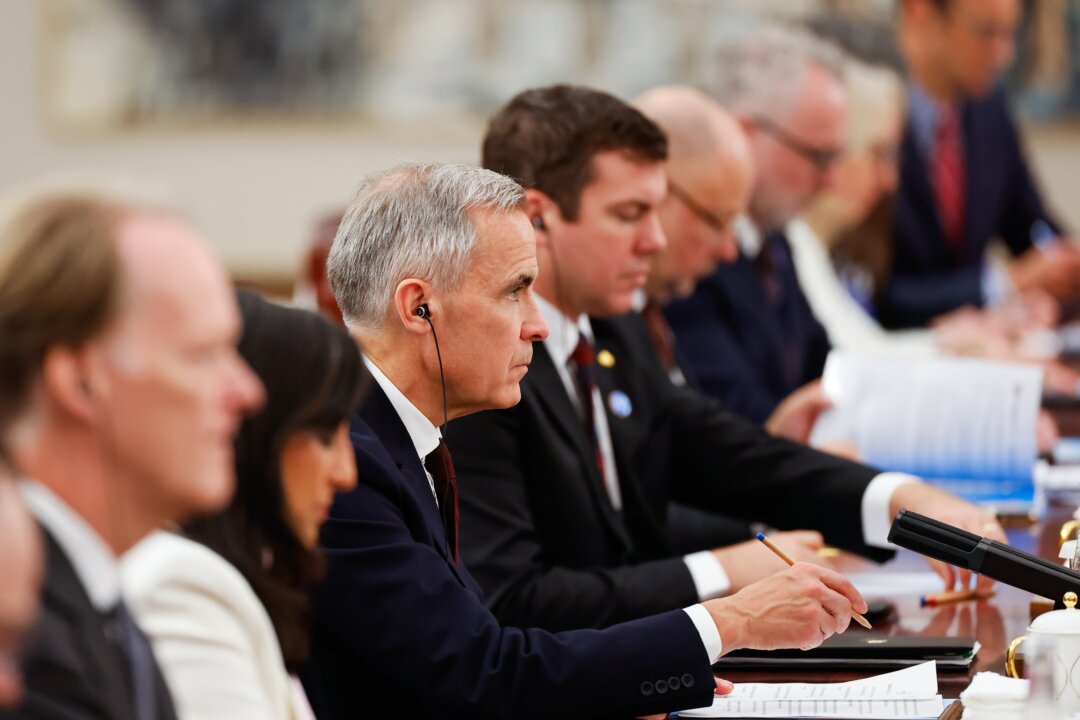
While Ottawa’s new deals with Beijing include reciprocal measures to ease trade restrictions on both sides, certain factors give Beijing the upper hand, according to China analysts.
“While Canada may gain short-term economic benefits and improved market access, Beijing potentially gains longer-term strategic leverage,” Scott McGregor, author and a former Canadian Armed Forces intelligence operator, told The Epoch Times.
Carney and Xi announced further tariff reductions on Canadian pork and seafood exports to China and further exemptions for Chinese steel and aluminum entering Canada during their Nov. 17 meeting in Shenzhen, China. This follows Carney’s earlier agreements to allow Chinese electric vehicles (EVs) into Canada up to a certain quota at a reduced tariff rate, replacing the previous 100 percent tariff, in exchange for China lowering tariffs on Canadian canola and other agricultural products. The two countries also reached agreements in other areas, including police co-operation.
The two leaders said the latest meeting builds on their pursuit of a “strategic partnership,” with Xi saying the work toward closer ties is the “right choice,” and Carney saying it’s part of reshaping the “global order that benefits all peoples through sustainable, peaceful, and human-centred growth.” The two met on the sidelines of the Asia-Pacific Economic Cooperation (APEC) Economic Leaders’ Meeting that is being held Shenzhen, China, this week.
Michael Kovrig, senior advisor to the International Crisis Group and a former Canadian diplomat to China, said the Beijing-Ottawa deals are “asymmetric.” He said China’s entry into the Canadian EV sector is a strategic gain for them, as it allows them to dominate the sector, whereas Beijing could easily revoke Canada’s access to the China’s canola customers at any time.
“Tariff relief for farmers and fishers is real but revocable. China’s gains are durable: a foothold for its EVs in North America and a financial pillar with bank licences on the table,” Kovrig said on X. According to Chinese news outlets, Chinese officials have said agreements include the establishment of more branches of Chinese banks in Canada.
“China’s asking price keeps rising. To roll over canola and seafood access, Ottawa extended surtax relief on cut-price Chinese steel and aluminum to 2028, in the middle of the CUSMA review. Weigh every deal in terms of long-term prosperity, security and sovereignty,” Kovrig added.
According to scholars from the Macdonald-Laurier Institute, Beijing uses state-controlled means of the economy in certain sectors, turning them into a “geopolitical weapon.” This includes, for example, its dominance in the critical minerals sector.
“By deliberately oversupplying key minerals and driving down prices, Beijing makes it nearly impossible for Western producers to attract private investment and sustain operations,” says the study, adding that it uses this dominance to gain concessions from the West.
The paper says that China’s dominance in EV production “is no accident,” but the result of a strategy developed over decades that has been “ignored” by the West.
“Western firms now find it difficult to gain a foothold in markets where Chinese companies enjoy Beijing’s support via subsidies, regulations, and scaling potential,” the paper says.
Canada’s domestic auto sector has raised concerns about the potential impact. Brian Kingston, CEO of the Canadian Vehicle Manufacturers’ Association, said the annual quota of 49,000 Chinese EVs that Canada is allowing to enter at a reduced tariff of 6.1 percent could accounts for about 30 percent of all electric vehicles sold in Canada.
“At its core, China’s strategy is to maintain structural dependence – keeping other states tied to Chinese systems and supply chains and limiting their ability to (re)industrialize and build strategic capacities needed in today’s era of intense geoeconomic and geopolitical rivalry,” the Macdonald-Laurier paper says.
America’s Northern Neighbour
Kovrig warns that Beijing’s goal is not simply to expand trade, but to normalize relations with the United States’ neighbour on “Xi’s terms” while Washington continues to apply pressure.
“Canada is the demonstration case for every other US ally,” Kovrig said. “Every warm photo feeds the CCP’s story that its system is legitimate and its power is rising. In Washington it reads as America’s closest partner drifting.”
While Carney recently said that the risk Beijing poses to the United States is less than its risk to Canada, Kovrig said Canada isn’t less exposed to China than the United States.
“It’s more vulnerable, with less deterrent. And its biggest China risk is indirect: if China weakens America, deindustrializes Europe, blockades Taiwan or bullies neighbours, that hurts Canada regardless of bonhomie with Beijing,” he said.
Dennis Molinaro, an academic and former national security analyst for the federal government, notes that steel dumping has been a major concern in trade talks with the United States, and that this has implications for Canada’s latest agreement to ease trade barriers on Chinese steel and aluminum.
“The United States is trying to prevent dumping of cheap Chinese steel into North America. Canada has exemptions to its China tariff for steel and aluminum that isn’t made in Canada. The US complaint is Chinese steel is entering the US through goods made in Canada with it,” he said on X.
“Decisions are being made with China that are making a deal with the US impossible.”
China also recently launched CA$846 in yuan-denominated sovereign bonds in Canada. The Chinese state-run Global Times said the move marks “another step in expanding the Chinese currency’s international reach” and creating an alternative to the U.S. dollar in trade. China has spearheaded the BRICS initiative with other nations including Russia, Brazil, and India to promote the use of its own currency in international trade.
Monaro said the move means that there is now a “G7 country hosting China’s push against the USD and tying Canadian institutions to China’s economy in a way that trade alone never could.”
McGregor said the recent pursuit of closer ties with China could compromise Canada’s relationship with the United States, “particularly regarding continental security and economic integration.”
“The primary concern is whether Ottawa has adequately assessed the national security implications of deeper engagement with Beijing. China’s established use of economic coercion, United Front operations, cyber espionage, and political influence creates risks beyond conventional trade,” he said.
Security Risks and Transnational Repression
Kovrig noted a recent report by the human rights group Safeguard Defenders that said China is operating numerous “liaison” points in the world, including in Canada, which conduct the work of Chinese police and other CCP organs.
“The [prime minister] should insist that China cease all transnational repression, seek Xi’s assent to publish the RCMP–Ministry of Public Security agreement, and call for named prisoners’ release,” he said, naming people such as Hong Kong democracy activist and publisher Jimmy Lai.
Carney aid ahead of his trip that he would raise the issue of foreign interference when he meets with Xi, but didn’t indicate whether he would also raise the issue of human rights. A statement by his office on the meeting with Xi doesn’t indicate whether the two discussed these issues.
Foreign Affairs Minister Anita Anand, who is accompanying Carney on his visit to China, said she met with Chinese Foreign Minister Wang Yi and discussed “the momentum that we have built over the last year to recalibrate our relations and advance cooperation,” while listing areas of collaboration including trade, energy, tourism, and fentanyl. Her Nov. 17 social media statement also mentioned the issues of human rights and foreign interference toward the end.
“We will also continue a frank, open and constructive dialogue on consular matters, foreign interference, and human rights,” she said.


Patriotism Is a Virtue We Need to Reclaim
CommentaryIn 1917, as World War I raged, British soldier Wilfred Owen drafted...
Harvard Discovers What Vancouver Island University Had—and Then Abandoned
CommentaryThere is a crisis in Canadian education. Much has been said recently...
LIVE NOW: Paris Champs-Élysées Christmas Lights Switch-On Ceremony with Cate Blanchett
Watch live from Paris at 12:30 p.m. ET on Nov. 22 as...
Taiwan Disputes Chinese Media Claim That Trump Opposes Taiwan Independence
Taiwan's Mainland Affairs Council Minister Chiu Chui-cheng speaks during an interview with...