When a family receives the devastating news that their child has cancer, one of the first questions they usually ask is “How is that possible, they’re just a child?”
The first thing to bear in mind is that there is no one to blame – in many cases, the causes of childhood cancer remain unknown or unclear. At such times, additional support provided to families by associations and other organisations is essential.
Although they share a name, childhood tumours cannot be regarded simply as an early form of adult tumours. They have different biological origins, affect different tissues, and do not follow the same clinical course. This means childhood cancers must be studied and treated as diseases in their own right.
While lung, colon, breast, prostate and stomach cancers are the most common in adults, the most frequent in children are leukaemia, brain tumours, lymphomas and neuroblastomas. These conditions affect different tissues and follow their own biological patterns.
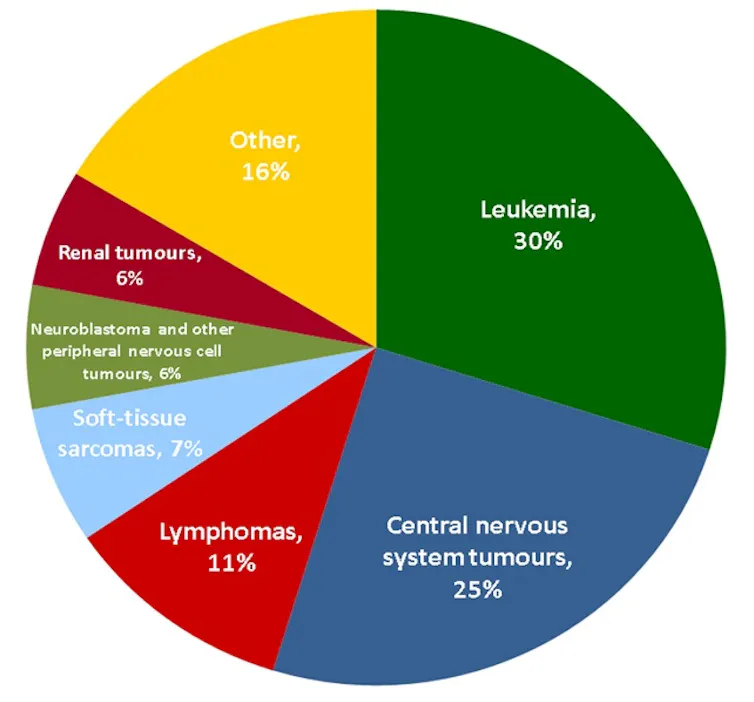
Furthermore, children usually have a better prognosis than adults. Approximately eight out of ten children diagnosed with cancer will survive the disease. In the adult population, the overall survival rate is around 50%.
All of this means we must view childhood cancer as a distinct condition. But what causes it?
Genetics, not lifestyle
In adults, we know that tobacco, alcohol, obesity, certain infections and prolonged exposure to toxic substances play a key role in the development of many tumours. It is estimated that around 40% of cases in adults are the result of decades of exposure to risk factors.
But in children the situation is very different, as childhood cancers are rarely linked to lifestyle habits or environmental factors accumulated over many years. We now know that around 5–10% of diagnoses can be attributed to hereditary syndromes that predispose children to the disease, but this still leaves the majority of cases unexplained.
There is growing evidence that many of these conditions are caused by genetic and chromosomal abnormalities that arise during the early stages of development – and in some cases even before birth. These can lie dormant for years before leading to the onset of the disease.
All these differences have direct implications for clinical practice, influencing diagnosis, treatment strategies and patient outcomes.
Read more: Children living near oil and gas wells face higher risk of rare leukemia, studies show
Differences with adults
A child is not just a small adult. Their immune system is still maturing, their organs are still developing, and the tissues in which tumours occur are very different from what we would expect in an adult.
Acute myeloid leukaemia is a good example. Historically, the models most commonly used to study it have been elderly patients, but a child’s bone marrow bears little resemblance to that of a 70-year-old. In older adults, bone marrow progressively loses its haematopoietic activity (the formation and development of blood cells) and becomes infiltrated by fatty tissue. In children, however, it is an extraordinarily active, mineral-rich organ that supports growth.
There is growing evidence that this microenvironment influences how tumour cells behave and how paediatric patients respond to treatment. Some leukaemia cells can hide in niches within the bone marrow, temporarily evade the action of drugs, and later become the source of a relapse. At this point, the survival rate drops rapidly.
Another key difference is that the symptoms of childhood cancer are often non-specific and can be misleading. We typically associate cancer in adults with the appearance of a lump or sudden weight loss, but in children the warning signs can be much more subtle. Persistent fever, excessive tiredness, recurrent infections, frequent bruising or bone pain are all warning signs.
Read more: Why are so many millennials getting cancer?
Beyond survival
The main aim of cancer treatment is to ensure the patient’s survival. However, if the patient is a child, the goal is not limited to survival alone – we have to minimise the effects of both the disease and treatments used to fight it.
Many of the current treatment options, such as chemotherapy or radiotherapy, can cause significant side effects. In an adult patient, these side effects can have different impacts depending on the stage of life at which the disease develops.
But when treatment is administered during childhood, it is inevitable to worry about its long-term consequences, which may last for decades. Fears range from – among many other things – an impact on growth and cardiac or endocrine function, to future fertility and quality of life in adulthood.
Many research groups are working to identify and understand these differences, with the aim of developing increasingly precise and personalised treatments. These will enable patients not only to survive their illness, but also to lead healthy, fulfilling lives.

A weekly e-mail in English featuring expertise from scholars and researchers. It provides an introduction to the diversity of research coming out of the continent and considers some of the key issues facing European countries. Get the newsletter!






At Republican midterm convention, Trump urges voters to let him ‘finish the job’
U.S. President Donald Trump arrives to speak during the Republican National Midterm Convention...
War as a Business Plan: Ukraine, Iran, and the Global Industry of Profitable Conflict
Modern warfare has undergone a grotesque transformation. What once was a last...
Canada unveils more sign-based retaliation against the U.S.
A sign on display during a B.C. Premier David Eby news conference...
Afternoon front page: The importance of teaching Canadian history; is Trump escalating the trade war?; and more
Wounded Canadians take cover behind a pillbox during the Battle of Passchendaele...