2 Former Montreal Police Officers Charged with Assault and Criminal Harassment
 William HetheringtonUpdated 38 minutes Ago1 Mins read
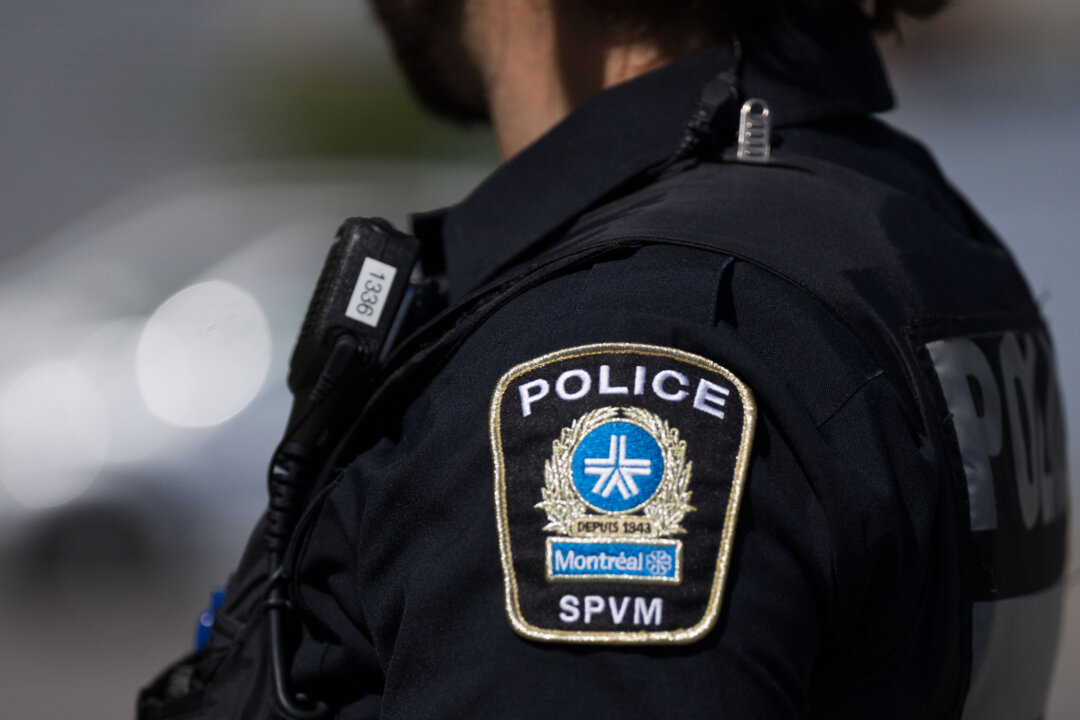

An SPVM police shoulder patch is seen on an officer in Montreal, on Aug. 29, 2024. The Canadian Press/Christinne Muschi
Two former officers with the Montreal Police Service (SPVM) have been arrested in connection with an investigation into allegations of racist and discriminatory conduct within the force.
The charges follow a review by Quebec’s independent public prosecuting authority of an investigation report submitted by the SPVM concerning officers from Neighbourhood Police Station 39, according to a Nov. 21 news release by the Director of Criminal and Penal Prosecutions (DPCP).
Neighbourhood Police Station 39 is located in the borough of Montréal-Nord, at 6100 Henri-Bourassa Blvd. East, near Lacordaire Boulevard. The station serves the Montréal-Nord area.
The station has been at the centre of a broader investigation into allegations of racist and discriminatory conduct by officers. In June, a team of 16 officers from the station was disbanded following allegations that officers had cut locks of hair from certain members of the public and kept them as trophies.
DPCP said it “has publicly announced that charges have been laid against two police officers, with the aim of maintaining public confidence in the justice system.”
The charges were laid through an endorsed arrest warrant. They include assault, breach of trust, and criminal harassment. The DPCP said both officers would appear before the Court of Quebec in Montreal at a later date.
DPCP said it would not provide further information on the ongoing case in order to avoid compromising judicial proceedings.
“The DPCP provides independent criminal and penal prosecution services on behalf of the state, free from political considerations,” it said.
Assault and breach of trust each carry a maximum prison sentence of five years if prosecuted by indictment, while criminal harassment carries a maximum sentence of 10 years. If prosecuted summarily, the general maximum penalty is a $5,000 fine, up to two years less a day in prison, or both. These are maximum penalties, and actual sentences would depend on the circumstances of the case.
The charges have not been proven in court.




Analysts Say Trump–Xi–Putin Summit Exposed Deep Divide
The first-ever trilateral summit between the leaders of the United States, China,...
What the Data Show About the Reality of Canada-China Trade
A container ship unloads its cargo at Kwai Chung Container terminal in...
Denmark Says It Thwarted Russian Plot to Assassinate US-Ukrainian Rapper
Head of PET Rasmus Kieffer-Kristensen and National Police Chief Lasse Boje Nielsen...
Brazil Ex-president Jair Bolsonaro Taken to ICU
Former Brazilian President Jair Bolsonaro arrives home to begin serving house arrest...