Oil giant Suncor won’t need an environmental impact assessment before treating and dumping millions of litres of oilsands tailings into the Athabasca River.
In a July letter recently obtained by Canada’s National Observer, the Alberta Energy Regulator (AER) said Suncor’s plan “is not a mandatory activity for the purposes of environmental assessment,” and won’t require a report on its impact. The company may still need to consult Indigenous communities before the project can proceed, it notes.
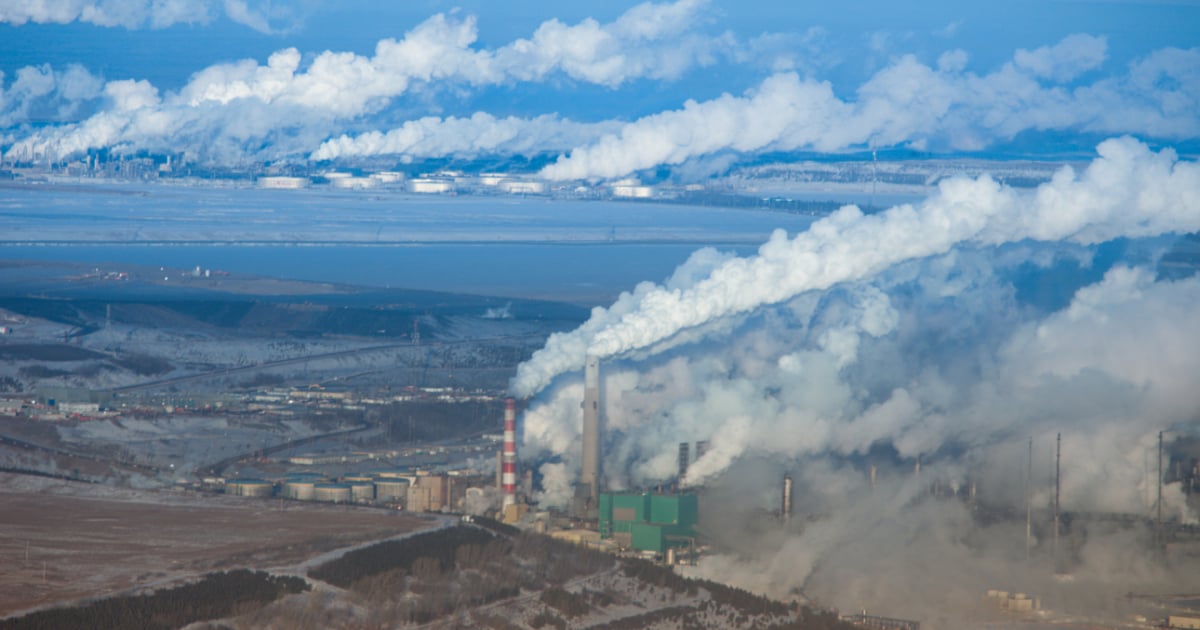
The plan would see Suncor draw between 10 and 12 million cubic metres of tailings water per year (one cubic metre equals 1,000 litres) from the company’s tailings ponds of its Base Plant oil sands facility near Fort McMurray, Alta., treat it and release it into the Athabasca River. The project lays the groundwork for Suncor to restore the region to boreal forest as it winds down operations in parts of the facility, according to documents submitted by the company to the regulator.
The tailings ponds contain residues from oil sands mining operations, including water, sand and clay, salts and heavy metals. Suncor’s oil sands ponds also contained potential carcinogens, such as ethylbenzene, phenols and naphthenic acids, according to the company’s annual water testing report.
Suncor will use “nanofiltration technology” to treat the water so it meets provincial standards, though the documents don’t provide details about this technology. Suncor didn’t respond to questions from Canada’s National Observer asking for more details about its planned water treatment process.
The planned release is magnitudes larger than Imperial Oil’s accidental leaks of untreated tailings waste water in 2022 and 2023, when more than 5.3 million litres of tailing pond sludge ended up outside the company’s ponds. Imperial and the AER waited months to tell nearby First Nations about the leaks, which prompted three investigations and a $50,000 fine. Imperial reported a net income of US$3.2 billion in 2025.
Some Indigenous residents downstream are still angry about the past leaks and Imperial’s penalty — and now they’re enraged by Suncor’s latest proposal and the province’s decision to exempt it from an environmental review.
‘They think the rest of Canada is more important’
“How is this fair?” said Billy Joe Tuccaro, former chief of the Mikisew Cree First Nation, a community of about 800 people downstream from both Suncor and Imperial’s oil sand operations.
“They think that the rest of Canada is more important; that their lives are more important than mine. More important than my kids. More important than my family’s kids. More important than my friends’ family and their kids.”
Cancer has stalked the community for years, and doctors and community members suspect oil sand pollution is the cause. A study the nation commissioned earlier this year found the community’s cancer rates were at least 25 per cent higher than the rest of the province prior to the spills, but couldn’t determine if they caused a spike because the province didn’t release health data after 2022.
However, Tuccaro said cancer is even more common since the spill. In the four years he was chief, from 2022 to 2026, about 60 Fort Chipewyan residents were diagnosed with the disease, he said.
Dozens of people expressed anger and protested Suncor’s plans during a Wednesday open house in Fort Chipewyan organized by the company, said Alice Rigney, an area resident and Athabasca Chipewyan elder. Rigney said she has also lost friends and relatives to cancer.
Although Suncor intended to hold a two-day exhibit of its plans, Rigney said its large exhibition trailer left after two hours, with company officials claiming they were concerned about potential violence.
“We all showed up for Suncor to listen to our concerns, and they packed up and left. The actions of Suncor spoke volumes: they don’t care about us at all,” she said. “People were angry [and] disappointed that their voice was not heard.”
“They go through the motions to make it look like they’re caring for the environment and people,” added John O’Connor, a doctor who has worked extensively in Fort Chipewyan. He has raised concerns about the health impacts of oil sands pollution for years.
In a Wednesday email, the AER said the proposed water treatment plant is already covered under the company’s environmental assessment for its Base Plant extension, which was proposed in 2020. That environmental assessment isn’t yet complete.
The regulator’s July letter exempting the water treatment plant from an assessment also notes Suncor may need to undergo a federal impact assessment. However, this is unlikely after an April deal between the federal government and Alberta that defers environmental impact assessments to the province.
Alberta’s environmental impact assessment process has been criticized as inadequate for years, with researchers noting oil sands assessments are rife with bad science, while provincial officials routinely exempt major projects from environmental assessments, such as Kevin O’Leary’s proposed $70-billion Wonder Valley data centre.
The problem could soon get worse. Earlier this year, Alberta Premier Danielle Smith’s government passed legislation to fast-track approvals for major projects. That law has yet to come fully into force, but environmental groups are bracing for an even weaker environmental impact assessment process.
Back in Fort Chipewyan, Tuccaro is anticipating the company will claim the two-hour information session meets its requirements to consult with Indigenous people impacted by the proposal and provincial officials will agree. If so, and the project goes ahead, he sees a bleak future for his community.
“If this treatment release happens, within 10 to 15 years there’s going to be nobody left in this community. I can fucking guarantee that.”