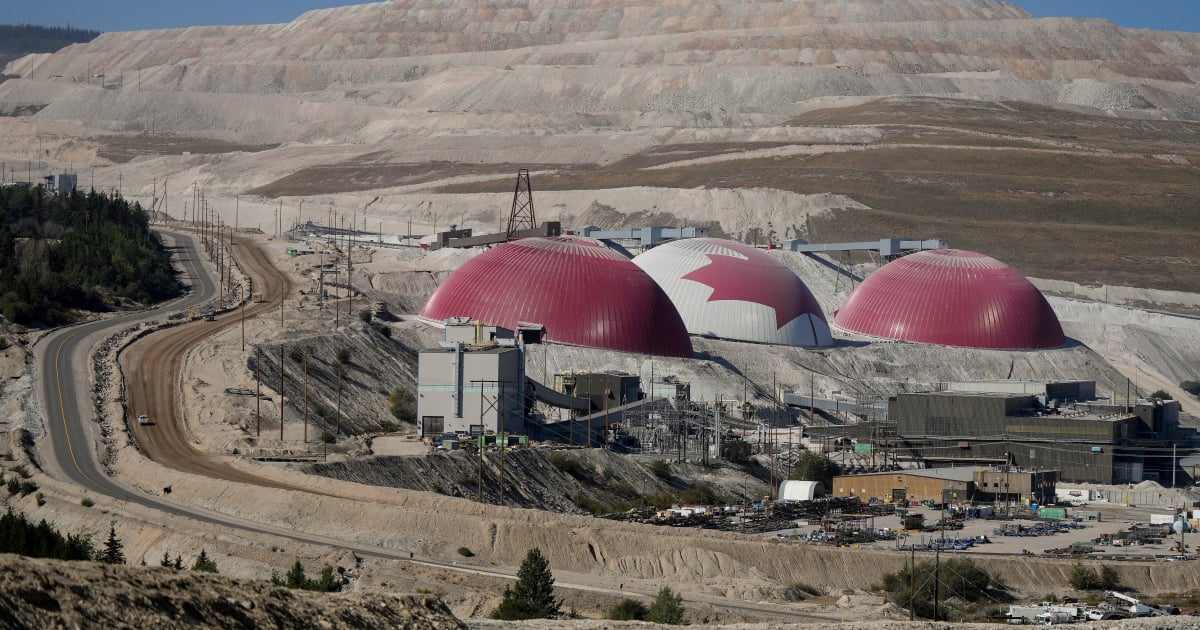
A new mine in Saskatchewan is already producing copper and zinc, barely a year after the federal government put it on a list of major projects eligible for support and expedited approvals.
The mine, known as McIlvenna Bay, is in operation as Canada and other countries try to secure critical minerals such as copper to build new power infrastructure and electrify transportation, said Evan Pivnick, a clean-energy program manager at Clean Energy Canada.
“Copper is going to be playing an absolute star role in underpinning the electricity grid buildouts here in Canada, as well as amongst our trading partners around the world,” Pivnick said.
Production is ramping up. The mine, situated near Hanson Lake in northeastern Saskatchewan and close to the Manitoba border, produced its first copper concentrate in June, followed by zinc and pyrite concentrates in July. Commercial production is expected in the third quarter of this year.
“As one of Canada’s most significant new sources of copper and zinc, this project is strengthening our economic prosperity and national security at a time when we have never needed to build for ourselves more,” federal Energy and Natural Resources Minister Tim Hodgson said in a press release issued Wednesday after the announcement in Saskatoon.
The mine’s Vancouver-based owner, Eldorado Gold, is also considering an expansion of about 43 per cent that would increase processing capacity from 4,900 tonnes a day to nearly 7,000 tonnes and add a new circuit to produce lead and silver.
The mine’s path to production began long before the federal government included it as one of five initial projects referred to the Major Projects Office in 2025, alongside LNG Canada Phase 2 and the Red Chris mine expansion in BC.
The McIlvenna Bay deposit was discovered about four decades ago, said Kevin Ansdell, a University of Saskatchewan professor who studies mineral deposits. But it took years of drilling and geological work to determine whether it was large and rich enough to support a mine. “Mining companies often say it takes approximately 15 years from discovery to actually develop a mine,” Ansdell said.
In 2023, Saskatchewan approved the project after an environmental review, allowing Foran Mining, the company developing it at the time, to move ahead with the project. Eldorado Gold acquired the project earlier this year.
The McIlvenna Bay mine is part of the Flin Flon Greenstone Belt, a mining region that stretches across Saskatchewan and Manitoba. At full production, the mine is expected to produce copper, zinc, gold and silver and support nearly 400 jobs, according to the federal government.
Ansdell said McIlvenna Bay was originally presented as a potential “carbon-neutral” mine. The plan called for using battery-electric vehicles underground instead of diesel equipment and drawing power from Saskatchewan’s hydroelectric grid, which would reduce emissions from mining operations. The federal government has also funded electric vehicles, heat-recovery and water-recycling systems at the site, but Ansdell said he is unsure whether it remains part of Eldorado Gold’s plans as that goal is not highlighted on its website.
Canada’s National Observer reached out to Eldorado Gold for comment but did not receive a response before publication deadline.
Pivnick said clean-energy projects still carry environmental risks. Mines can affect ecosystems and nearby communities, so projects should face rigorous environmental reviews, Indigenous consultation and scrutiny of their local benefits and impacts. “Not every project may be worth the trade-offs that are presented,” Pivnick said.
Ansdell said the mine will not produce finished copper or zinc but concentrate — crushed, mineral-rich material that will be sent to Quebec for smelting, where the metals are separated from the remaining rock. “Canada has hardly anywhere to refine and smelt copper, despite having lots of potential,” Ansdell said.
Pivnick said that gap is part of a larger question: whether Canada can connect new mines to the industries that need copper, including expansion of its electricity grid, while also finding customers abroad. Germany and Italy, he said, are possible partners because they have copper smelters and produce equipment for power grids. But Canada would need firm commitments from companies to buy its minerals, invest in projects and process the material, he said. It remains unclear whether McIlvenna Bay will come up in Canada’s talks with the European Union this fall.
“We have a growing number of memorandums of understanding with different EU countries. Moving from those agreements… is going to be a really vital part of moving from words to transactions,” Pivnick said.
Canada’s National Observer contacted the Major Projects Office and Natural Resources Canada for comment but had not received a response by publication time.
The federal government has committed about $217 million in federal-backed support for the project, including funding for electric mining equipment, water and heat-recovery systems, a hydroelectric connection and construction costs. The Major Projects Office is also working with Eldorado Gold on the proposed expansion, which requires further study, permitting, Indigenous and community engagement and a final investment decision.
Sonal Gupta / Local Journalism Initiative / Canada’s National Observer.
September 3rd 2026