J.D. Tuccille: Trump shouldn’t have the authority to rename Lake Ontario
 Carson JeremaUpdated 5 hours Ago3 Mins read

Article content
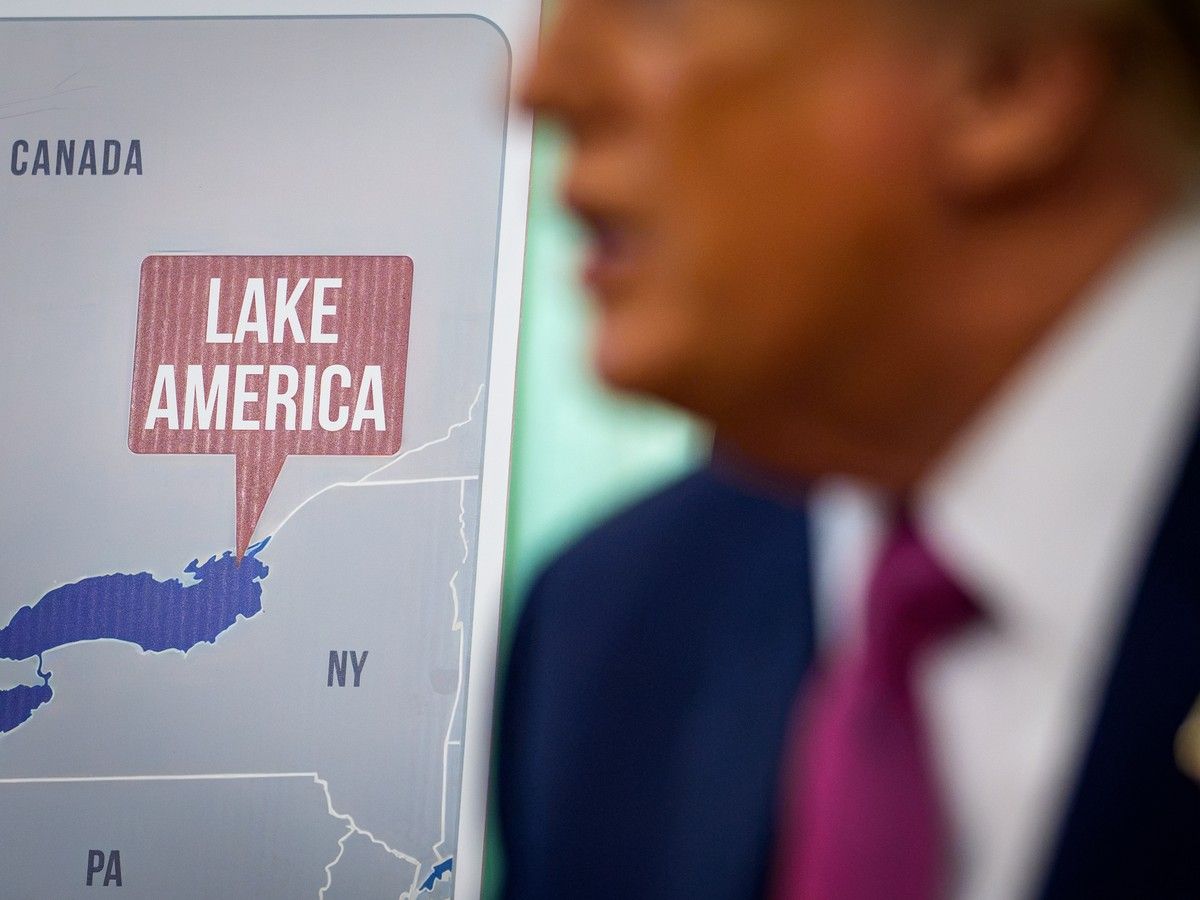
In an odd way, U.S. President Donald Trump’s renaming of Lake Ontario as Lake America demonstrates the limits of his power. Yes, Trump elicited the annoyed responses he hoped for from Canadian politicians. But the renaming is a symbolic gesture that binds only U.S. federal agencies. State governments and private entities in the U.S. can’t be required to use federal place names, and the order has even less clout beyond America’s borders. Relatively impotent though it is, renaming a body of water shared with another country is one of the few ways the president can provoke neighbors without risking a courtroom slap-down, as he’s received over tariffs. It’s still more power than a president should have.

THIS CONTENT IS RESERVED FOR SUBSCRIBERS
Enjoy the latest local, national and international news.
- Exclusive articles by Conrad Black, Barbara Kay and others. Plus, special edition NP Platformed and First Reading newsletters and virtual events.
- Unlimited online access to National Post.
- National Post ePaper, an electronic replica of the print edition to view on any device, share and comment on.
- Daily puzzles including the New York Times Crossword.
- Support local journalism.
SUBSCRIBE FOR MORE ARTICLES
Enjoy the latest local, national and international news.
- Exclusive articles by Conrad Black, Barbara Kay and others. Plus, special edition NP Platformed and First Reading newsletters and virtual events.
- Unlimited online access to National Post.
- National Post ePaper, an electronic replica of the print edition to view on any device, share and comment on.
- Daily puzzles including the New York Times Crossword.
- Support local journalism.
REGISTER / SIGN IN TO UNLOCK MORE ARTICLES
Create an account or sign in to continue with your reading experience.
- Access articles from across Canada with one account.
- Share your thoughts and join the conversation in the comments.
- Enjoy additional articles per month.
- Get email updates from your favourite authors.
THIS ARTICLE IS FREE TO READ REGISTER TO UNLOCK.
Create an account or sign in to continue with your reading experience.
- Access articles from across Canada with one account
- Share your thoughts and join the conversation in the comments
- Enjoy additional articles per month
- Get email updates from your favourite authors
Sign In or Create an Account
or
Article content
Article content
In his Aug. 27 executive order, President Trump directed that “(w)ithin 30 days of the date of this order, the Secretary of the Interior (Secretary) shall, in coordination with the Board on Geographic Names and consistent with 43 U.S.C. 364 through 364f, take all appropriate actions to rename as ‘Lake America’ the body of water currently named as Lake Ontario.”
Article content
Recommended Videos
Article content
By signing up, you consent to receive the above newsletter from Postmedia Network Inc.
Article content
Sure enough, the secretary of the interior followed up with a directive “to immediately rename Lake Ontario to Lake America and to update the Geographic Names Information System to appropriately reflect the change.”
Article content
President Trump’s move came after the recent collapse of trade talks and amidst much cross-border verbal sniping by members of his administration and Canadian officials. Trump didn’t get what he wanted in the abortive talks, which was essentially U.S. government-managed commerce between the people of the two countries. He did, however, get a sought-for rise out of politicians north of the border.
Article content
Prime Minister Mark Carney quickly assured Canadians that they would continue to call the body of water “Lake Ontario — then, now and always.”
Article content
Article content
Ontario Premier Doug Ford shelled out taxpayer money to erect a sign vowing the body would be “Lake Ontario now and always.”
Article content
Article content
It turns out that, as much as the power of the U.S. presidency has grown beyond the bounds envisioned by the country’s founders, the office still operates within limits. Even in the era of what scholar Gene Healy called The Cult of the Presidency in his book by that name, presidential orders apply only to the executive branch. Affected federal agencies have wide, but finite reach.
Article content
According to a U.S. Geological Survey discussion of the limits of the federal government’s Geographic Names Information System (GNIS), “Federal agencies must use GNIS for the publication of map, products or other services. The decisions of the Board on Geographic Names (BGN) are only binding to federal departments and agencies. A state may maintain its own names database or have other policies that govern state map production, but typically and for consistency, they use the names in GNIS. Private mapping companies (e.g., Google Maps, Apple Maps, Esri) also use GNIS but are not required to do so.”







Europe recycles just 12% of the materials it uses. Here’s how training can accelerate the transition to a circular economy
Since January 2024, ten organisations in four European countries have been working on...
Ceuta crisis: anti-migrant ‘invasion’ rhetoric threatens Europe’s food supply and economy
In August 2026, a deep humanitarian crisis unfolded in Ceuta, a small...
The Mocha monopoly: how Yemen’s dominance of the global coffee trade birthed the Houthi rebels
The Red Sea often makes headlines as the launch site for attacks...
FIFA confirms president Gianni Infantino ‘will be standing for re-election’
FIFA President Gianni Infantino, left, takes a selfie during the FIFA World...