Canada was founded with the clear goal of not being the United States
 Tristin HopperUpdated 3 hours Ago3 Mins read
Article content
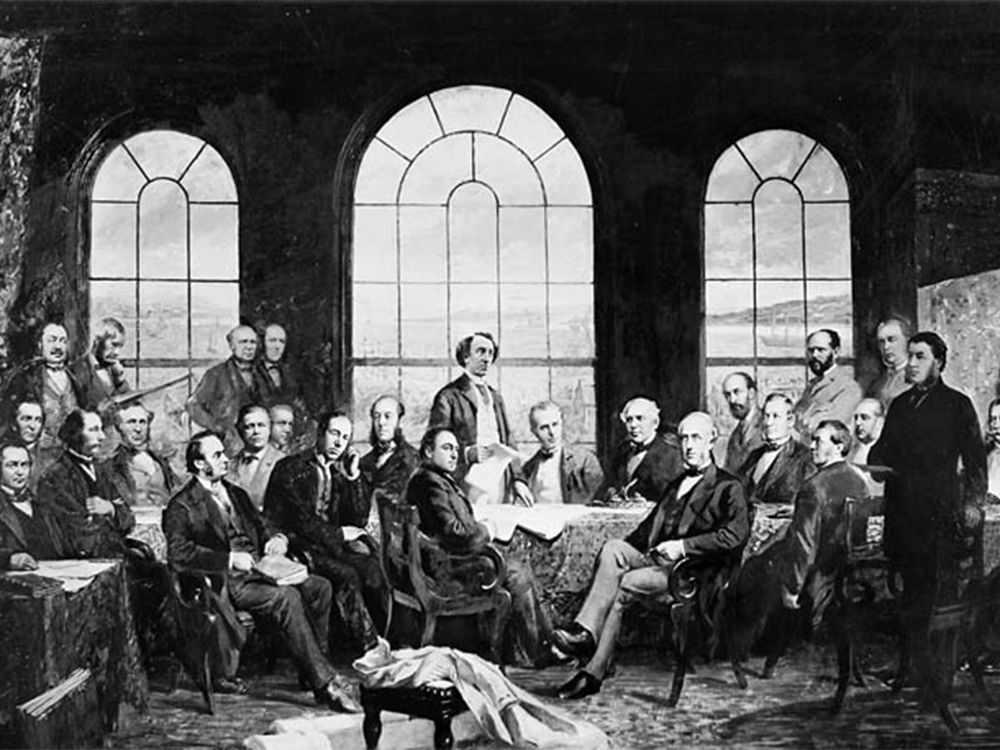
Canadians in the mid-19th century harboured no particular ill-will towards the United States. Then, as now, trade with the U.S. was a cornerstone of the Canadian economy. Several Fathers of Confederation had lived for extended periods in American cities.
Article content
Records of the Confederation debates don’t contain a single denunciation of the United States, or wish for its destruction.
Article content
“I know myself I have not a particle of prejudice against the United States; on the contrary, I am bound to declare that many things in the constitution and the people I sincerely esteem and admire,” McGee declared in 1862.
Article content
McGee even recoiled at declarations that the United States was a failure. Such sentiments “ought to be frowned down, wherever it appears, by the Canadian public,” he said in 1861.
Article content
Macdonald said much the same. Even when he was slamming the flaws of the U.S. Constitution, Macdonald still praised it as “one of the most skillful works which human intelligence ever created … one of the most perfect organizations that ever governed a free people.”
Article content
Article content
But these same Canadians also had no problem articulating why they personally didn’t want to live under the Stars and Stripes.
Article content
Article content
It’s easy for modern Americans to see themselves as the freer, more conservative alternative to Canada. But the first generation of Canadians saw it exactly the other way around.
Article content
The United States, as they saw it, was a radical experiment in mob rule plagued by political and civic corruption.
Article content
In 1849, after a small annexationist movement emerged in Montreal, the Montreal Gazette saw fit to issue a lengthy condemnation of the sicknesses of U.S. society.
Article content
“The numerous defalcations both in public and private offices in the U.S. shew something very far from perfection in the morale of Society,” it read, adding that the United States was plagued by a “dreadful catalogue of crimes of every description.”
Article content
Canada was not only safer and more virtuous, but its parliaments “shine with superior lustre and rise in proud preeminence with most of the popular legislative bodies of the separate States.”
Article content
Canadians of the era were also known to recoil at the perceived godlessness of the U.S. political class.
Article content
Also in 1849, a Toronto newspaper reacted with horror that then U.S. president James Polk had only been baptized on his deathbed. “How is it that the people of the United States suffered themselves to remain in this ignorance of the religious position of their Chief Magistrate? The anomaly must bring disgrace with it.”
Article content
Article content
Canada’s founding generation was also quick to note the American penchant to speak loudly of liberty while holding millions in bondage, slavery having been phased out by the British Empire a generation prior.
Article content
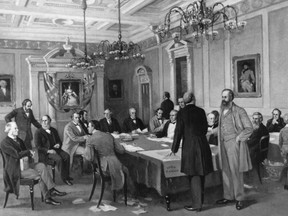
Father of Confederation George Brown had spent years as a stolid abolitionist, and he would come to believe that America’s central mistake was in becoming a republic.
Article content
“We … are forcibly led to the conclusion that Republican Institutions are not favourable to genuine liberty,” he wrote.
Article content
Article content
And the 1860s would become a particularly easy time to make the argument that the American system had failed, given that it had dissolved into full-blown civil war.
Article content
Throughout the early 19th century, British North America had experienced occasional bouts of annexationist sentiment, usually from business leaders covetous of the larger U.S. market. French-Canadian nationalists were even known to flirt with the idea that their rights would be better protected under American rule.
Article content
But these all screeched to a halt the moment American soldiers were killing each other at the rate of 500 per day.







Europe recycles just 12% of the materials it uses. Here’s how training can accelerate the transition to a circular economy
Since January 2024, ten organisations in four European countries have been working on...

Ceuta crisis: anti-migrant ‘invasion’ rhetoric threatens Europe’s food supply and economy
In August 2026, a deep humanitarian crisis unfolded in Ceuta, a small...
The Mocha monopoly: how Yemen’s dominance of the global coffee trade birthed the Houthi rebels
The Red Sea often makes headlines as the launch site for attacks...
FIFA confirms president Gianni Infantino ‘will be standing for re-election’
FIFA President Gianni Infantino, left, takes a selfie during the FIFA World...