Stellantis Signs MOU on Possible Sale of Brampton Plant to Canadian Defence Company Roshel
 Paul Rowan BrianUpdated 5 hours Ago3 Mins read
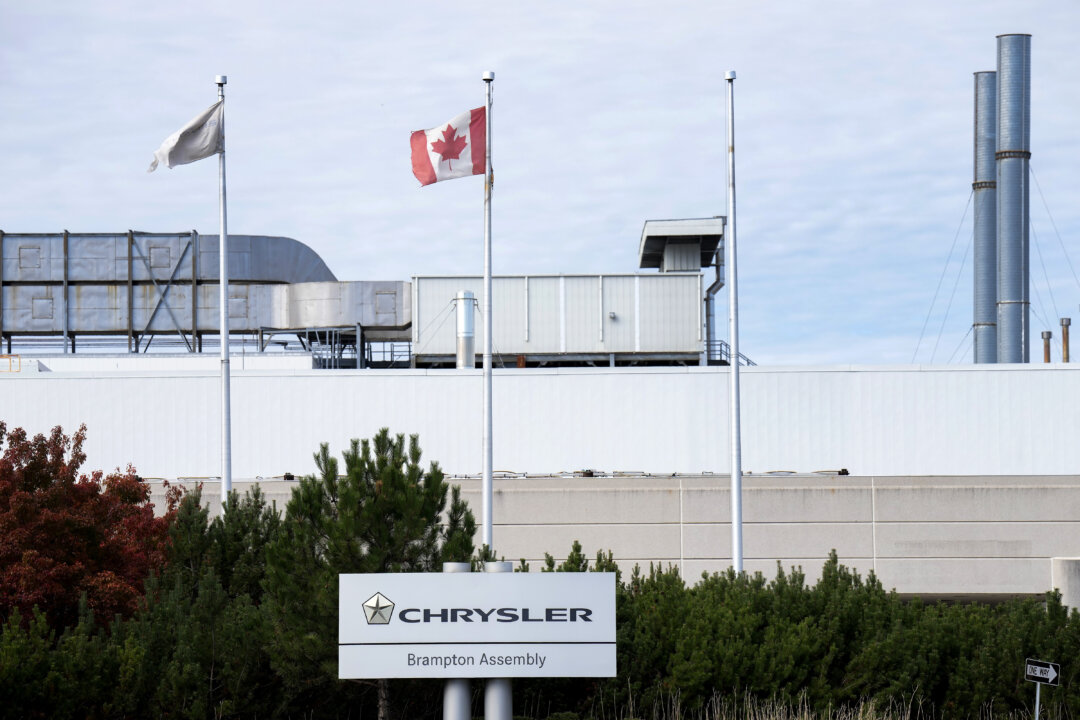
Automaker Stellantis says it has signed a memorandum of understanding on the potential sale of its Brampton, Ont., assembly plant to Canadian defence firm Roshel.
“Following consideration of a number of potential opportunities, Stellantis believes that Roshel represents a strong path to restoring sustainable operations at Brampton Assembly preserving the site’s strategic role in Canada’s advanced manufacturing sector, and helping to avoid a prolonged period of inactivity,” the company said in a Sept. 11 statement to media.
The Sept. 11 memorandum of understanding (MOU) concerns a potential sale of the facility, but no completed transaction has been announced.
The vehicle factory last manufactured the Dodge Charger and Dodge Challenger vehicles as well as the Chrysler 300 before production stopped in late 2023 so the plant could be retooled to produce the next generation Jeep Compass.
However, retooling that began in 2024 was paused in February 2025, and the company said in October that production of the Compass would be moving to the United States instead, leaving the Brampton plant indefinitely idle.
The Netherlands-based automaker said it is still committed to supporting Canadian jobs and backing innovation but said it would not offer further comment at this time as it is still negotiating a new collective agreement with Unifor, the union representing workers at its Brampton factory.
Roshel Deal
Roshel produces armoured vehicles and other specialized vehicles for commercial and government clients in Canada and the United States, including the Canadian-made Senator armoured vehicles, 200 of which have been donated to Ukraine by the federal government as part of Ottawa’s military aid.
Canada has committed at least 591 Roshel-built armoured vehicles to Ukraine in total, with Roshel having received federal contracts worth more than $290 million for 583 of those vehicles—more than $90 million for 200 Senators announced in 2023, and $200 million for a further 383 announced earlier this year.
The company also received an undisclosed amount for eight Roshel armoured vehicles purchased by Ottawa in 2022 to send to Ukraine.
News of the MOU with Roshel comes as bargaining between Unifor and Stellantis stalled, with Unifor announcing Sept. 11 that it was pausing talks with the automaker partly due to unresolved issues regarding the future of the Brampton plant.
The union had previously said it hoped to reach a deal with Stellantis by Sept. 11, although its current collective bargaining agreement does not expire until Sept. 20.
The union says it was first told in August that Stellantis was considering selling the factory. Unifor opposes the sale and has accused Stellantis of walking back on a past promise to reinvest in the Brampton factory.
“The persistence of the company’s proposal to close and sell the Brampton plant has hindered the bargaining process,” Unifor spokesperson Kathleen O’Keefe said in a statement.
“The proposed facility closure and sale threaten the wages, pensions and other benefits of Unifor members. It also deals a devastating blow to Canada’s industrial sector, especially in the province of Ontario and the community of Brampton,” she added.
The union added that Stellantis has not confirmed future plans for its assembly plant in Windsor, Ont., or its casting plant in Etobicoke, Ont., and said any future agreement must bring resolution to its workers who were laid off from the Brampton plant.
Unifor said Stellantis has offered only conditional agreement to economic terms patterned on agreements the union reached earlier this year with Ford and General Motors, with those terms tied to the closure of the Brampton facility.
Auto Dispute
The decision by Stellantis to move production of the Compass to the United States in October 2025 was followed by the Liberal government halving the number of American-made vehicles Stellantis was permitted to import into Canada without paying an existing 25 percent counter-tariff.
Canada’s 25 percent counter-tariff on certain American-made vehicles and vehicle components not compliant with the Canada-U.S.-Mexico Agreement went into effect April 9, 2025, less than a week after the United States put a 25 percent tariff on Canadian-made automobiles coming into the country.
Ottawa said the counter-tariff was a response to the “unjustified” American auto tariffs and said it was necessary to safeguard Canadian jobs, business interests, and investment.
Trump referred to Canada’s 25 percent counter-tariff on American-made vehicles and limits on tariff-free American-made automobile imports as one of his reasons for imposing 50 percent tariffs on roughly $28 billion of Canadian goods, which went into effect Aug. 22.
The president also announced several days later that U.S. tariffs on Canadian cars and trucks would rise to 50 percent and that Canadian automotive parts would also face a 50 percent tariff beginning Jan. 1, 2027.
“Build in the U.S. and there are ZERO TARIFFS,” Trump wrote Aug. 24 on social media regarding the intended upcoming tariff raise.
In response to the recent U.S. 50 percent tariffs, Canada introduced retaliatory tariffs against the United States on a matching value of American goods that went into effect Sept. 8.
The Canadian Press contributed to this report.





US House to Vote on Russia Sanctions Bill Next Week
The U.S. Capitol building on Aug. 17, 2026. Madalina Kilroy/The Epoch TimesThe...
Trump Says He’s Open to Chinese Automakers Building Cars in US
President Donald Trump speaks during the 2026 Republican Midterm Convention in Dallas...
Commerce Department Finalizes Steep Duties on Solar Imports From India, Indonesia, Laos
The Commerce Department on Friday finalized steep duty rates on imports of...
President Trump Visits Ireland
U.S. President Donald Trump meets with Irish President Catherine Connolly and Prime...