Rabbi Dan Moskovitz: Boy George’s journey to my Vancouver synagogue
 National PostUpdated 4 hours Ago2 Mins read
Article content
One Friday night, sitting at home, he did. He released the first version without consulting his manager because, as he told us, “I didn’t want to be told not to do it.”
Article content
Most public figures employ people precisely to tell them what not to do. They calculate the market, anticipate the backlash and sand down every dangerous edge until they say nothing, or at least nothing anyone could possibly find objectionable.
Article content
While recording the final version, he told us, he burst into tears.
Article content
The backlash was immediate. George was denounced and threatened with boycotts. Activists demanded that Vancouver’s Pacific National Exhibition cancel his scheduled concert.
Article content
Then something remarkable happened.
Article content
The Centre for Israel and Jewish Affairs and the Jewish Federation of British Columbia, led by Ezra Shanken, organized a letter-writing campaign. More than 10,000 people urged the PNE to stand by George and allow the concert to proceed.
Article content
The PNE did.
Article content
That decision deserves recognition. In the three years since October 7, too many arts institutions, particularly here in British Columbia, have backed down before bullies and called their cowardice prudence. They invoke “safety,” “sensitivity,” or “community harmony.” The language is polished, but the lesson is dangerous: create enough anger and you will be given a veto.
Article content
Article content
The PNE refused to teach that lesson.
Article content

Article content
Courage is contagious. George stood his ground. Thousands of Canadians stood with him. The PNE kept the stage open.
Article content
George then made another important choice. He did not perform “We Will Dance Again” at the PNE.
Article content
He understood that the audience, of which I was a part, had come to a summer concert to sing, dance and enjoy the music. They had not consented to attend a political rally.
Article content
He respected them enough not to hold them captive to his politics.
Article content
Performers such as Macklemore and Kneecap have turned concerts into platforms for hostile, one-sided political propaganda, forcing audiences who came for music to become participants in their causes.
Article content
George had every opportunity to answer his critics from the PNE stage. He chose instead to give the audience the concert they had purchased tickets to see.
Article content
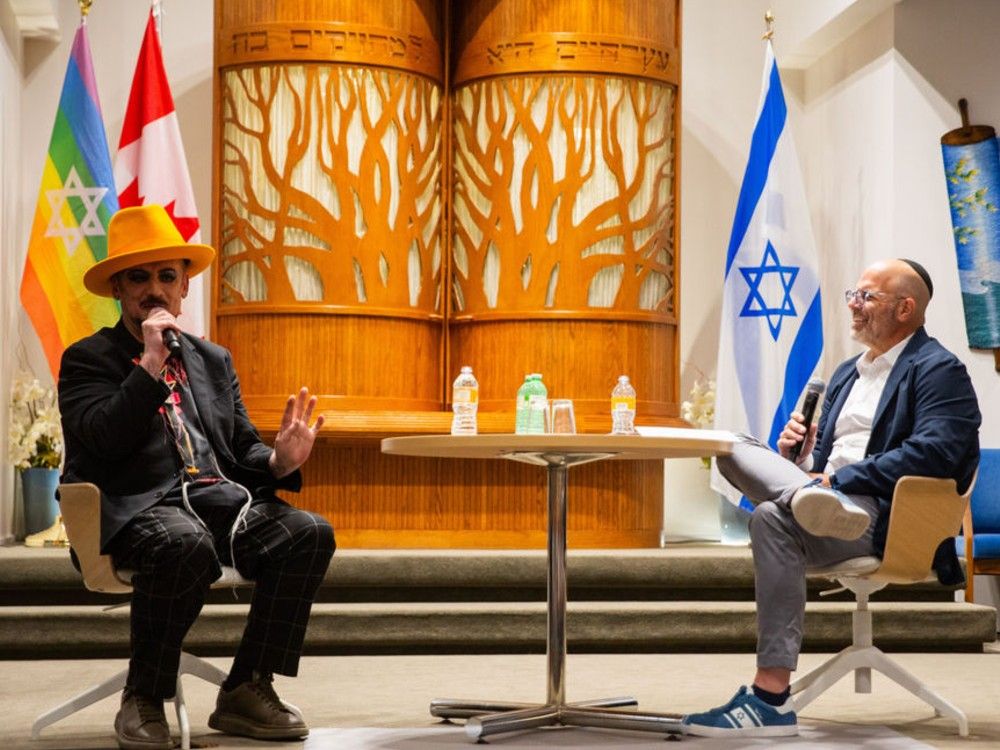
Two nights later, he came to Temple Sholom, where the purpose was different and everyone knew why we had gathered.
Article content
There he spoke openly about the song, the threats and the Jewish friends and strangers who had written to thank him. Then, in a synagogue filled with people who understood its meaning, he performed “We Will Dance Again” live for the first time.
Article content
Article content
That night, I watched people cry, smile and rise to dance. In the days that followed, messages have poured in calling the evening magical, joyful and unforgettable.
Article content
Their gratitude revealed how lonely many Canadian Jews have felt.
Article content
When it was over, I gave Boy George the hug I promised him, and presented him with a shofar, the biblical ram’s horn blown to wake us from our slumber and call us to action. Officially, it was presented on behalf of the Jewish community of British Columbia, but as I said in the moment, truthfully it was on behalf of Jews and our allies everywhere.
Article content
Courage is contagious. May other artists catch it and appear at a synagogue, Jewish community centre or public forum near you. We need more artists like George to stop being confused and stand with the Jews against those who seek to terrorize and destroy us. Every rabbi I know has an extra shofar in the office. Come and get one. It will come with a hug.
Article content
Rabbi Dan Moskovitz (@rabbidanmosk) is the Senior Rabbi of Temple Sholom in Vancouver.
Article content




Canadians are ‘overwhelmingly open’ to closer EU ties as Carney heads to Europe: poll
Support for deeper cooperation with the European Union has grown among Canadians...
Adam Pankratz: Mark Carney’s elitist quest to turn us into Europeans
France's President Emmanuel Macron and Canada's Prime Minister Mark Carney hold a...
Canada seeking ‘unique alliance’ with EU, not membership: Carney
Prime Minister Mark Carney on the the TIFF Tribute Awards red carpey...
How Conservatives can get their groove back: Full Comment podcast
Ian Brodie and Ginny Roth on how Poilievre can reinvigorate his party...