Article content
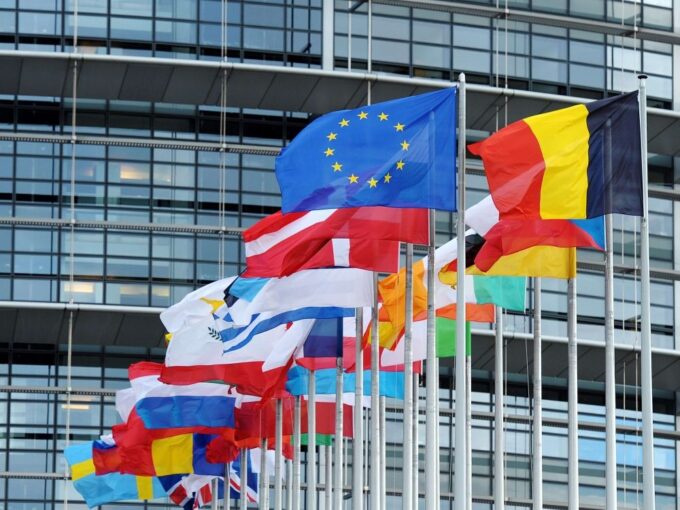
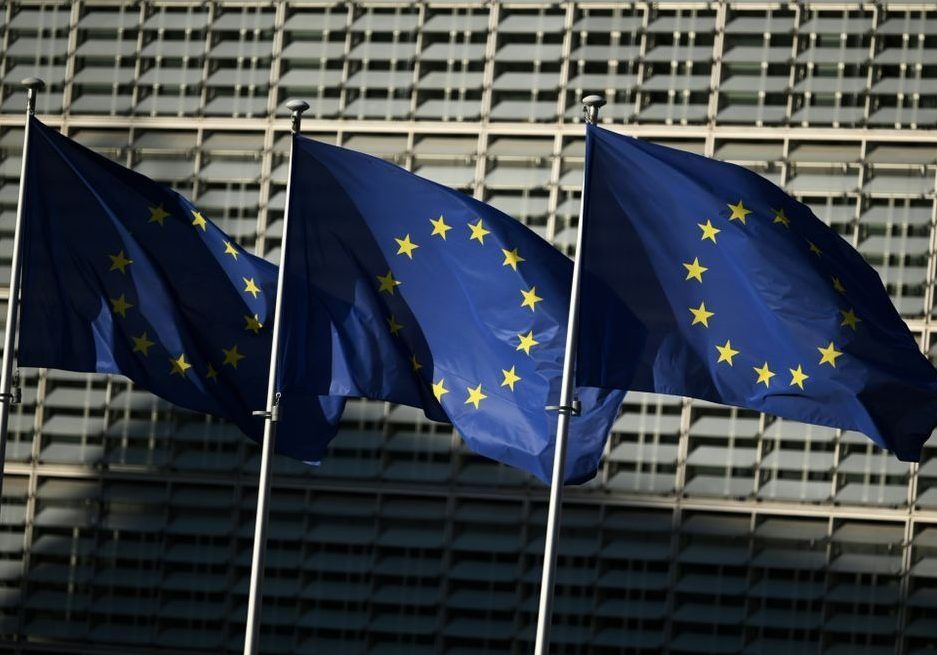
This Thursday, Prime Minister Mark Carney is due to address the opening of the European Parliament in Strasbourg. Guest addresses like this aren’t unheard of, but they have mostly been reserved in recent years for civil society figures focused on Ukraine, which was already a signal that something significant was to be announced, and reporting has suggested that some sort of new relationship between Canada and the European Union was in the cards.

THIS CONTENT IS RESERVED FOR SUBSCRIBERS
Enjoy the latest local, national and international news.
- Exclusive articles by Conrad Black, Barbara Kay and others. Plus, special edition NP Platformed and First Reading newsletters and virtual events.
- Unlimited online access to National Post.
- National Post ePaper, an electronic replica of the print edition to view on any device, share and comment on.
- Daily puzzles including the New York Times Crossword.
- Support local journalism.
SUBSCRIBE FOR MORE ARTICLES
Enjoy the latest local, national and international news.
- Exclusive articles by Conrad Black, Barbara Kay and others. Plus, special edition NP Platformed and First Reading newsletters and virtual events.
- Unlimited online access to National Post.
- National Post ePaper, an electronic replica of the print edition to view on any device, share and comment on.
- Daily puzzles including the New York Times Crossword.
- Support local journalism.
REGISTER / SIGN IN TO UNLOCK MORE ARTICLES
Create an account or sign in to continue with your reading experience.
- Access articles from across Canada with one account.
- Share your thoughts and join the conversation in the comments.
- Enjoy additional articles per month.
- Get email updates from your favourite authors.
THIS ARTICLE IS FREE TO READ REGISTER TO UNLOCK.
Create an account or sign in to continue with your reading experience.
- Access articles from across Canada with one account
- Share your thoughts and join the conversation in the comments
- Enjoy additional articles per month
- Get email updates from your favourite authors
Sign In or Create an Account
or
Article content
Article content
Then on Saturday, a 5,000-word Wall Street Journal exclusive gave us a hint at what might be coming. The reporting claimed that the prime minister has spent months using his extensive European rolodex and connections to push for a deeper relations with the EU. According to the Journal, Carney even “suggested Canada take on a new title: Associate Member of the European Union.” Government sources challenged the story later in the day, saying the reporting “overstates” what is being discussed.
Article content
Recommended Videos
Article content
By signing up, you consent to receive the above newsletter from Postmedia Network Inc.
Article content
Carney owes all Canadians a clear explanation of what is actually on the table, but even if we don’t know for sure just yet, it’s important we have a clear eyed view about what would actually be in Canada’s interests. Getting closer to Europe and the European Union is appropriate in a world where Canada is in need of closer economic and security relationships with likeminded allies and friends, as Ottawa seeks to lessen dependence on the United States.
Article content
But this does not, and should not, mean joining the EU even in an “associate” role, even if the government is not currently pursuing anything so formal. The whole reason the government is seeking close relationships with other allies and partners is precisely because there is a newfound sense of urgency in protecting and reasserting Canadian independence. We cannot trick ourselves into giving up sovereignty to Brussels.
Article content
Article content
I am of the view that we must lessen our dependence on a much less reliable and volatile United States no matter who succeeds Donald Trump as president. A president who muses about annexation and slaps tariffs on his closest ally and biggest trading partner isn’t just an aberration, he is himself a symptom of an America that haw changed. At the same time, we cannot delude ourselves into thinking we will ever be able to entirely detach ourselves from America. They will likely remain our biggest trading partner and most important security partner.
Article content
Turning to Europe as a place we can build closer economic and defence arrangements with is a fitting a approach in the light of how relations with the U.S. have devolved. But don’t be fooled into thinking this means we must therefore join the European Union.
Article content
We still have no idea what being an “associate member” would mean, and the Wall Street Journal reporting doesn’t make that clear. There is currently no such thing as an associate member of the EU. There are other arrangements like the European Free Trade Association, which includes Iceland, Norway, Switzerland and Liechtenstein who are not full members, but three of whom participate in the European single market via the European Economic Area, with Switzerland’s access instead coming through its own bilateral deals, and all four of whom are in the Schengen Area, meaning open borders with the EU. There are a variety of different levels of integration within the the bloc. Some countries are not in the Schengen Area like Ireland. Some are not in the monetary union and don’t use the Euro. But whatever is being proposed for Canada appears to be new.
Article content
This obscures the more useful and important question, which is not whether Canada should join the EU in some new, undefined capacity, but whether it needs to. We don’t. For instance, if we want free trade with the EU (which is not the same as being in the single market), Canada signed CETA, the Comprehensive Economic and Trade Agreement, with the bloc back in 2016. A decade later, 10 member states, including France, still have not ratified it. If we want to deepen economic ties with the EU, why don’t we start here?
Article content
It might not be as flashy and sexy, but getting CETA fully ratified, deepening the defence procurement and research ties that are already underway, building out the data and satellite infrastructure both sides say they want do not require anything that changes our existing arrangements and would benefit both Canada and the EU.
Article content
But even if full, or even partial membership, is not in the cards, we should think carefully about what we are attaching ourselves to. The European Union is in many ways a remarkable political accomplishment.
Article content
The 27 member nations of the EU (and the few others closely intertwined through the EFTA) have created an economic entity that guarantees the free movement of goods, capital, services, and people — known as “the four freedoms.” The GDP of this single market is roughly 18 trillion Euros (rouglyly C$30 trillion), one of the largest economies on the planet.
Article content
Article content
More access to this market is a great idea, but let’s be honest about what full integration with that would entail.
Article content
EU member states give up a significant amount of sovereignty and national self-determination. National courts must set aside domestic law that conflicts with EU law, and governments can no longer block goods, services, or workers from other member states to protect their own industries. Environmental, energy, labour and procurement regulations must be aligned, as well. Deeper still, the customs union means Brussels alone sets tariffs and negotiates trade deals with non members, so no country can strike its own agreement with Washington or Beijing.
Article content
Eurozone members surrender monetary policy entirely to the European Central Bank and accept Brussels-enforced limits on deficits and debt, and Schengen states abolish their own border controls with each other altogether. Together these amount to one of the deepest peacetime surrenders of national control any democracy has ever voluntarily accepted. You can make the argument that these are sacrifices are worth making, but make no mistake that joining this union means sacrificing sovereignty at a level that, quite frankly, I think most Canadians divorced of our current fight with the Americans, would be very uncomfortable giving up.
Article content
Article content
While the EU might be a massive market we should want access to, it faces its own major challenges. Mario Draghi, the former president of the European Central Bank and briefly prime minister of Italy, authored a major report in 2024 that exposes how sclerotic and stagnant the EU economy has become. He found that the income gap between the EU and the United States had roughly doubled in the two decades before the report, from about 15 per cent to about 30 per cent, and that closing it would require something like 800 billion euros a year in new investment.
Article content
Two years on, only a small fraction of Draghi’s own recommendations have been fully acted on, and the International Monetary Fund now projects that high energy costs alone will trim eurozone growth by roughly half a point this year and drag on it again in 2027. The innovation numbers are just as stark: of the 147 unicorns, private startups valued at over $1 billion before they ever go public, founded in Europe between 2008 and 2021, roughly 30 per cent packed up and moved abroad, mostly to the U.S., and no European company built from scratch in the last 50 years has grown into a 100 billion euro (C$160 billion) firm, while seven American companies crossed one trillion euros ( C$1.6 trillion) in that same span.
Article content
Europe is a natural ally and a massive market, but it is not an economic powerhouse. Canada can actually help the Europeans escape this sclerotic trap, and more than anything else it would be about an energy partnership where Canada helps power an energy poor Europe. But it wouldn’t require us joining.
Article content
Cast your mind back to 2022 when, with then-German Chancellor Olaf Scholz visiting Canada, Justin Trudeau said there was “no business case” for expanding LNG exports to Europe. Germany went looking elsewhere. Canada’s first LNG Canada cargo did not leave the export terminal in Kitimat until July 2025, years after allies had already signed contracts with Qatar and the United States, and even that cargo went to Asia, not Europe: LNG Canada is a Pacific-facing project, and the Atlantic-facing terminal that could actually have served Germany, the Quebec project Trudeau’s own government let die, was never built.
Article content
Europe needs our energy and it can be a beneficial arrangement between us and Europe. But the issue isn’t a lack of integration, its that we haven’t built the infrastructure and developed the resources needed to help power Europe, especially as Russia increasingly seems intent on provoking conflict not just in Ukraine but with EU nations. Canada spent a decade failing to build the pipelines and export terminals that would let it sell what Europe wants to buy. Selling Germany gas does not require EU membership in any capacity. It requires ports and resource infrastructure.
Article content
Article content
There is also a harder constitutional question lurking underneath all the “associate member” talk that nobody in Ottawa or Brussels seems eager to raise. Depending on what precisely “associate member” means, it could require implementation at the provincial level, or even a formal constitutional amendment with at least seven provinces signing on. Either way, most or all of the provinces would have to be fully on board with the plan. If associate membership meant accepting rules but not having any actual say in the EU or voting rights, we’d be giving up sovereignty to let rules be made in Brussels instead of Ottawa. Our goal should be become more sovereign and “maître chez nous,” not transferring sovereignty to another continent.
Article content
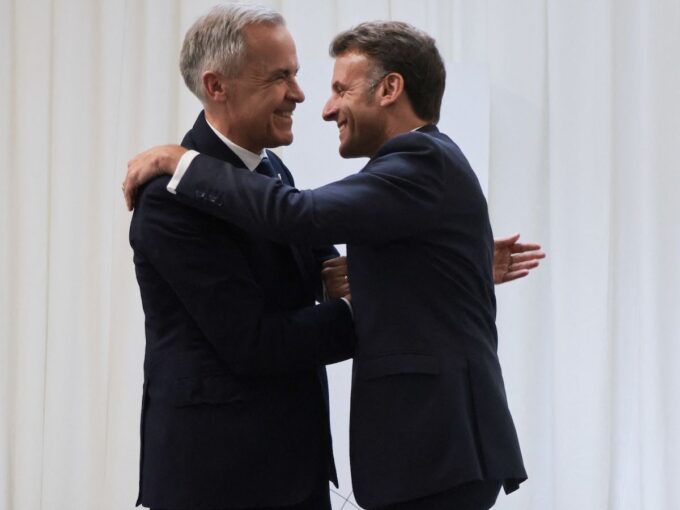
Perhaps subtly but most important, we must be honest with ourselves about our own identity and who we are as a country. Just after becoming prime minister, in Paris on his first foreign trip, Carney called Canada “the most European of non-European countries,” which in hindsight is revealing about the prime minister’s broader strategy and mindset. At the end of the Wall Street Journal story, a senior Canadian official apparently told the paper that “we sound like Americans, we dress like Americans, but as a society we’re much more European.”
Article content
Article content
We may increasingly feel we align with Europe more than America on questions of political values, but we should not pretend that we are not still culturally much more similar to the United States than any other country, even if we don’t like to admit it. Canada’s consumer culture, its continental supply chains, its sports leagues, its entertainment, the car-dependent suburbs and strip malls we actually build and live in reflects a country that has been thoroughly Americanized, for better and worse, since the Second World War. Wanting Canada to be more European is a perfectly respectable aspiration. Believing it already is, is wishful thinking.
Article content
None of this is an argument against getting closer to Europe. Get CETA ratified, continue to join defence and defence procurement arrangements, build more research connections, make Canada the democratic energy supplier of Europe, build underwater cross-Atlantic cables so we can build data centres for Europe, and much more. Europe is our most natural and logical partner in our quest to diversity away from the United States. But even if the Wall Street Journal overstated what Ottawa is seeking, Canada needs to be clear eyed and think now about what any membership, partial or otherwise, would actually entail. If this moment is really about sovereignty, the answer was never Washington or Brussels.
Article content
National Post
Article content