What is an ‘associate member’ of the EU? Nobody in Europe seems to have a clue
 Christopher NardiUpdated 3 hours Ago3 Mins read
Article content
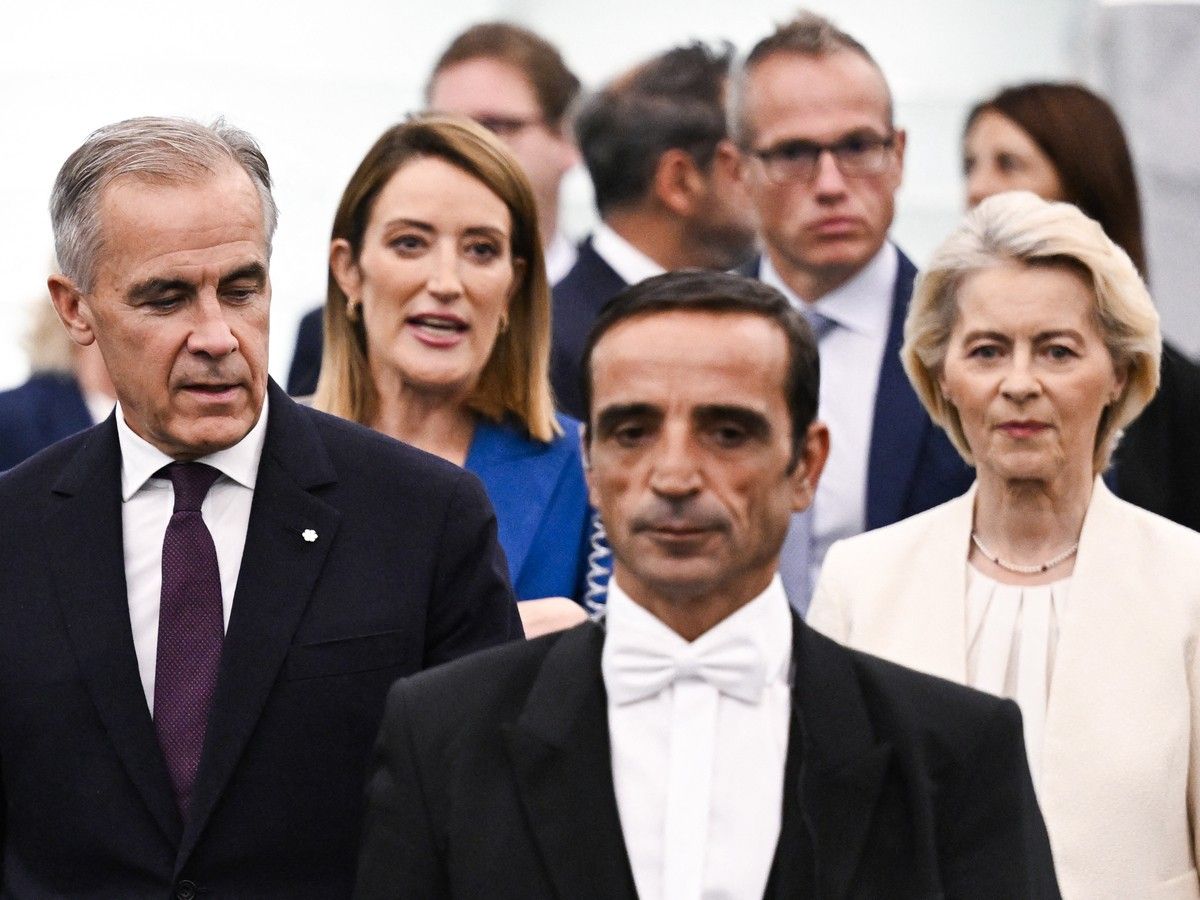
STRASBOURG, FRANCE — What does it mean for Canada to become an “associate member” of the European Union? At the European parliament, no one seems to have a clue.

THIS CONTENT IS RESERVED FOR SUBSCRIBERS
Enjoy the latest local, national and international news.
- Exclusive articles by Conrad Black, Barbara Kay and others. Plus, special edition NP Platformed and First Reading newsletters and virtual events.
- Unlimited online access to National Post.
- National Post ePaper, an electronic replica of the print edition to view on any device, share and comment on.
- Daily puzzles including the New York Times Crossword.
- Support local journalism.
SUBSCRIBE FOR MORE ARTICLES
Enjoy the latest local, national and international news.
- Exclusive articles by Conrad Black, Barbara Kay and others. Plus, special edition NP Platformed and First Reading newsletters and virtual events.
- Unlimited online access to National Post.
- National Post ePaper, an electronic replica of the print edition to view on any device, share and comment on.
- Daily puzzles including the New York Times Crossword.
- Support local journalism.
REGISTER / SIGN IN TO UNLOCK MORE ARTICLES
Create an account or sign in to continue with your reading experience.
- Access articles from across Canada with one account.
- Share your thoughts and join the conversation in the comments.
- Enjoy additional articles per month.
- Get email updates from your favourite authors.
THIS ARTICLE IS FREE TO READ REGISTER TO UNLOCK.
Create an account or sign in to continue with your reading experience.
- Access articles from across Canada with one account
- Share your thoughts and join the conversation in the comments
- Enjoy additional articles per month
- Get email updates from your favourite authors
Sign In or Create an Account
or
Article content
And while some members of the continental parliament seem excited at the prospect, the move has blindsided European governments, who were never asked to sign off on the announcement and are struggling to understand what it means, according to media reports.
Article content
Article content
Article content
On Wednesday morning, EU President Ursula von der Leyen officially extended an invitation for Canada to become an “associate member” of the 27-state block. The result of that invitation — and ongoing negotiations between both parties — is expected to be announced at a Canada-EU summit in Montreal in late October.
Article content
Article content
The announcement by the EU head was cheered by most of the hundreds of members of European parliament (MEP) in the room for her State of the European Union speech. In their replies to von der Leyen’s speech, many Parliamentary leaders celebrated the news.
Article content
But after the fact, European journalists, political staffers and MEPs were left scratching their heads about what it actually meant for Canada to become an “associate member” of the EU — a status that does not exist.
Article content
“It is a new category,” summarized Teresa Ribera, the European Commissioner for Competitiveness and a key figure in von der Leyen’s Commission. “What being an associated member today could mean will need to be developed and detailed in the time to come.”
Article content
She, like a half-dozen other MEPs interviewed by National Post after von der Leyen’s speech, was elated at the push between the EU and Canada to deepen their relationship unlike any other non-European country.
Article content
Article content
But as to what that actually looks like, no one seems to have a clue beyond Carney and von der Leyen.
Article content
Tobias Cremer, a centre-left German MEP who sponsored a spring resolution urging closer Canada-EU ties, said no one knows what “associate member” means, but it’s “provocative” — and he likes that.
Article content
“The signal should really be that we want as close in lines with Canada as possible. But I also think it might it will be interesting how it will be spelled out… It’s the first time that we are doing these things with non-geographically European countries.”
Article content
Speaking to reporters Wednesday afternoon, Canada’s incoming ambassador to the EU Jonathan Wilkinson explained that “associate member” was a name chosen by the Europeans to define the new deepening alliance.
Article content
After the Wall Street Journal reported last week that Carney and the EU were working towards an “associate membership” for Canada, the prime minister came out firmly denying that he was seeking any kind of formal membership within the European bloc.
Article content
“I think we’re still a ways away from actually landing on what we think is the best way to describe it,” Wilkinson said while avoiding to use the terms “associate member”.






‘Go time’: SEC, CFTC prepare to push crypto rules as Clarity Act stalls in Senate
CFTC Chair Mike Selig said his agency is "locked in and ready...

House panel approves first federal crypto tax framework, one day after Senate’s Clarity Act stumbles
The House Ways and Means Committee voted to advance crypto tax legislation,...

Aave founder pitches ‘Uber path’ for DeFi after Clarity Act fails Senate vote
Aave founder Stani Kulechov sees an 'Uber path' for DeFi if U.S....

JPMorgan says Clarity Act ‘not fully dead,’ but passage window ‘extremely narrow’
The Clarity Act is "not fully dead," but the window for passing...