They have sprouted up in Saint-Adelphe like campaign signs.
“TES Canada, no thanks!” some of them read. Others say, “For the economic vitality of my municipality,” followed by, “Yes to TES Canada!”
Here, all along Baillargeon Street and Rue de la Station, everyone is literally showing their colours. TES Canada’s Mauricie Project, which aims to build around 100 wind turbines in the heart of the region’s agricultural lands to power a green hydrogen production plant, has stirred strong reactions among the roughly 1,000 residents of this small village on the banks of the Batiscan River.
Around Saint-Adelphe, some 40 steel giants could rise over the next few years. In its project notice filed in 2024, TES Canada had proposed building around 100 turbines in the regional county municipalities (RCMs) of Mékinac and Les Chenaux. “My residence on Rang Price is located 4 kilometers from 30 wind turbines,” one resident wrote this spring on the TES Canada website, where the company is collecting public feedback on its project. “What you are doing is disgusting. End your project. It doesn’t work.”
‘Friendships have been broken’
According to a Léger poll commissioned by the company and released in June, 61 per cent of residents living in the “project area” — the area where the wind turbines and plant would be located — are “very favourable” or “somewhat favourable” to TES Canada’s arrival in their community. That figure drops to 57 per cent in the Mékinac RCM and 50 per cent in the Les Chenaux RCM, much of which fall within the Champlain electoral district.
Moreover, a poll by the same firm, conducted exclusively in the Mékinac RCM in 2025, found that 68 per cent of residents opposed the Mauricie Project.
“Friendships have been broken, and there are families who no longer speak to one another. It’s sad,” said Guy Veillette, warden of the Les Chenaux RCM (not to be confused with the CAQ candidate of the same name running in the Laviolette–Saint-Maurice riding), when Le Devoir visited him this summer.
“There are couples that it’s putting a strain on. Children at school … You know: ‘Your father is in favour. Your father is against it,’” added Caroline Clément, warden of the Mékinac RCM, alongside Veillette.
An election issue?
Since TES Canada announced that it planned to set up operations in Mauricie, neither of them has gone a day without hearing about it, they said. “Regionally speaking, this is the topic of the hour. It remains that way, even though we’ve been saying for two years that there are other things going on,” said Clément, who is also mayor of Grandes-Piles. “Clearly, it’s going to be the election issue.”
If that comes to pass, Champlain voters will experience what residents of Saint-Adelphe went through in the last municipal election, said the village’s current mayor, Carole Neill, when Le Devoir visited her community in July.
In November, she had put together a team of candidates, all of whom opposed the project. “For me, it was an essential condition. When I went door to door, it was the first thing I told people. I would give them the platform and then say: ‘I want to be clear with you: we are opposed to the TES Canada project.’”
“Nine times out of 10, people would respond: ‘Yes, that’s what we want,’” she said, nearly a year later. On Nov. 2, 2025, Carole Neill won 56 per cent of the vote.
The mayor of Saint-Adelphe said this led her to “conclude that people were opposed to the project.” Since then, she has overseen the adoption of two bylaws— one on noise pollution and another protecting private wells — which prompted TES Canada to send her a formal demand let1ter in April.
The Coalition Avenir Québec says it is aware of the “issues raised by TES Canada.” It says “the project could offer benefits in terms of the energy transition,” but that “at this point, the company has not demonstrated that there is social acceptance for the project.”
The Quebec Liberal Party is “in favour of developing renewable energy projects that contribute to decarbonization and economic development.” While not opposed to private- sector involvement in wind energy development, it says it is looking for projects that can generate economic benefits while securing “genuine social acceptance.”
Québec solidaire is concerned about the effects of a law passed in 2025 “to allow TES to generate its own electricity using privately owned wind turbines.” “Electricity distribution must remain in the hands of Hydro-Québec,” the party says.
The Parti Québécois believes that “in the case of the TES project, democracy has spoken more than once, and there is no social acceptance for the project.”
The Conservative Party of Quebec is prioritizing hydroelectricity and natural gas so that Quebec can become “an energy superpower.” “Wind power has a place, but projects must respect local social acceptance,” the party says.
Divided views
Le Devoir stopped along the streets of Saint-Adelphe to ask residents what they thought of the Mauricie Project. The three residents quoted below did not wish to disclose their last names.
“We’re going to see a lot of them [wind turbines] around here. We’re going to be a construction site for three years,” complained Mario, standing in front of windows plastered with signs opposing the project.
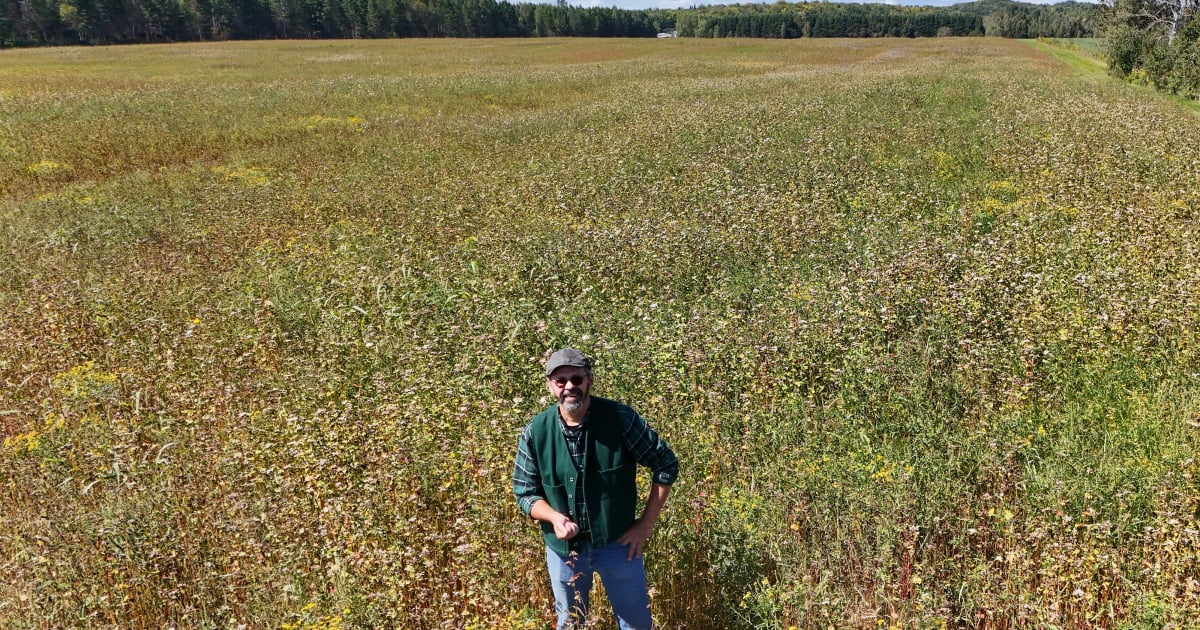
For Alain, “the tranquillity of the village” is at stake. “My wife has been ready to leave for a long time. And now, with the wind turbines coming … She can’t imagine seeing them all over the landscape,” he said, gazing toward the nearby farmland.
Line, on the other hand, believes that “we need them in Saint-Adelphe.”
“We’re in favour of economic development,” she said. “We’re not against progress, either.” In her view, “those who support [the project] around here don’t really dare say so.”
With less than a month to go before the election, Neill sees the Mauricie Project as the central issue in the Champlain riding. “It’s going to be fundamental,” she said.
And regardless of the outcome, the rift in Mauricie could take time to heal, according to Clément. “It’s going to take us years to recover from this. One side or the other.”