Large-Scale War Shoots Up UN Global Risk Rankings
 Guy BirchallUpdated 6 hours Ago3 Mins read
Large-scale war has rocketed up the list of perceived risks to the planet, though climate-related inaction remains the foremost concern, according to the global risk survey published by the United Nations on Tuesday.
About 36 percent of the 1,300 respondents said they expected a large-scale war within one year, rising to 76 percent when the period is extended to seven years. The report said the risk of large-scale war had shot up 16 places in the survey’s list of imminent concerns, compared to its ranking in 2024.
Though the perceived risk of large-scale war has increased the most since the last survey, it still ranks fourth among the most important overall threats, with mis- and disinformation third, geopolitical tensions second, and climate-related inaction first.
Survey respondents included government officials, NGO members, workers in U.N. international organizations, experts, academics, and private-sector workers. Respondents assessed 28 global risks across five groups: political, technological, economic, environmental, and societal.
The United Nations said in a post on X announcing the survey that it “shows that large-scale war is now seen as the world’s greatest vulnerability.”
U.N. Secretary-General António Guterres said in his preface to the report that the global risk landscape has shifted since the first survey was published two years ago, calling the latest iteration’s conclusions sobering.
“Political risks have moved centre stage. The prospect of large-scale war is seen as far more important and far more immediate than it was two years ago,” he said, adding that the institutions that are expected to respond in such instances are seen as “less able to act.”
Guterres also highlighted artificial intelligence as a significant concern, saying that innovation in that field is “outpacing our capacity to govern it.”
AI, frontier technologies, and technology-driven power concentration, the report said, were “seen as far bigger global threats than in 2024,” adding that the world was “especially unprepared” to cope with them.
U.S. President Donald Trump said in a Sept. 14 post on Truth Social that additional guardrails on AI are unnecessary and that the government already has “tremendous CRIMINAL and REGULATORY power over these companies!”

Visitors walk past a display depicting artificial intelligence and a human hand at the China International Supply Chain Expo in Beijing on June 22, 2026. Ng Han Guan/AP
“There is a SICK conspiracy going on against AI and Data Centers, and the only one that is happy about it is China,” Trump added. “WHOEVER WINS AI, WINS!”
AI Race Could Lead to ‘Gigantic Disaster’
Guterres was asked about the U.S. president’s views on AI during a Sept. 16 press conference.
“When a number of leaders and workers of the companies that are on the frontier of AI are the first to say that there are risks they still are not entirely able to control, I don’t think we can ignore that,” he said.

U.N. Secretary-General António Guterres delivers remarks to reporters outside the U.N. Security Council at U.N. headquarters in New York City, on April 20, 2023. Mike Segar/Reuters
“In my opinion, it is essential that the countries that have capacity, and I’m not referring only to the two biggest ones, the countries that have the highest capacity in the frontiers of AI, I think they should establish mechanisms of contact, of exchange of information, and some common guardrails in order to avoid this race to the bottom that could lead one day to a gigantic disaster at the global level.”
White House AI adviser David Sacks said on Sept. 12 that AI companies should regulate themselves and encouraged those with concerns to slow down their own development, arguing that they can do so without demanding a “preferred regulatory framework.”

A worker uses a thermal fogger to disinfect a church in Thessaloniki, Greece, on March 12, 2020. Sakis Mitrolidis/AFP/Getty Images
The perceived importance of biorisks and new pandemics fell more than any other risk measured in the survey, with both dropping 8 places in the most important rankings from 2024 and falling out of the top 10 altogether.
The U.N. said in a statement that respondents had “pointed to weak governance and coordination, a lack of political consensus, and eroding trust and accountability as the biggest obstacles to managing risk – alongside poor prioritisation, resistance from the public, politicians or business, and gaps in data.”





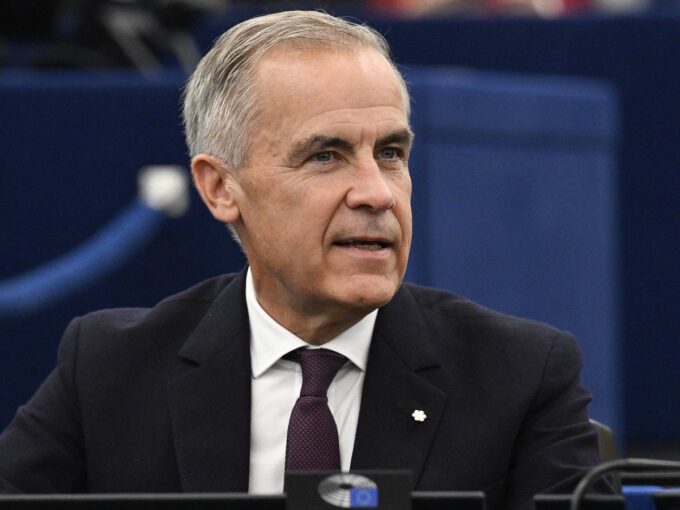
Carney speaks to the European Parliament; what Canada might have to give up in EU alliance; and more
Prime Minister Mark Carney attends the annual keynote address by European Commission...
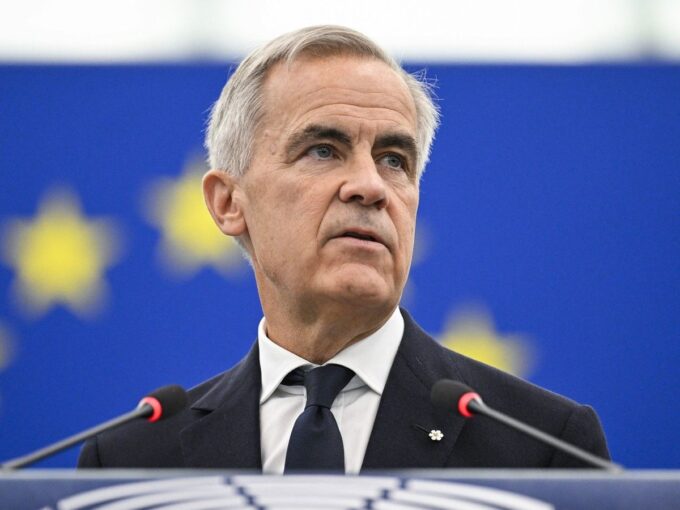
Chris Selley: A European alliance deserves more seriousness than Carney’s treated it with
Canadian Prime Minister Mark Carney delivers a speech in the hemicycle of...
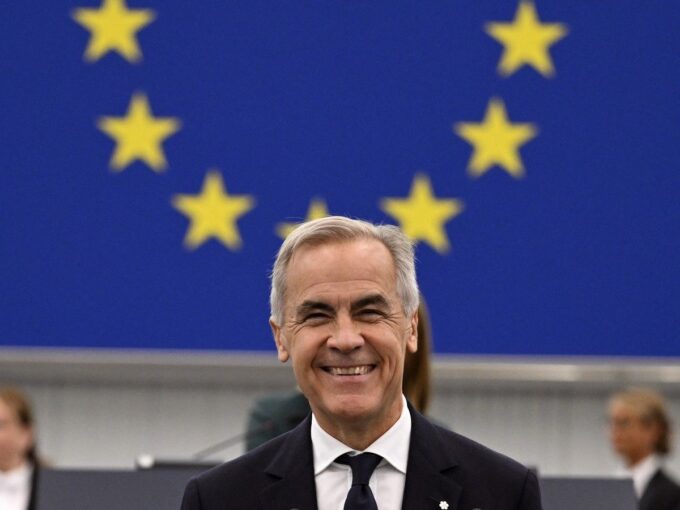
Jamie Sarkonak: Don’t trust Carney to tell us what EU ‘associate membership’ means
Mark Carney delivers a speech in the hemicycle at the European Parliament...

U of T called out for ‘despicable’ research group dedicated to anti-Zionism theories
A demonstrator waves a Palestinian flag inside an anti-Israel encampment at the...