5 Banks Failed. 2,080 Branches Closed. Now Comes Tokenization.
 William BrociusUpdated 6 hours Ago4 Mins read
Advertorial
Five U.S. banks have already failed in 2026, and more than 2,080 bank branches have closed across America since January 2025.
Those numbers make headlines, but I believe they may be the least important part of this story. While Americans watch familiar bank branches disappear from street corners, an entirely different financial infrastructure is being constructed behind the scenes.
There is one word every American needs to learn: tokenization.
Tokenization is the process of digitally representing assets—stocks, bonds, real estate, and even physical gold—on digital ledgers such as blockchain infrastructure.
This is no longer a cryptocurrency experiment.
The Depository Trust Company (DTC) sits at the center of America’s securities infrastructure and safeguards more than $114 trillion in securities. Its parent, the Depository Trust & Clearing Corporation, is developing infrastructure for tokenized securities and, in July, successfully processed real production trades using DTC-tokenized assets.
BlackRock CEO Larry Fink has gone even further, writing that every stock, every bond, every fund—virtually every asset—can be tokenized.
Where does the dollar fit into this new system?
Enter the stablecoin.
The GENIUS Act established America’s first federal regulatory framework for payment stablecoins. Treasury Secretary Scott Bessent has said their growth could create a surge in demand for U.S. Treasuries.
To understand why, look at Tether, issuer of the world’s largest stablecoin. According to its BDO-attested first-quarter 2026 figures, Tether reported approximately $141 billion in direct and indirect U.S. Treasury exposure, $20 billion in physical gold and $7 billion in Bitcoin.
Think about that structure.
You hold the stablecoin. Behind it sits an enormous pool of assets.
That raises a question worth asking: If those underlying assets generate income or appreciate substantially, who receives that economic benefit?
I jokingly call it a stable coin, not a profit coin.
And this is where physical precious metals become particularly interesting.
For generations, critics of gold have asked, “How are you going to eat your gold?”
Tokenization is beginning to answer that question. Gold is already being tokenized today, allowing physical metal held in secure vaults to be represented and used digitally. As this technology develops, imagine keeping your gold securely stored while accessing its value through a blockchain-linked debit card—even using it to take your family out for dinner. Suddenly, the question isn’t how you eat your gold. It’s how easily you can unlock its value when you need it.
But tokenization creates another question precious-metals owners should start asking: Do you own the right gold?
Historically, gold owners concentrated on three things: weight, purity and value.
I believe the emerging system adds a fourth: Where did it come from?
Look at the geopolitical chessboard. In August, the U.S. Treasury launched Operation Economic Outcast against Iran and its international financial networks. Treasury specifically identified digital assets and gold among five sectors targeted by the new sanctions determinations.
Then consider what Treasury did just two months earlier.
The Office of Foreign Assets Control sanctioned a Rwandan gold refinery and an associated network that Treasury alleged was involved in illegally smuggling minerals from the Democratic Republic of Congo.
That should make every precious-metals owner think about one word:
Provenance.
Imagine holding bars inside a retirement account you purchased years ago from what appeared to be a legitimate source. What happens if somewhere within that metal’s supply chain a refinery, intermediary, or source is subsequently identified as a sanctioned or illicit actor?
Who bears the consequences? What happens to liquidity? Can the metal move freely into a regulated tokenization platform? What documentation will tomorrow’s financial system require?
Those aren’t questions with universal answers today.
That’s precisely why I believe they need to be asked now.
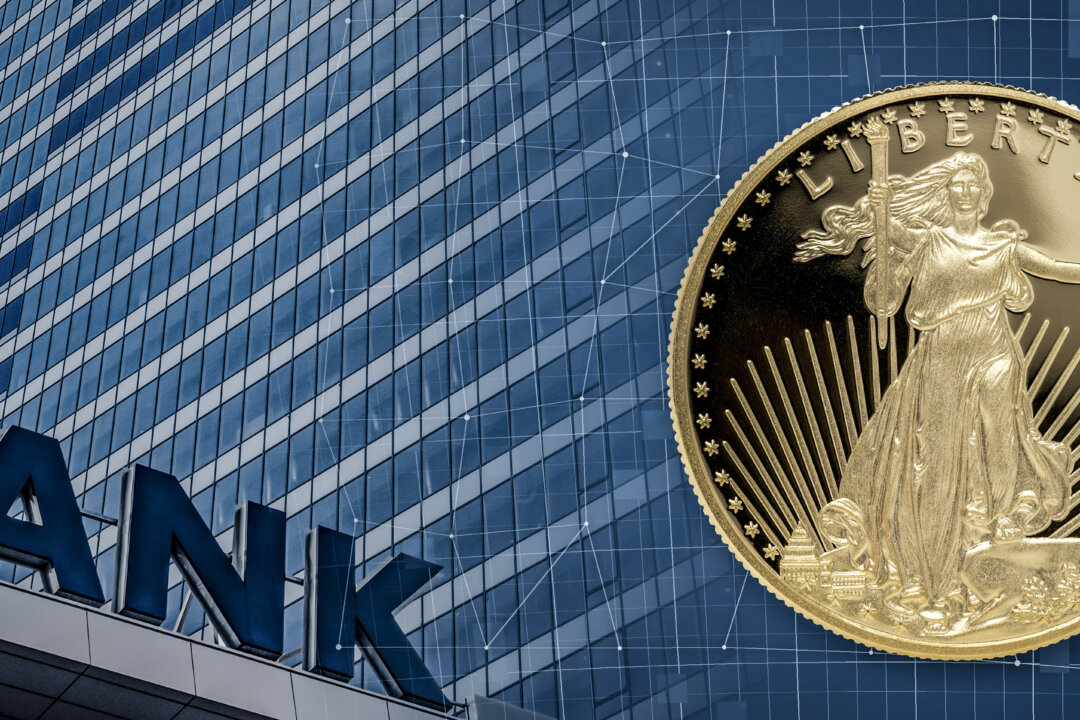
This is also why I personally favor the American Gold Eagle.
Congress authorized the American Gold Eagle bullion program in 1985, with production beginning in 1986. Most importantly for this discussion, the U.S. Mint states that, by law, the gold used to produce American Gold Eagles comes from domestically mined sources.
That doesn’t mean a Canadian Maple Leaf, Australian Kangaroo, British Britannia, or South African Krugerrand isn’t legitimate gold. They are internationally recognized bullion products. Nor am I claiming that future tokenization systems will reject them.
Nobody knows exactly what eligibility, provenance, sanctions-compliance, or chain-of-custody requirements tomorrow’s regulated platforms will impose.
My argument is about preparing for what we don’t know.
If I am positioning physical metals for the financial system developing in front of us, I want an asset with the clearest provenance possible within the United States.
Look at how the pieces are coming together.
Wall Street’s central securities infrastructure is preparing for tokenization. Stablecoins are becoming an important source of Treasury demand. Treasury is scrutinizing gold and international financial networks. Physical assets can increasingly be represented digitally.
The old question was: How much gold do I own?
The emerging question may be: Can I prove exactly what I own, where it came from and whether the next financial system will recognize it?
Don’t wait until the system begins shifting beneath your feet to find out.
Contact Dedollarize News today to request Digital Dollar Exposed and our complimentary Tokenization Report. Find out what tokenization could mean for the precious metals you currently hold, questions to ask about whether you are holding the right metals, and what options may be available if you’re not—before the transition accelerates.
The objective isn’t simply adapting to another financial system. It’s understanding that system while maintaining as much financial sovereignty as possible.
Our agents are standing by at 1-866-487-9106.
By contacting this telephone number, you consent to communications from Dedollarize News regarding your request and communications from its affiliates related to that request.
Compliance Disclosure:
De-Dollarize News does not provide financial, investment, tax, or legal advice. The content above is for informational purposes only and is not a recommendation to buy, sell, or hold any asset. All financial decisions involve risk and should be made in consultation with licensed professionals who understand your individual circumstances. Precious metals markets are subject to price volatility and liquidity risk. Program eligibility and terms may vary.
Third-party advertisements and links to other sites where goods or services are advertised aren’t endorsements or recommendations by The Epoch Times of the third-party sites, goods, or services. The Epoch Times takes no responsibility for the content of the ads, promises made, or the quality/reliability of the products or services offered in all advertisements.





Los Angeles Ranks Last Among 100 US Metros for Affordability and New Home Construction
Des Moines, Iowa, ranked first and Los Angeles ranked last in Realtor.com’s...

GM Defense Makes First Delivery for Lockheed’s Patriot Missile Program
A launcher of a Patriot air defense system of the Ukrainian Air...
Round-the-Clock Trading Closer After SEC Clears Path for Tokenized Stocks
The Securities and Exchange Commission (SEC) is inching closer to 24/7 trading...

US Unemployment Claims Slide Below 200,000 for 5th Time This Year
The number of Americans filing unemployment benefit claims fell below 200,000 for...