Round-the-Clock Trading Closer After SEC Clears Path for Tokenized Stocks
 Andrew MoranUpdated 3 hours Ago3 Mins read
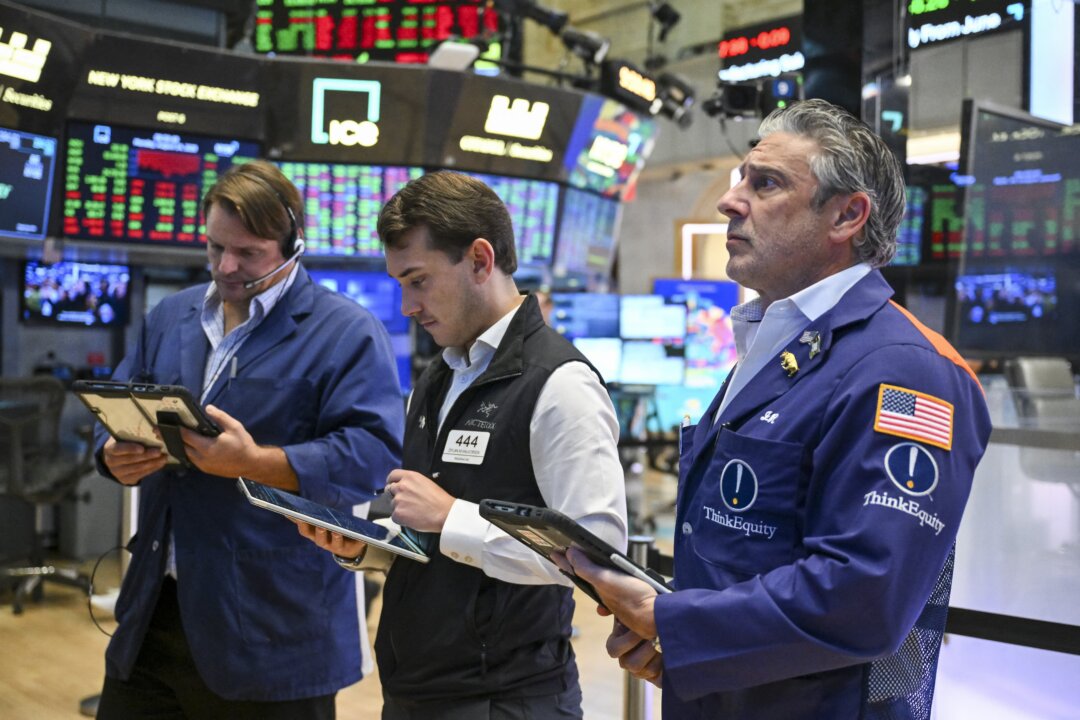
The Securities and Exchange Commission (SEC) is inching closer to 24/7 trading after clearing a path for tokenized stocks on Sept. 17.
Tokenization consists of issuing digital versions of publicly traded securities or real-world assets on a blockchain network.
It has drawn significant interest in financial markets because proponents say blockchain advancements and future potential can bolster accessibility and enhance liquidity across multiple financial assets.
In its June 2026 report, titled “Tokenization 2030: Wall Street On-Chain,” Citigroup projects a $5.5 trillion base case for tokenized assets by 2030.
In its Innovation Exemption, the SEC aims to provide certain trading platforms with regulatory relief to move forward with tokenized stock trading as long as they meet certain conditions.
Under the new framework, stock token holders must retain the same rights they would have with conventional equity holdings.
Additionally, firms could refuse to have their securities represented as tokens.
Synthetic security tokens are excluded from the latest move since the Wall Street regulators do not classify derivatives as direct ownership of shares.
Instead, the agency says tokens must provide actual ownership of the underlying stock, giving investors “the same rights and privileges as the traditional securities, including rights to receive dividends and exercise voting rights.”
“The Innovation Exemption is designed to resolve challenges that have prevented responsible innovation from taking root in the United States while providing investor protections and market integrity standards,” SEC Chair Paul Atkins said in a statement.
While not a standard rule for the equities arena, Atkins noted that this move would allow the market to evolve and would require monitoring by regulators.
The SEC would then use the information to determine a “future-ready regulatory framework,” he said.
“Critically, this interim measure must be followed by durable rulemaking to ensure that onchain markets remain a viable pathway as our capital markets continue to evolve.”
This is part of the federal agency’s “Project Crypto” initiative launched last year.
24-Hour Trading
The SEC’s latest actions could make 24/7 stock trading closer to reality, something officials have been examining over the past year.
On Sept. 17, the SEC hosted a roundtable discussion to assess 24-hour trading in U.S. equity markets.
“As we look toward expanded overnight trading, technology no longer appears to be the limiting factor,” SEC Commissioner Mark Uyeda said in prepared remarks.
“There are, however, new questions arising, centered on the readiness of market participants and regulators to operate and manage risk in overnight sessions.”
Major U.S. stock exchanges have been introducing round-the-clock trading as they come under pressure to adapt to a world that increasingly does not sleep.

President Donald Trump (C) delivers remarks during a summit of crypto and technology leaders in the Roosevelt Room of the White House in Washington on Aug. 19, 2026. Alex Wong/Getty Images
The Nasdaq said last month it will launch 23-hour trading, beginning Dec. 6. Under this schedule, trading will run from Sunday 9 p.m. EST until Friday 8 p.m. EST.
The exchange will pause for one hour daily between 8 p.m. and 9 p.m.
The New York Stock Exchange is looking to implement a 22-hour day, running from 1:30 a.m. to 11:30 p.m. EST.
Geopolitics has been at the center of major market movements this year, but significant military actions have occurred when Wall Street’s doors are closed.
In late February, when the United States and Israel conducted a joint military operation in Iran, the attacks happened on a Saturday morning. This forced global traders to use cryptocurrency exchanges to trade crude oil and gold in real time.
Adjusting trading hours is not unprecedented, says Jamie Selway, director of the SEC’s Division of Trading and Markets.
For example, from May 1887 to September 1952, the New York Stock Exchange opened at 10 a.m. and closed at 3 p.m., with Saturday’s trading ending at noon.
The exchange then ceased Saturday trading in September 1952.
“Wednesday trading returned in January 1969, but the NYSE moved its close to 2 p.m. As technological advancements increased capacity, the Exchange pushed the close later by 30 minutes four times over the next five years, ultimately landing at 4 p.m. in October 1974,” Selway said in a speech on Sept. 17.
It now opens at 9:30 a.m. from Monday to Friday.
By the early 2000s, digital trading platforms drove updates to market data systems, allowing trading hours to expand from 4 a.m. to 8 p.m. ET.
“Once again, technological innovation and investment expanded capacity and increased resiliency—and multiplied choices available to investors,” he said.







Los Angeles Ranks Last Among 100 US Metros for Affordability and New Home Construction
Des Moines, Iowa, ranked first and Los Angeles ranked last in Realtor.com’s...

GM Defense Makes First Delivery for Lockheed’s Patriot Missile Program
A launcher of a Patriot air defense system of the Ukrainian Air...

JPMorgan says bitcoin could get more support than gold if ETF hedging eases
Bitcoin could get more support than gold if investors reduce their ETF...

As RWA trading surges on Hyperliquid, Dragonfly’s Qureshi makes the case for a multichain future
Dragonfly's Haseeb Qureshi said the shift reflects crypto's broader maturation toward tokenized...