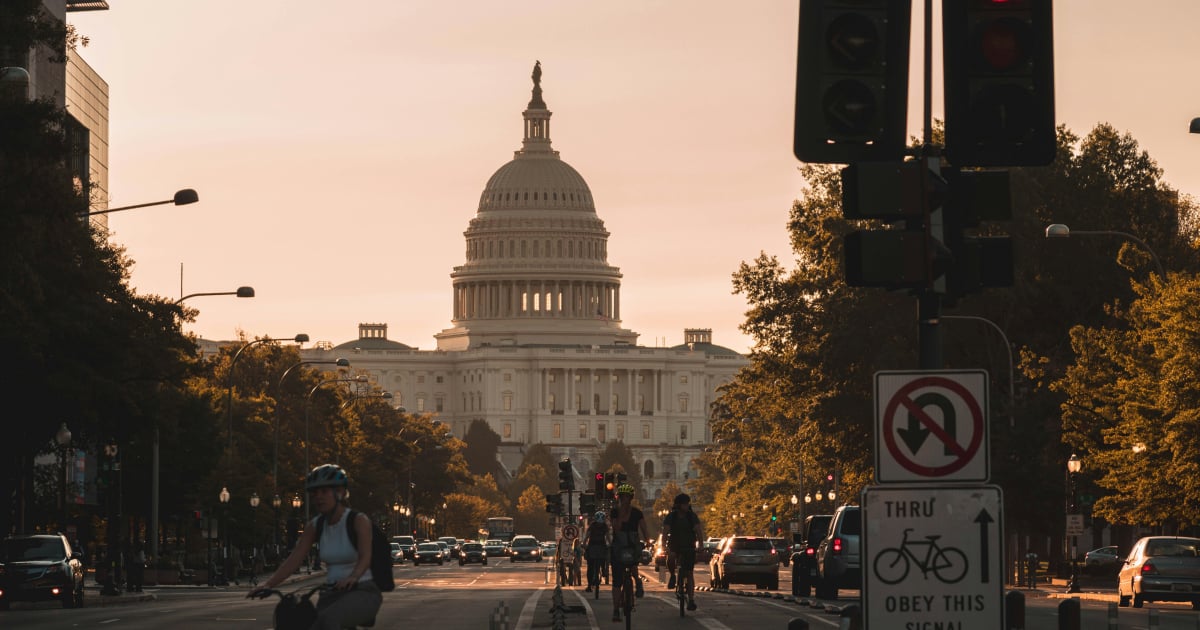
A sanctions bill imposing tariffs of up to 100 per cent on countries that continue importing Russian oil has passed the US House of Representatives 262-159, in a vote that could carry real implications for Canada’s own fuel supply.
Canada’s National Observer revealed earlier this month that petroleum products from Russia, refined in India and Turkey, have continued entering Canada’s fuel supply since 2022, despite Canada’s ban on direct Russian oil imports. A tanker carrying Russian-derived petroleum arrived at Point Tupper, NS as recently as April.
Canada has listed dozens of individuals and entities tied to Russia’s energy sector since June and sanctioned 200 additional shadow fleet vessels. However, none of those measures target petroleum refined from Russian crude in a third country, the specific loophole identified.
But the new US bill could squeeze that loophole at its source by threatening steep tariffs on India and Turkey if they continue to buy Russian crude, potentially reducing the supply of Russian-linked fuel that ends up in Canada’s imports.
The bill, the Lindsey O. Graham Sanctioning Russia and Iran Act of 2026, was introduced by the late Republican Sen. Lindsey Graham more than a year and a half ago, before his death this July. It passed the Senate 86-11 in August and cleared a key procedural hurdle in the House Monday by a vote of 214-211.
House Foreign Affairs Committee Chairman Emeritus Michael McCaul (R-Texas), who managed today’s floor debate, framed the bill’s tariffs as more durable than conventional sanctions. “You can evade sanctions — which the Russians have done for years — but you cannot evade tariffs,” McCaul said, citing a member of Ukrainian President Volodymyr Zelenskyy’s own sanctions team.
The bill’s central lever, relevant to Canada’s own loophole, allows the president to raise tariffs by up to 100 per cent on all goods imported from any country among the world’s top five importers of Russian-origin crude oil or gas. This list includes India and Turkey, the countries at the heart of Canada’s loophole. As McCaul explained, “if a country falls off of the top five list, the tariffs are removed,” an incentive designed to spark “a race to the bottom” away from Russian crude.
Graham himself named India as a direct target before his death. “This bill would give President Trump tremendous leverage against countries like China, India and Brazil to incentivise them to stop buying the cheap Russian oil that provides the financing for Putin’s bloodbath against Ukraine,” he said in a January statement.
Unlike the EU and UK, which have directly banned refined petroleum products traceable to Russian crude, this bill threatens the buyer countries’ entire trade relationship with the US instead of restricting the product itself.
Isaac Levi, Europe-Russia policy and energy analysis team lead at the Centre for Research on Energy and Clean Air, whose analysis first traced Russian-linked shipments to Canada, says that this approach could work. “Faced with a 100 per cent tariff, [India and Turkey] would likely decide that protecting access to the US market matters more than cheap Russian crude,” Levi said, adding that could reduce the Russian-origin content of products flowing to Canada from India’s Jamnagar refinery and Turkey’s STAR refinery.
But Levi said Canada shouldn’t wait to find out.
“Canada should not rely on foreign pressure to close its own loophole,” he said. “It needs a simple legal ban on petroleum products made from Russian crude, regardless of where they are refined.”
He proposed barring any port or refinery that received Russian oil in the previous six months from exporting to Canada at all.
Dr Svitlana Romanko, founder and executive director of Razom We Stand, shares that scepticism. “A 100 per cent tariff on the oil business of countries like India and Turkey would be real leverage,” she said. “But that scale only matters if Washington leaders are actually willing to use their power against large countries like China or India, and also against Russia — that’s the real test.”
That uncertainty isn’t confined to advocacy groups. The bill grants the president broad waiver authority, and both Levi and Razom We Stand warn Trump could weaken enforcement by exempting key trading partners. Democratic Reps. Gregory Meeks of New York and Don Beyer of Virginia raised the same concern, calling the bill’s text “unacceptable” for containing “the broadest possible waiver authority for President Trump.”
For Canada, the bill underscores a gap Ottawa could close itself, regardless of developments in Washington. “Canada calls itself a strong ally of Ukraine, but still lets in Russian crude the moment it’s passed through a refinery in India or Turkey,” Romanko said. “I want Canada to follow the EU and UK’s lead: block refined products traceable to Russian crude and require real proof of origin.”
Global Affairs Canada did not respond to a request for comment in time for publication.
September 17th 2026